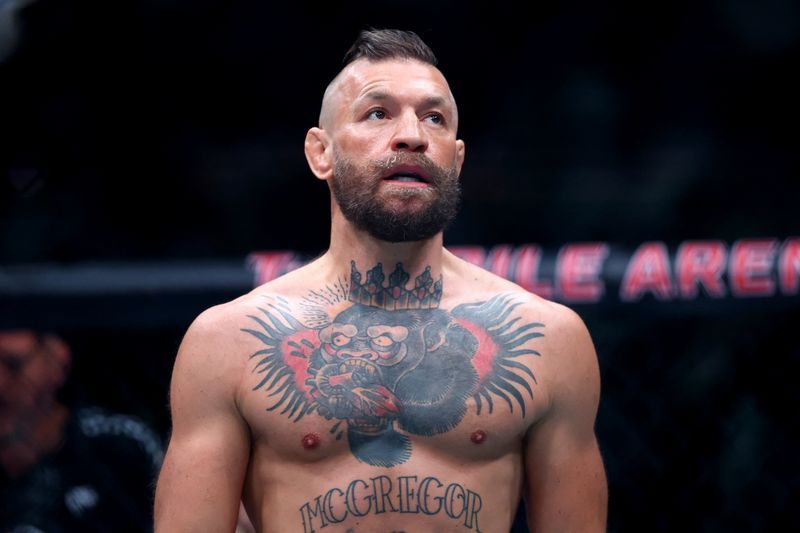
Conor McGregor's much-publicised comeback to competitive mixed martial arts ended almost as soon as it began on Saturday night in Las Vegas, when a devastating knee injury forced the Irish fighter to withdraw from his UFC 329 contest against Max Holloway within the opening minute. What was supposed to be a marquee encounter at the T-Mobile Arena became instead another chapter in McGregor's frustratingly injury-plagued recent years, as a failed aerial offensive manoeuvre left him unable to continue the fight.
The injury came when McGregor attempted an aggressive flying kick early in the first round but landed poorly, immediately signalling distress. After attempting to push forward for a few more seconds, he gestured towards the referee that he was unable to proceed, bringing an abrupt end to what the UFC had heavily promoted as a significant moment for the sport. The 37-year-old's return fight lasted marginally longer than one minute, marking yet another frustrating development in his attempts to rebuild his fighting career.
This comeback had carried particular significance given McGregor's extended absence from competition. The last time the former two-division champion had stepped into the octagon was July 2021, when he suffered a serious leg break against Dustin Poirier in their trilogy match. That injury had sidelined him for years, and his eventual return had been eagerly anticipated by fans and analysts who remembered his dominance in earlier career phases. The UFC had positioned Saturday's encounter as a meaningful return to action rather than a tune-up bout.
McGregor and Holloway had previously met in 2013, with the Irishman prevailing via unanimous decision in what was then a significant matchup. Saturday's scheduled rematch carried extra intrigue given how both fighters had evolved in the intervening 12 years. Holloway, the former featherweight champion, had become one of the sport's most durable and active competitors, regularly taking fights and consistently performing at an elite level. The contrast between their trajectories in recent seasons made the matchup narratively compelling—until McGregor's injury cut it short.
Holloway responded to the anticlimactic ending with philosophical acceptance, immediately indicating his willingness to run the fight back once McGregor has recovered from his latest setback. The veteran competitor acknowledged the substantial promotional buildup surrounding their encounter and expressed his readiness to face McGregor again when circumstances permitted. His measured reaction highlighted the complexity of promoting major fights when one party carries such an uncertain injury history.
Beyond this particular setback, McGregor's recent years have been marked by an unfortunate pattern of obstacles that have repeatedly prevented him from competing at regular intervals. A scheduled bout with Michael Chandler was cancelled in June 2024 after McGregor sustained a broken toe during training camp, preventing him from making the start date. This incident exemplified how even preparations for return fights have gone awry, suggesting underlying issues with his readiness or training methodologies.
McGregor's difficulties extend far beyond the purely sporting realm. In 2024, an Irish civil court determined that he bore liability for allegations of sexual assault involving Nikita Hand in 2018—a legal finding that sent significant shockwaves through his public reputation and commercial interests. The case had already limited his public profile and promotional opportunities, and the court's judgment further complicated his standing.
Additionally, regulatory consequences have hampered his ability to compete. In October 2025, McGregor accepted an 18-month suspension from the sport's anti-doping authority for repeated failures to comply with whereabouts notification requirements. He had missed three separate testing collection attempts during 2024, triggering the enforcement action. Although the ban was retroactively applied and technically expired in March 2025, such regulatory entanglements demonstrate systemic dysfunction in how he has managed his obligations as a professional athlete.
The cumulative effect of these injuries, legal matters, and regulatory issues has substantially altered McGregor's standing in mixed martial arts. Where once he was the sport's most marketable star with seemingly boundless momentum, he now represents a cautionary tale about how quickly elite athletes can see their careers derailed through a combination of unfortunate circumstance and personal mismanagement. Each setback has made a successful return progressively more difficult.
Saturday's card itself produced another dramatic finish in the co-main event, where British lightweight Paddy Pimblett secured victory over France's Benoit Saint-Denis in similarly emphatic fashion. Pimblett required less than 60 seconds to conclude his fight via submission, choking out his opponent in what was another example of decisive early-round finishes that characterised the evening. While Pimblett's rapid victory was celebrated as an impressive performance, McGregor's injury-enforced withdrawal overshadowed these other results.
For Malaysian and Southeast Asian combat sports enthusiasts who have followed McGregor's career trajectory, Saturday's outcome served as a sobering reminder of the sport's unpredictability and the physical toll that accumulated injuries exact on athletes. McGregor's inability to complete even one minute of fighting raises legitimate questions about whether his competitive window has effectively closed, despite his obvious desire to recapture past glory. The injuries, the legal entanglements, and the regulatory suspensions have created a formidable obstacle course that successive comeback attempts have repeatedly failed to navigate successfully.

