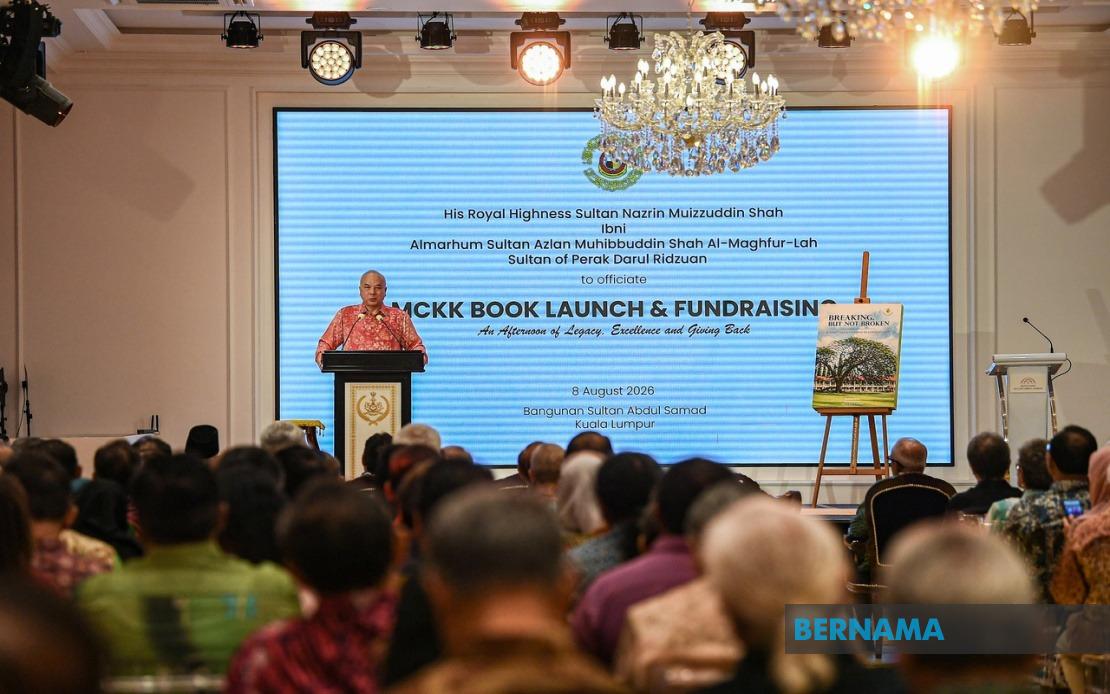
The Sultan of Perak, Sultan Nazrin Shah, has stressed that historic Malaysian educational institutions like the Malay College Kuala Kangsar can reclaim prominence and relevance by fundamentally reimagining their roles for contemporary society. Speaking at a book launch event in Kuala Lumpur, His Royal Highness underscored that institutions of MCKK's standing possess the foundations necessary for revival, provided they embrace substantive transformation that acknowledges the radically altered landscape they now inhabit. The comments arrive amid broader concerns about whether Malaysia's most celebrated residential schools are adequately preparing students for a rapidly evolving global economy.
As Royal Patron of the MCKK Board of Governors, Sultan Nazrin articulated a vision that extends beyond conventional modernisation. He advocated for an educational philosophy that marries practical skill development with the cultivation of deeper human qualities—critical thinking, ethical grounding, and genuine commitment to societal contribution. This dual focus reflects recognition that technological competence alone cannot produce the well-rounded graduates that Malaysia's future demands. The Perak ruler's emphasis on balancing tangible capabilities with intangible virtues suggests growing anxiety within Malaysian leadership circles that education systems have become too narrowly focused on economic competitiveness at the expense of character formation.
Central to Sultan Nazrin's thesis is the profound disruptive force that artificial intelligence and rapid technological advancement will exert on the labour market and social structures in coming decades. He argued that Malaysia's education establishment must fundamentally reconsider how it equips the next generation to navigate an era of unprecedented transformation. Rather than viewing AI as a threat to be resisted, the sultan proposed that schools should proactively redesign curricula and pedagogical approaches to position students as beneficiaries of technological progress rather than casualties of obsolescence. This reframing is particularly significant for regional education policymakers grappling with comparable challenges across Southeast Asia.
The Ruler's remarks carried an unmistakable critique of current educational outcomes from Malaysia's most prestigious institutions. He noted that prestigious residential schools, historically designated as elite "power" schools, have experienced a demonstrable decline in their capacity to produce graduates of exceptional calibre. Sultan Nazrin specifically highlighted deficiencies in language proficiency, analytical reasoning, and a palpable lack of commitment to public service among recent alumni—qualities that these institutions once reliably cultivated. This frank assessment contradicts the continued cultural reverence accorded to schools like MCKK, suggesting that institutional prestige and actual educational effectiveness have begun diverging.
The book being launched, authored by Ghazally Ismail, Ahmad Ibrahim, and Hisham Badrul Hashim, apparently provides an unflinching diagnostic examination of MCKK's challenges and those facing comparable institutions. Sultan Nazrin commended the authors for their intellectual courage in tackling a sensitive subject within Malaysian educational discourse, where heritage schools occupy a hallowed position in national mythology. The fact that a reigning monarch felt compelled to publicly validate such critical analysis indicates that questions about institutional decline have reached a level of urgency that demands candid examination. The willingness to acknowledge harsh realities represents a potential turning point in how Malaysia's leadership addresses systemic weaknesses in prestigious educational establishments.
Meanwhile, tangible efforts to revitalise MCKK are proceeding alongside such philosophical reconsideration. Tan Sri Dr Ahmad Tajuddin Ali, chairman of the MCKK Board of Governors, revealed that the MCKK Foundation has accumulated over RM36 million in donations and contributions since its establishment in 2008. This substantial fundraising achievement demonstrates sustained confidence in the institution's potential among alumni and corporate benefactors. The Foundation's capital deployment reflects a strategic approach to institutional renewal: approximately RM19 million has been directed toward new infrastructure projects, most notably the construction of the IB Complex and Auditorium Tun Abdul Razak, investments designed to enhance the college's academic and cultural capabilities.
Beyond capital expenditure, the Foundation has executed extensive renovation programmes targeting essential facilities across the campus. Nearly RM3.5 million has been committed to refurbishment initiatives encompassing the Pavilion Hostel, improvements to Prep School sanitation facilities, gymnasium roof repairs, and swimming pool restoration. These systematic upgrades, while administratively unglamorous, address fundamental quality-of-life factors that shape student experience and institutional appeal. For a school competing against international boarding institutions for top-tier students, such attention to campus infrastructure sends an important signal about institutional seriousness and forward-looking management.
The Foundation's endowment strategy represents perhaps the most forward-thinking element of MCKK's financial architecture. Current endowment funds exceed RM16 million, including substantial contributions from corporate sponsors such as PETRONAS and international donors including His Majesty Sultan Hassanal Bolkiah of Brunei Darussalam. This diversified donor base reflects MCKK's regional significance and the cross-border networks that connect Southeast Asian elites. The endowment mechanism creates a sustainable financing model insulating the institution from annual budgetary fluctuations, a crucial advantage as Malaysia's education funding environment becomes increasingly constrained.
Returns generated from the Foundation's investment portfolio have already begun delivering tangible benefits to the student body. More than RM7 million in investment income has been channelled back to the college, supporting scholarship programmes for financially disadvantaged but academically promising students, professional development for teaching staff, and sponsorship of student participation in international competitions and academic conferences. Critically, these funds have also supported heritage preservation efforts, ensuring that MCKK's historic buildings and grounds—themselves repositories of institutional identity and educational value—receive appropriate custodianship. This balance between innovation and preservation encapsulates the broader challenge facing heritage institutions: how to modernise substantially without severing connections to the traditions that confer legitimacy and cultural significance.
The investment in leadership development programmes funded through Foundation resources directly addresses Sultan Nazrin's concerns about character formation and commitment to public service. By providing structured opportunities for students to develop leadership capabilities through experiential learning, mentorship, and exposure to real-world challenges, MCKK seeks to cultivate the kinds of graduates the sultan identified as currently deficient. Such programming becomes increasingly important as traditional classroom instruction struggles to develop softer skills and ethical sensibilities that employers and society value highly. The emphasis on leadership development suggests institutional recognition that academic excellence alone no longer suffices to justify MCKK's elevated position within Malaysian education.
The broader context encompassing Sultan Nazrin's comments and MCKK's strategic initiatives reflects wider anxiety within Malaysia's leadership establishment about educational competitiveness and national preparedness for technological disruption. Heritage schools occupy a symbolic position far exceeding their numerical significance, serving as reference points for educational excellence and social mobility. When such institutions appear to be faltering, the implications extend beyond individual school performance to encompass national capacity for producing globally competitive talent. Malaysia's effort to position itself as a Southeast Asian knowledge economy hub depends partly on whether prestigious institutions like MCKK can successfully navigate the transformation from twentieth-century boarding school models toward twenty-first-century educational paradigms.
Sultan Nazrin's call for comprehensive reimagining rather than incremental adjustment carries particular weight given his formal status as Royal Patron and his intellectual engagement with educational policy. His emphasis on preparing students for an AI-saturated future aligns with global educational trends, but his insistence on maintaining ethical and character-based dimensions of learning reflects distinctly Malaysian preoccupations about maintaining social cohesion and shared values amid technological disruption. The challenge facing institutions like MCKK involves simultaneously adopting cutting-edge pedagogical approaches and technological infrastructure while preserving the institutional ethos and formative experiences that justify their continued existence and justify the premium fees and selective admissions that maintain their exclusivity.
The path forward for MCKK and comparable heritage institutions appears to hinge on whether leadership can execute transformation at sufficient pace and depth to affect actual educational outcomes. Financial investment, infrastructural upgrade, and endowment building provide necessary but insufficient conditions for genuine institutional renewal. The ultimate test involves whether students graduating from these schools demonstrate the combination of technical competence, critical thinking, language proficiency, and genuine commitment to service that Sultan Nazrin identified as currently deficient. Without measurable improvement in these dimensions, even substantial financial investment risks merely polishing institutions in decline rather than effecting genuine transformation capable of justifying their continued prominence in Malaysian education and society.

