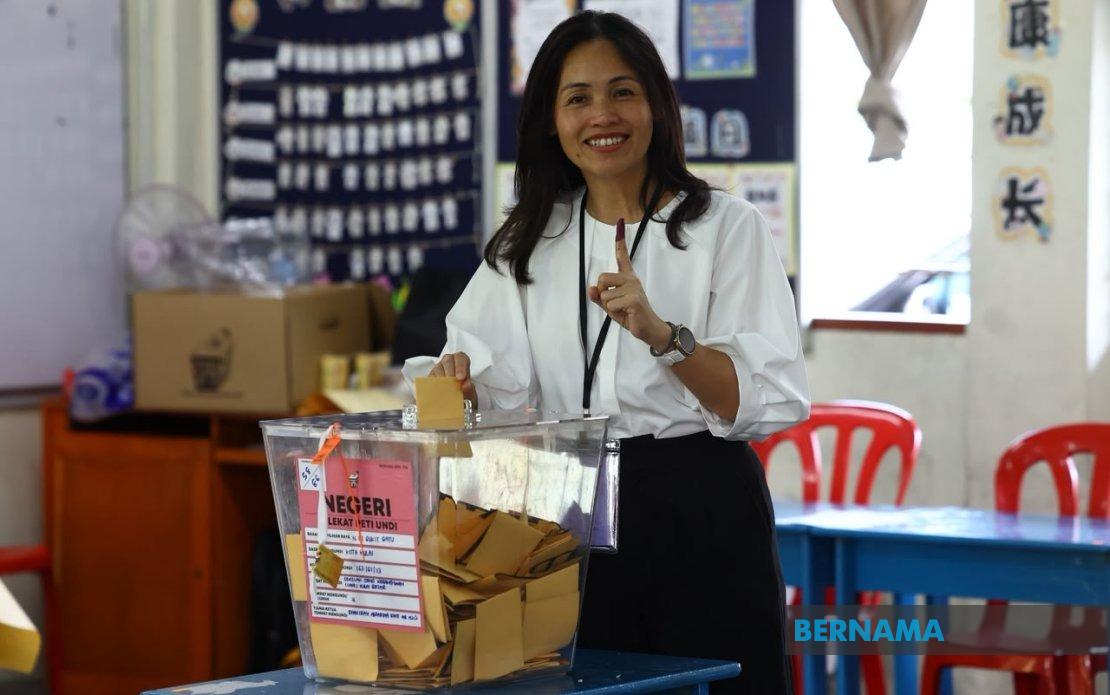
The Malaysian Communications and Multimedia Commission encountered significant levels of online misconduct as voters prepared for the 16th Johor state election, receiving 29 formal complaints centred on problematic digital content during the campaign period. Deputy Communications Minister Teo Nie Ching disclosed the volume of reports while casting her ballot at SJK (C) Kulai Besar, highlighting the persistent challenges facing election administrators as digital platforms increasingly shape political discourse across Malaysia.
The complaints varied substantially in their nature and severity. The largest share—17 cases—involved unverified claims and deliberately false information circulating online, reflecting widespread public concern about the reliability of digital news sources ahead of polling day. A further 11 complaints focused on expressions of hostility and intolerance toward identifiable groups, while a single case involved fraudulent account creation and identity misrepresentation. This breakdown reveals the multifaceted threat landscape confronting both electoral integrity and social cohesion during politically sensitive periods.
The hate speech allegations demonstrated particularly concerning patterns rooted in Malaysia's historical sensitivities. Nine of the eleven reported cases centred on racial grievances, while the remaining two touched respectively on religious tensions and statements deemed disrespectful toward the monarchy. These complaints fell squarely within Malaysia's defined framework of 3R content—race, religion and royalty—designations that carry significant legal and social weight in the Malaysian context. The preponderance of race-related allegations suggests that electoral competition may have amplified existing communal divisions or encouraged inflammatory rhetoric targeting specific ethnic populations.
Teo's comments to assembled media representatives emphasised the responsibility citizens bear for filtering and evaluating information in an increasingly complex media environment. She specifically called upon voters to cultivate greater critical awareness regarding digital content, resisting the temptation to uncritically share unverified claims or emotionally provocative statements. The Deputy Communications Minister framed digital literacy not merely as a technical skill but as a civic duty essential to meaningful democratic participation, suggesting that voter behaviour itself represents a crucial defence against online manipulation.
The broader context of these 29 complaints merits careful consideration for regional observers. Johor's 16th state election mobilised an unusually large electorate, with more than 2.6 million registered voters determining the allocation of 56 State Legislative Assembly seats contested by 172 candidates. An election of such scale provides ample opportunity for coordinated disinformation campaigns, whether originating from foreign sources seeking to destabilise Malaysian politics or domestic actors leveraging technological advantages for partisan gain. The relative modesty of the complaint tally—whether indicating effective preventive messaging, genuine restraint among political actors, or simply under-reporting—remains ambiguous.
Malaysia's election management infrastructure has evolved considerably in response to previous episodes of viral false claims and sectarian agitation during electoral contests. The MCMC's capacity to receive and investigate complaints represents one institutional response to these challenges, though questions persist regarding the investigative rigour applied to each case and the consequences ultimately imposed. The communications regulator operates within statutory constraints that sometimes pit the protection of electoral integrity against established principles of online expression and privacy, creating inherent tensions in enforcement approaches.
The timing of Teo's disclosure—made while the voting itself was underway—served multiple communicative purposes. The revelation reassured voters that authorities were actively monitoring online spaces and responding to concerns, potentially reducing anxiety about undetected manipulation. Simultaneously, it signalled that despite genuine problems, the overall volume remained manageable and that election day could proceed with confidence in the underlying integrity of the process. The Deputy Communications Minister's appeals for vigilance implicitly shifted some responsibility for combating misinformation from government agencies toward individual citizens themselves.
For Southeast Asian democracies broadly, the Johor experience illustrates persistent vulnerabilities in the information ecosystem during elections. While Malaysia possesses relatively sophisticated regulatory frameworks and technological capacity compared to some regional neighbours, the steady flow of complaints indicates that legal provisions and monitoring systems do not automatically prevent problematic content circulation. The gap between detection and impact remains substantial; many false claims or inflammatory statements reach substantial audiences before regulatory intervention occurs, and removal after wide circulation often fails to erase their influence on voter perceptions.
The relationship between online hate speech and electoral outcomes warrants closer analytical attention, particularly in Malaysia's multi-ethnic context. Research from comparable democracies suggests that concentrated bursts of hate speech during campaigns can measurably influence support patterns, especially among younger voters and those already predisposed toward communal grievance. The concentration of complaints around race-related content in Johor aligns with longstanding Malaysian political dynamics wherein ethnicity functions as a primary political cleavage, yet digitalisation has amplified the velocity and reach of identity-based messaging.
Teo's reference to the smooth conduct of the polling process itself signified that online disorder did not visibly disrupt election administration or voting procedures. Election officials managed logistical challenges effectively, and the institutional machinery functioned without major incident. This distinction between online disorder and operational disruption proves crucial; whilst digital misinformation threatens democratic quality and informed decision-making, it did not prevent voters from actually casting ballots or officials from tallying results. The separation highlights the particular nature of modern electoral challenges—more abstract, diffuse, and difficult to measure than the concrete obstacles of previous eras.
Moving forward, Malaysian policymakers must balance competing imperatives: maintaining robust investigation into problematic online content whilst protecting legitimate expression, expanding digital literacy programming before rather than during elections, and collaborating with platform operators to address algorithmic amplification of inflammatory material. The Johor election revealed both the reality of online governance challenges and the capacity of existing institutions to respond, though optimisation of these responses remains an ongoing endeavour.

