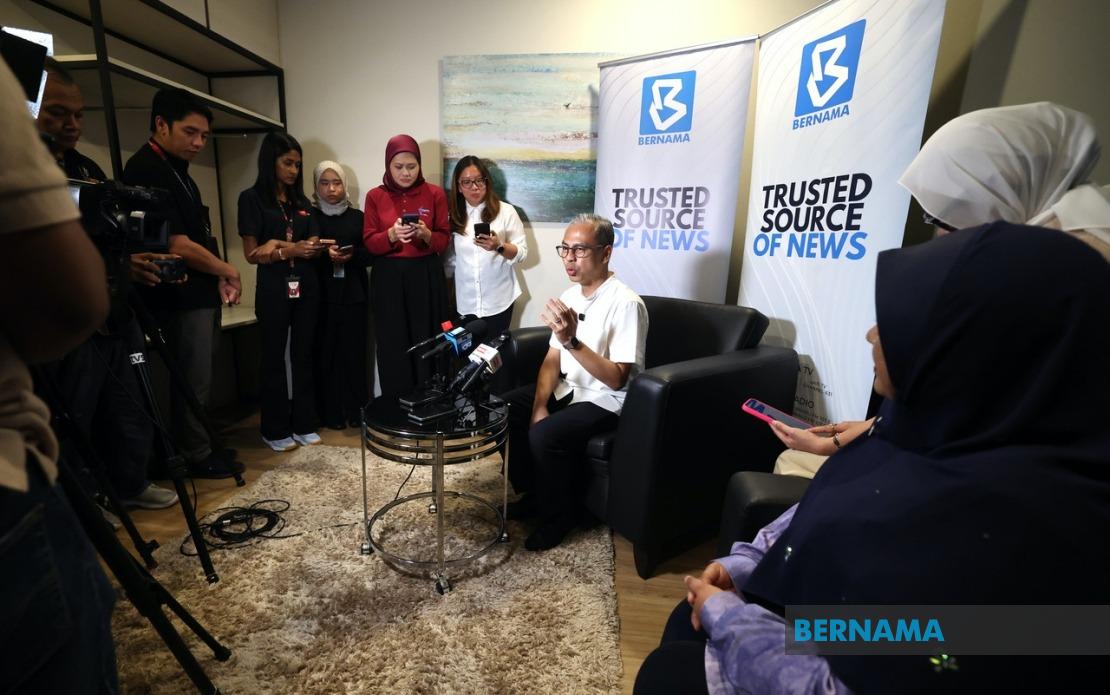
The Malaysian Communications and Multimedia Commission has been instructed to guarantee comprehensive 4G and 5G network coverage at the Johor Bahru-Singapore Rapid Transit System Link stations before the service commences operations on January 1, 2027. Communications Minister Datuk Fahmi Fadzil disclosed this directive while emphasising that digital infrastructure represents a cornerstone of the government's broader strategy for the anticipated cross-border rail corridor, which will fundamentally reshape connectivity between Malaysia's southern economic hub and Singapore's western regions.
During remarks made in Johor Bahru following a ministerial visit to the Malaysian National News Agency, Fahmi explained that cultivating optimal wireless connectivity across the RTS Link's two planned stations—situated at Bukit Chagar in Johor Bahru and Woodlands North in Singapore—constitutes a priority that extends beyond mere infrastructure completion. The minister intends to conduct a comprehensive inspection alongside MCMC officials to assess progress, though he deferred the timing of such a visit to a future occasion. This preventive approach reflects mounting recognition that modern transit infrastructure demands digital-first planning rather than retrofitting connectivity solutions after commissioning.
The approximately four-kilometre rail shuttle, which will transport thousands of daily cross-border commuters, presents a unique technical challenge given its bifurcated geographic nature. Unlike purely domestic rail projects, the RTS Link's operations span two distinct sovereign territories with differing regulatory frameworks and telecommunications standards. Ensuring seamless handover of mobile signals between Malaysian and Singaporean networks requires meticulous coordination between authorities on both sides, making Fahmi's early directive a pragmatic acknowledgment of these complexities.
Fahmi's comments also addressed persistent connectivity deficiencies affecting rural Malaysia, particularly regarding the digital payments ecosystem which increasingly relies upon stable internet access and QR code functionality. He attributed many of these shortcomings to incomplete coverage rollouts, asserting that resolution of such gaps remains anticipated through implementation of the second phase of the National Digital Network programme, commonly known as JENDELA. This phased infrastructure development underscores the government's recognition that digital inclusion cannot be achieved through singular initiatives but demands sustained, sequential investment across multiple geographic and technological frontiers.
The construction timeline for telecommunications infrastructure remains a significant constraint upon rapid deployment. Fahmi noted that erecting new telecommunications towers typically necessitates between twelve and twenty-four months, a duration shaped by protracted land acquisition processes and the requirement to secure approvals from various local authorities. This extended timeline illuminates why preemptive planning for the RTS Link project proves essential; commencing preparations immediately rather than awaiting the imminent launch date substantially diminishes the prospect of operational difficulties stemming from inadequate wireless infrastructure.
However, the ministry has begun exploring approaches beyond traditional tower construction to accelerate coverage expansion. The government is investigating alternative methodologies, including deployment of satellite internet services such as Starlink, to furnish expedited connectivity solutions to communities situated in areas experiencing persistent digital accessibility constraints. This strategic diversification reflects acknowledgment that conventional infrastructure approaches, whilst reliable, cannot independently resolve coverage challenges across Malaysia's varied terrain and demographic distribution patterns.
Geographic and economic factors compound the connectivity challenge, particularly across northern Johor and the country's east coast regions. Fahmi explained that these areas face distinctive obstacles stemming from topographical complexity, expansive oil palm plantation landscapes, and populations distributed across dispersed settlements. These conditions substantially diminish the commercial attractiveness of conventional tower investment, as the anticipated subscriber base and revenue potential may prove insufficient to justify capital expenditure under standard economic models. Consequently, addressing connectivity in such zones demands innovative financing structures, public-private collaboration frameworks, and technology solutions fundamentally distinct from urban deployment strategies.
The minister acknowledged that the MCMC bears responsibility for examining alternative technologies suited to these challenging environments, implicitly delegating technical evaluation authority to the regulatory body rather than imposing top-down technological mandates. This approach grants the commission flexibility to assess emerging solutions and recommend deployment strategies calibrated to specific regional characteristics. Starlink and comparable satellite services represent one dimension of this evolving toolkit, offering potential for rapid deployment without requiring conventional ground infrastructure, though such systems introduce their own regulatory considerations regarding spectrum allocation and international coordination.
The RTS Link project itself represents a significant milestone in Malaysia-Singapore regional integration, transcending conventional bilateral cooperation frameworks. The rail shuttle is expected to facilitate substantially increased cross-border labour mobility, commercial activity, and tourism flows, generating considerable economic multiplier effects across the southern region. However, realising these potential benefits depends critically upon supporting infrastructure maturity, including robust telecommunications capacity that enables commuters and businesses to maintain seamless digital connectivity whilst traversing the border corridor.
Fahmi's emphasis upon digital infrastructure readiness prior to service commencement reflects lessons absorbed from previous major transportation projects where inadequate attention to ancillary services compromised initial operational effectiveness. The RTS Link authorities and coordinating agencies appear determined to avoid repeating such patterns, prioritising systematic preparation of enabling infrastructure alongside physical rail construction. This integrated approach acknowledges that contemporary transportation demand encompasses both physical mobility and digital connectivity as essentially bundled service expectations rather than separate considerations.
The ministry's comprehensive strategy encompasses multiple temporal and geographic dimensions. Whilst the RTS Link stations represent a discrete and high-visibility project commanding immediate attention, the broader JENDELA initiative addresses systemic rural connectivity deficiencies affecting agricultural regions, small towns, and dispersed settlements across peninsular Malaysia. These parallel initiatives, though distinct in scale and specific objectives, reflect cohesive governmental recognition that digital infrastructure development constitutes foundational economic policy rather than peripheral supplementary investment.
Looking toward the 2027 operational launch, the MCMC faces challenging technical and logistical requirements that demand sustained focus and coordination with Singapore's telecommunications regulator. Successfully executing this dual-nation wireless infrastructure project will establish valuable institutional experience and working relationships applicable to future cross-border infrastructure initiatives, potentially setting precedents for how Malaysia and Singapore coordinate on critical digital services affecting regional competitiveness and citizen experience.

