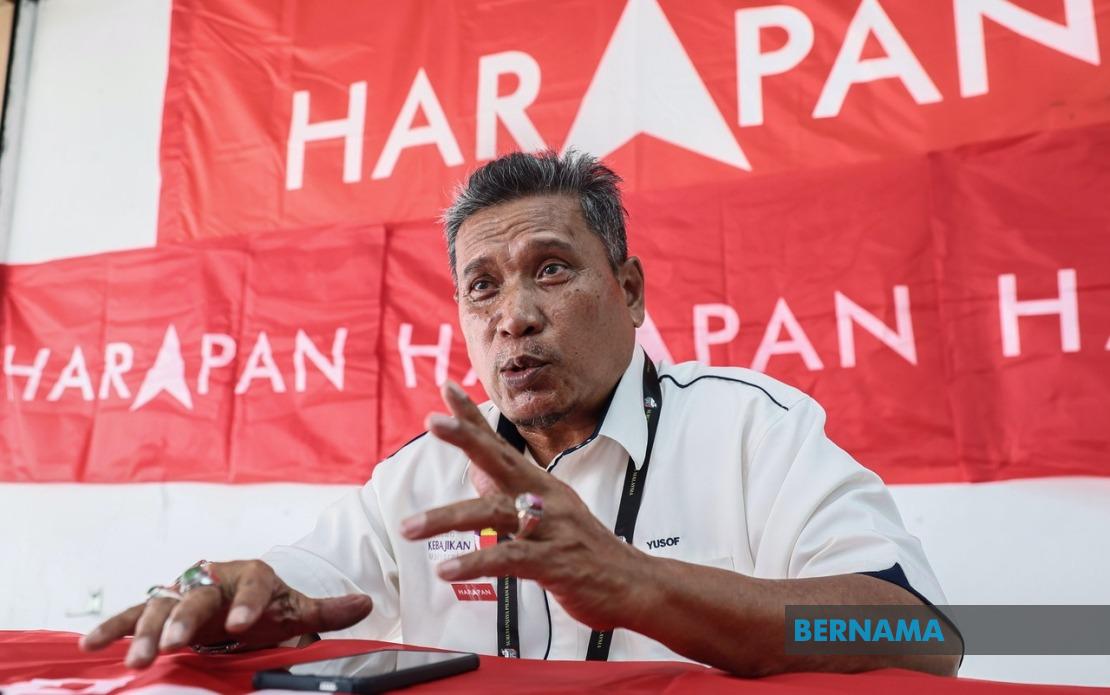
Md Yusof Dawam, the Pakatan Harapan candidate contesting the Tenggaroh state seat in the upcoming Johor election, has unveiled a comprehensive development roadmap targeting two critical concerns facing the Felda settler community: affordable housing for younger residents and economic diversification within established agricultural settlements. The 64-year-old retired educator believes these issues represent interconnected challenges that, if left unaddressed, risk undermining the long-term viability and social cohesion of Malaysia's pioneering federal land development schemes.
Central to Md Yusof's campaign messaging is the exodus of second-generation Felda residents to urban centres, a demographic shift driven primarily by the absence of affordable housing options within their home settlements. During his grassroots engagement across Tenggaroh, younger constituents have repeatedly highlighted their inability to establish independent households without leaving the district entirely, forcing them to either remain in family homes well into adulthood or abandon their ancestral lands. This migration pattern, according to Md Yusof, represents not merely a personal hardship but a structural vulnerability threatening the viability of family-managed oil palm operations that have sustained Felda communities for decades.
To tackle this housing crisis, Md Yusof proposes allocating between 10 and 20 acres within the Tenggaroh Felda scheme for a purpose-built second-generation settlement incorporating modern urban planning principles. Rather than treating this as a straightforward residential project, he frames the initiative as a strategy to retain human capital and productive assets within the settler community. By enabling younger residents to establish households locally, Md Yusof argues that family-owned plantations remain actively managed across generations rather than being neglected, subdivided, or transferred to external investors—a concern that has gained salience as some pioneering Felda schemes approach their demographic transition point.
Beyond housing, Md Yusof identifies retail sector stagnation as a secondary constraint limiting economic opportunity. The commercial landscape within Tenggaroh Felda has remained substantially unchanged since the 1980s, comprising basic shop lots that fail to attract modern enterprises or retain consumer spending within the settlement. His proposal involves introducing temporary land grants enabling entrepreneurs to construct contemporary retail premises, thereby catalysing a transition toward what he describes as a "small town" concept. The ambition here extends beyond mere commercial vibrancy; Md Yusof explicitly frames economic modernisation as a mechanism for retaining purchasing power within the Felda ecosystem rather than seeing residents travel 70 kilometres to Mersing for routine consumer needs and leisure activities.
The retail revitalisation component reflects broader concerns about Felda settlements' economic vulnerability in an era of agricultural diversification and rural-urban integration. Many established schemes, developed during Malaysia's mid-twentieth-century expansion of palm cultivation, were designed around agricultural production and basic subsistence commerce. Contemporary younger residents, however, expect access to modern retail amenities, food establishments, and services comparable to those available in nearby urban centres. By systematising commercial development within Tenggaroh itself, Md Yusof positions retail modernisation not as an ancillary benefit but as essential infrastructure supporting broader demographic retention objectives.
On the tourism front, Md Yusof highlights an underexploited economic opportunity centred on Mersing's island archipelago, particularly Pulau Besar, Pulau Tinggi, and Pulau Aur. These locations have proven attractive to international film production companies, yet the economic spillover to local youth remains minimal due to the absence of locally-owned tourism operators and maritime transport enterprises. He contends that younger residents lack meaningful participation in the tourism value chain, with most economic activity flowing to external service providers. By facilitating entrepreneurship in tourism-related sectors, Md Yusof envisions channelling island-based economic activity directly to local youth rather than allowing external stakeholders to capture the primary benefits.
Md Yusof's campaign strategy emphasises intimate community engagement over large-scale public events, reflecting his conviction that effective representation requires deep understanding of constituent aspirations and concerns. His four decades of residence in Mersing and 16 years teaching in Felda Nitar provide what he characterises as insider credibility within the settler community. Rather than imposing predetermined solutions, his approach involves conducting small-group discussions enabling residents to articulate their priorities directly, thereby grounding policy proposals in authentic community feedback rather than electoral calculus or bureaucratic assumptions.
This localist campaign methodology carries particular significance within Felda constituencies, where residents maintain distinctive social structures, economic dependencies, and governance preferences shaped by the settlement scheme's historical formation and ongoing management. Md Yusof's educational background and long-term community immersion position him as a figure familiar with the sector's institutional realities, policy architecture, and intergenerational dynamics—knowledge bases that external candidates may lack. His emphasis on personal rapport suggests recognition that Felda voters value substantive engagement with candidates possessing demonstrated commitment to settler welfare rather than merely partisan campaign rhetoric.
The Tenggaroh contest occurs within the broader context of the 16th Johor state election, which encompasses 56 seats and has attracted 172 candidates across competing political formations. Polling is scheduled for July 11, following early voting for security personnel on the preceding day. Within this competitive statewide environment, Md Yusof's campaign essentially argues that Tenggaroh's particular developmental needs—addressing housing crises, modernising retail infrastructure, and capturing tourism economic benefits—have been inadequately prioritised by incumbent representatives focused on broader state-level priorities.
The emphasis on second-generation housing resonates beyond Tenggaroh, reflecting a nationwide challenge within Felda settlements across peninsular Malaysia. Many schemes established during the 1960s and 1970s face demographic transitions as pioneer settlers age and their children require independent accommodation. Housing shortages have emerged as a persistent grievance in Felda constituencies, contributing to electoral volatility as residents seek representatives demonstrating concrete commitment to addressing the issue. Md Yusof's proposal, if technically feasible and politically viable, would establish a policy template potentially replicable across other settler communities experiencing similar pressures.
The retail modernisation and tourism development components similarly reflect development patterns observable across rural Malaysia, where geographic isolation from urban centres and limited private sector activity constrain economic opportunity for younger residents. Md Yusof's emphasis on maintaining economic activity within local communities addresses concerns about resource extraction dynamics whereby primary production or natural attractions generate revenues captured primarily by external stakeholders. By framing retail upgrading and tourism entrepreneurship as correctives to these patterns, he positions himself as advocating for endogenous development models prioritising local economic benefit retention.
Md Yusof's platform ultimately reflects nuanced understanding that contemporary Felda constituencies face development challenges qualitatively distinct from those addressed during the schemes' establishment phases. Housing pressures, retail sector modernisation, and tourism potential represent twenty-first century concerns requiring adaptive policy responses rather than application of settler-era frameworks. His candidacy thus represents a generational transition within Felda political discourse, from celebrating agricultural settlement achievements toward addressing contemporary constraints limiting settler prosperity and retaining younger residents within their ancestral communities.

