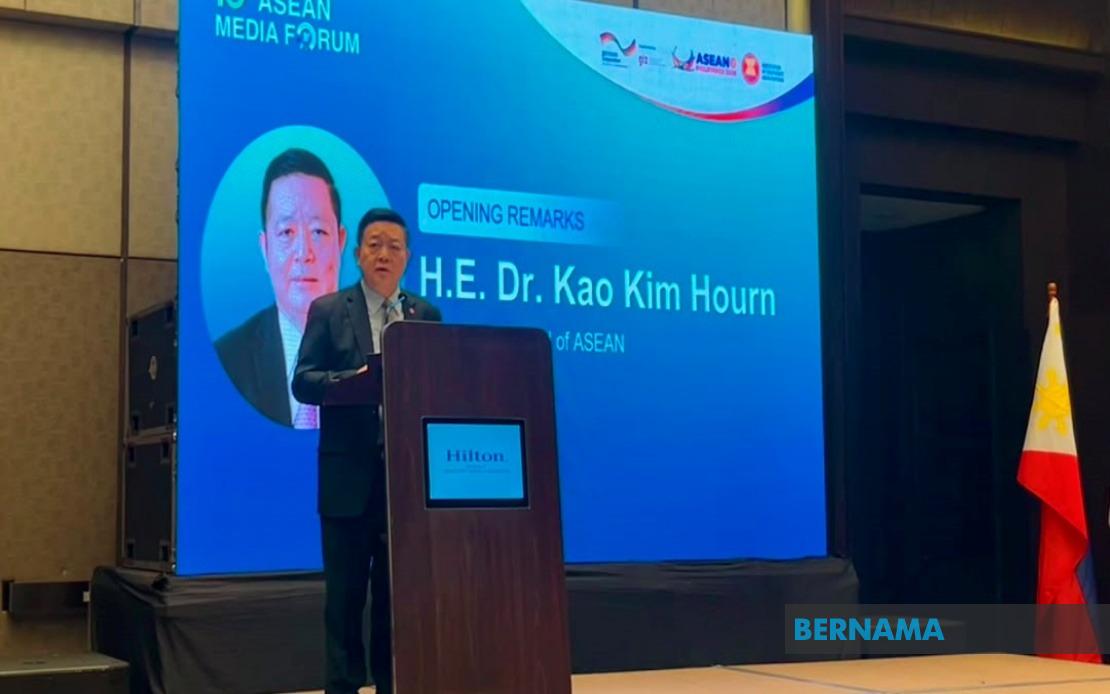
The media stands at the heart of Southeast Asia's ambitious regional integration project, according to ASEAN Secretary-General Dr Kao Kim Hourn, who delivered this message during the 10th ASEAN Media Forum in Manila this week. As the 10-member bloc charts its course towards the ASEAN Community Vision 2045, journalists and news organisations across the region face mounting responsibility to explain complex policy developments to ordinary citizens and foster a genuine sense of shared regional purpose that transcends national borders.
The context for this appeal could not be more urgent. The information landscape that journalists navigate has transformed dramatically over the past decade, fundamentally reshaping how news travels and how public opinion forms. Digital platforms and social media networks have democratised content distribution, enabling instantaneous global reach that was unimaginable in previous generations. Yet this same technological revolution has created unprecedented vulnerability to the spread of false narratives, deliberately misleading information and sophisticated manipulated content that crosses regional boundaries with ease. For policymakers attempting to build consensus around ASEAN's integration goals, this fragmented and often hostile information environment presents a formidable obstacle.
The emergence of generative artificial intelligence as a mainstream tool adds another layer of complexity to the challenge. These systems promise genuine efficiencies within newsrooms—faster content production, real-time multilingual reporting capacity and improved research capabilities that could strengthen coverage of ASEAN's ten member states. Yet the same technology enables the creation of deepfakes, synthetic media and content divorced from verifiable reality, multiplying the vectors through which misinformation can proliferate. The tension between AI's productive potential and its capacity for harm encapsulates a broader dilemma facing contemporary journalism across Southeast Asia.
Dr Kao emphasised that this technological environment places extraordinary weight on professional journalism standards. In an era when misinformation spreads faster than correction, and when synthetic content can replicate authenticity, the traditional journalistic virtues of verification, contextualisation and ethical practice become not merely desirable but essential to democratic function. Public credibility, once damaged, resists reconstruction, making a news organisation's reputation its most precious and simultaneously most fragile asset. For journalists across Malaysia, Indonesia, Thailand, Vietnam and their neighbouring countries, this reality demands constant vigilance and commitment to foundational principles that can sometimes feel at odds with the speed and scale demanded by modern digital platforms.
The Philippines, currently holding the ASEAN Chair, reinforced this perspective through Undersecretary for Foreign Affairs Leo M. Herrera-Lim, who positioned journalism as integral across all dimensions of the Vision 2045 framework. Rather than treating media as external observers documenting ASEAN's progress, the Philippines leadership envisions journalists as active participants in shaping the region's trajectory. This framing acknowledges that communication choices carry political weight—that the stories selected for coverage, the angles chosen for analysis and the voices elevated through reporting actively constitute regional identity rather than merely reflecting it. The three pillars of ASEAN's regional architecture—political and security matters, economic integration and socio-cultural development—all depend fundamentally on effective communication to succeed.
This expanded conception of journalism's role carries particular significance for Southeast Asian newsrooms grappling with resource constraints and market pressures. Malaysian media organisations, for instance, must balance commercial sustainability with deepened coverage of regional affairs that often receives less audience engagement than domestic political stories. The ASEAN Media Forum provides crucial space for editors and reporters to contemplate their responsibility to regional publics beyond immediate circulation or advertising returns. By convening journalists across the bloc annually, the forum creates opportunity for deliberate reflection on common professional challenges and shared commitments to coverage quality.
The geopolitical context surrounding this gathering deserves recognition as well. The Indo-Pacific region confronts intensifying great power competition, with China, the United States, India and others pursuing divergent strategic objectives. Within this contested environment, ASEAN's unity and independent voice depend heavily on effective internal communication and mutual understanding among member states. When misinformation or deliberately divisive narratives penetrate the regional conversation, they undermine the consensus-building processes that have historically enabled ASEAN to maintain relevance and autonomy. Credible journalism becomes, in this sense, a strategic asset for the region's stability and agency.
The ASEAN Media Forum itself represents an institutional evolution worth examining. First established in 2017 to mark the bloc's 50th anniversary, the platform has matured into a regular convening space where journalists, editors and government officials engage across traditional hierarchies. This regular dialogue creates channels for policymakers to explain their objectives while journalists develop deeper comprehension of regional initiatives. The forum's sponsorship by the German government through GIZ reflects broader international recognition that media development serves geopolitical interests beyond journalism itself—stable, informed public spheres support regional peace and predictable governance.
For Malaysian journalists and media organisations, the implications of this discussion extend into practical newsroom decisions. How much reporting capacity should be dedicated to ASEAN developments relative to domestic coverage? Which ASEAN stories merit explanation and contextualisation versus simple news reporting? How can newsrooms build expertise in regional affairs when audiences may not actively demand such coverage? These operational questions reflect the fundamental tension between commercial sustainability and public service that defines contemporary journalism everywhere. The ASEAN Media Forum exists partly to support journalists in resolving these tensions by demonstrating that regional coverage, properly executed, can serve both audiences and democratic function.
The challenge of synthetic media and deepfakes demands particular attention from Southeast Asian newsrooms developing their fact-checking and verification capabilities. While international news organisations have established sophisticated technical teams to identify manipulated content, many regional outlets lack comparable resources. Building regional capacity for rapid authentication of suspicious content—whether images, videos or audio—requires collaboration, shared technical standards and knowledge transfer across national media systems. The ASEAN forum provides venue for initiating such cooperation, establishing professional networks and agreeing on shared approaches to verification challenges.
Looking ahead toward Vision 2045, the media's role in ASEAN's future depends substantially on journalism's ability to demonstrate its continued value in an increasingly fractured information ecosystem. Public trust in media has eroded significantly across Southeast Asia in recent years, driven by concerns about ownership concentration, political capture and commercial incentives that reward sensationalism over accuracy. Journalists working within this context of diminished credibility bear responsibility for consistent demonstration that their profession serves citizens' need for reliable information rather than narrow partisan or commercial interests. The standards Dr Kao emphasised—verification, context, ethical practice—represent the pathway toward reconstructing this trust.
The convergence of ASEAN's integration ambitions with journalism's professional challenges creates both urgency and opportunity. The bloc's Vision 2045 cannot succeed without informed publics understanding regional developments, supporting cross-border cooperation and identifying with Southeast Asian identity alongside national attachments. Professional journalism grounded in verification and ethics provides the mechanism through which such understanding can develop. Yet journalism's capacity to fulfil this role depends on adequate resourcing, audience engagement and political space to operate independently. The ASEAN Media Forum's continued success in bringing regional journalists together to confront these challenges collectively offers some grounds for optimism about journalism's future contribution to the region's integration project.

