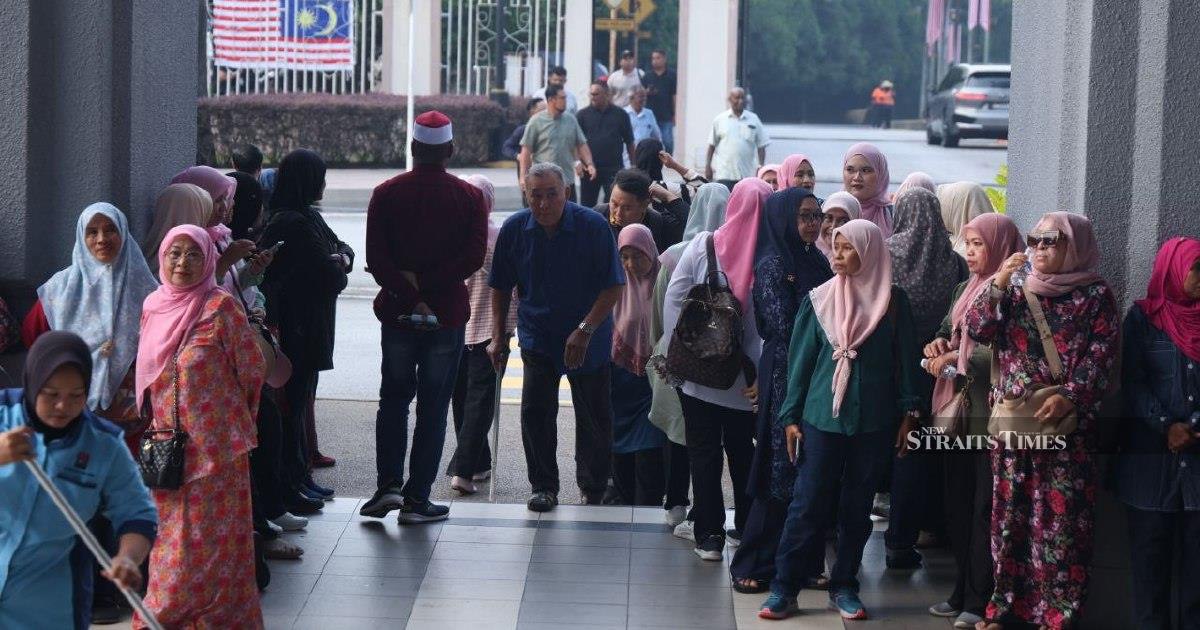
The Kuala Lumpur Court Complex became a focal point of intense media scrutiny on Tuesday as over three dozen news personnel assembled in anticipation of former Prime Minister Datuk Seri Ismail Sabri Yaakob's arrival for his scheduled court appearance and expected charging. The gathering underscored the considerable public and press interest in legal proceedings involving high-ranking Malaysian politicians, reflecting broader concerns about governance and accountability within the country's political establishment.
The presence of such substantial media representation at the court complex signals the high-profile nature of Ismail Sabri's case. The former prime minister, who led the nation from August 2021 to November 2022 during a tumultuous period of Malaysian politics, remains in the public consciousness as a controversial figure whose tenure witnessed significant political turbulence and numerous policy debates. His subsequent legal entanglement represents another chapter in Malaysia's complex relationship with holding political leaders accountable through the judicial system.
The assembly of media personnel reflects a pattern increasingly familiar in Malaysian courts, where proceedings involving prominent former government officials attract considerable journalistic attention. This heightened scrutiny serves multiple functions within Malaysia's democratic framework: it ensures public transparency, maintains pressure on the judicial system to uphold standards of impartiality, and provides citizens with timely information about how their institutions handle allegations against those who previously held executive power. The presence of over 30 practitioners demonstrates that this case transcends ordinary criminal proceedings.
For Malaysian and regional observers, Ismail Sabri's legal troubles contribute to a larger narrative about political accountability in Southeast Asia. The region has witnessed numerous instances of former leaders facing legal challenges following their departure from office, a pattern that speaks to both the complexities of power transitions and the varying capacities of judicial institutions to maintain independence. Malaysia's handling of such high-profile cases thus carries implications extending beyond the individual defendant to encompass broader questions about institutional strength and democratic maturity.
Ismail Sabri's brief premiership represented a stabilising force during an exceptionally volatile period in Malaysian governance. His appointment came shortly after the collapse of the Muhyiddin administration and preceded the subsequent return of Anwar Ibrahim to the prime ministerial office. This transitional role, while politically necessary at the time, has not shielded him from legal consequences, suggesting that Malaysia's courts operate with a degree of independence from political considerations. The expected charge therefore carries significance as a statement about how legal systems approach those previously entrusted with the nation's highest executive responsibilities.
The court proceeding itself forms part of a broader pattern affecting Malaysian political circles, where multiple senior figures have faced legal scrutiny in recent years. This trend reflects both genuine commitment to accountability mechanisms and the complex interplay between political rivalry and judicial process. Observers within the country and throughout the region monitor such proceedings closely for indications about the health of Malaysia's democratic institutions and the reliability of its legal frameworks in addressing alleged wrongdoing at the highest levels of government.
The gathering of journalists at the Court Complex also highlights the evolved role of media in contemporary Malaysian civic life. Rather than relying solely on official statements or court notifications, news organisations position representatives on-site to capture proceedings, document developments, and provide immediate reporting that reaches audiences through multiple platforms. This approach ensures that information flows rapidly to the public and maintains pressure on institutions to conduct proceedings with appropriate transparency and procedural fairness.
For Ismail Sabri personally, the court appearance marks a significant moment in what may prove to be a prolonged legal process. Former office-holders facing charges typically engage in proceedings spanning months or years, during which their public standing and personal circumstances may shift considerably. The initial charging represents merely the commencement of judicial engagement rather than its conclusion, meaning that developments unfolding within the court complex will likely generate sustained interest and commentary throughout Malaysia's legal establishment and political circles.
The regional dimension of this case merits consideration as well. Southeast Asian observers frequently examine how individual nations within the region handle accountability for former leaders, using such examples to assess broader patterns regarding institutional development and democratic consolidation. Malaysia's approach to prosecuting a former prime minister thus carries implications extending to neighbouring countries and contributes to regional discourse about governance standards and the relationship between political power and legal constraint.
Looking forward, how Malaysian courts manage Ismail Sabri's case will likely influence public perception regarding the country's commitment to impartial justice and institutional independence. The substantial media presence at the Court Complex reflected not merely curiosity but recognition that proceedings involving former prime ministers carry significance beyond individual legal outcomes. They constitute important moments within the life of democratic institutions, offering citizens and observers opportunities to assess whether those institutions function with genuine independence and whether accountability applies equally across hierarchies of political power.

