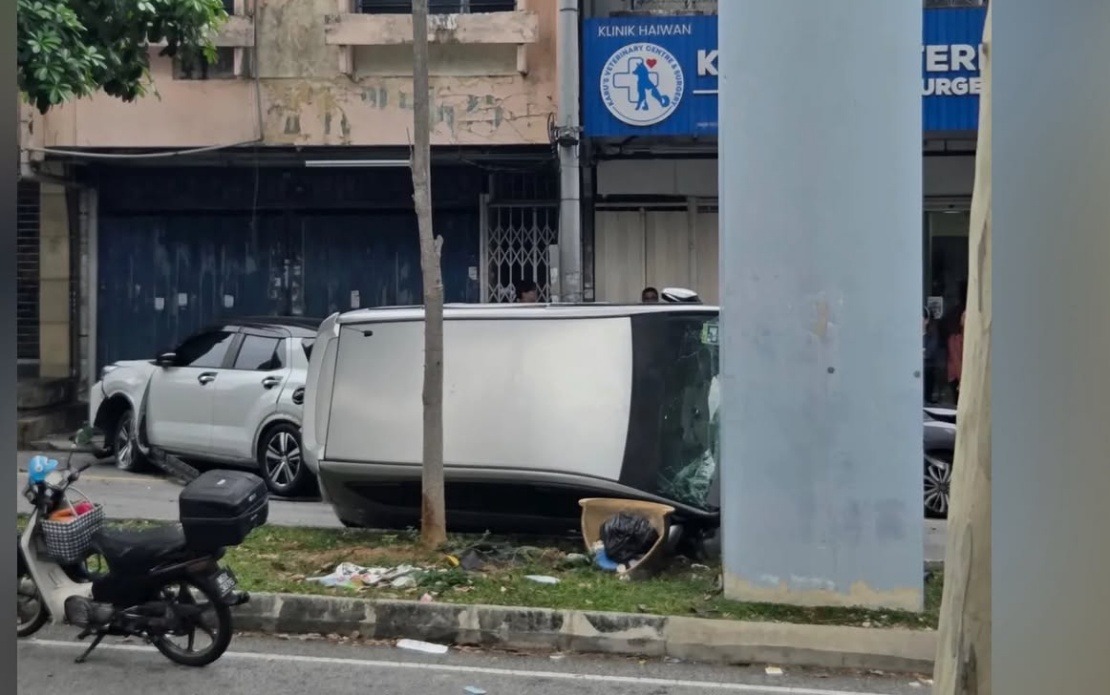
A routine morning commute turned chaotic in the Cheras neighbourhood when a 28-year-old motorist experienced a sudden medical emergency whilst driving, leading to a chain-reaction collision involving six parked vehicles along Jalan Midah 1. The incident, which unfolded around 8.30 am, has reignited concerns about the adequacy of medical screening protocols for drivers with chronic conditions in Malaysia, particularly seizure disorders that pose documented risks on the road.
The BMW 320i driver was en route from his residence to work at Taman Midah 1 when he suffered what police have classified as a seizure episode. According to Kuala Lumpur Traffic Investigation and Enforcement Department (JSPT) chief ACP Mohd Zamzuri Mohd Isa, the loss of consciousness or muscular control caused the vehicle to veer sharply off the roadway and strike six vehicles that had been parked on the left shoulder. The incident culminated in property damage across multiple vehicles, though the fortuitous absence of occupants in the parked cars prevented a potentially catastrophic outcome involving injuries.
What distinguishes this case from isolated traffic mishaps is the driver's documented medical history. Initial police investigations revealed that the 28-year-old had been experiencing seizures intermittently over the previous decade—a ten-year trajectory of a neurological condition that fundamentally impairs motor control and consciousness. This revelation raises substantive questions about Malaysia's vehicle licensing framework and whether current medical assessment criteria adequately screen drivers with such chronic conditions before or during licence renewal cycles.
The six vehicles damaged in the collision belonged to an eclectic mix of owners: four women aged between 29 and 43, one man aged 39, and a commercial vehicle assigned to a company. None of the vehicles were occupied at the time of impact, a circumstance that transformed what could have resulted in serious injury or loss of life into an incident confined to property damage. Whilst this outcome may be considered fortunate, it also underscores the unpredictability and danger posed when seizure-prone individuals operate motor vehicles on public roads frequented by residents and commuters.
Police conducted a breathalyser examination on the driver immediately following the incident, seeking to establish whether alcohol impairment contributed to the collision. The results proved negative, with a reading of 0 milligrammes per 100 millilitres of breath, effectively ruling out intoxication as a causative factor. This finding is significant because it corroborates eyewitness accounts and the driver's own recollection regarding the nature of the episode—a medical event rather than a driving error stemming from intoxication or recklessness.
The traffic authorities have categorised the case under Rule 10 of LN 166/59, a regulatory provision within Malaysia's Road Traffic Rules that addresses accidents resulting from mechanical failure or medical incapacity. This classification reflects police recognition that culpability in this instance derives from a medical condition rather than deliberate misconduct. Investigations remain ongoing, with police appealing for witnesses or members of the public who observed the incident or have pertinent information to contact the Tun H.S. Lee traffic police station at 03-2071 9999 or nearby police facilities.
The incident illustrates a persistent gap in Malaysia's approach to driver fitness assessments. Whilst regulations require initial medical certification before licence issuance, ongoing monitoring of drivers with chronic conditions—particularly neurological disorders affecting consciousness and motor control—remains inconsistently implemented. Many drivers with seizure histories may operate vehicles legally provided they have not been formally disqualified, creating a scenario where individuals with documented medical vulnerabilities navigate traffic alongside unaware motorists and pedestrians.
From a public safety perspective, the Cheras collision exemplifies why regional traffic authorities across Southeast Asia have begun tightening medical screening standards. Countries including Singapore and Thailand have progressively restricted or revoked driving privileges for individuals with uncontrolled seizure disorders, recognising that the risk to road users substantially outweighs individual convenience. Malaysia's relatively permissive stance—allowing drivers with seizure histories to continue operating vehicles—reflects a tension between personal autonomy and collective road safety.
The absence of injuries in this instance should not obscure the genuine hazard posed by seizure-prone drivers. Had the collision occurred during afternoon peak traffic with pedestrians crossing nearby, or had occupied vehicles been struck, the outcome would have been dramatically different. Medical episodes do not discriminate between time of day or traffic density; they occur without warning, transforming the driver into an uncontrolled projectile capable of causing serious harm.
For vehicle owners whose cars were struck, the incident represents an unexpected and frustrating inconvenience necessitating insurance claims, vehicle assessments, and repair arrangements. Several of the damaged vehicles belonged to female residents of the Midah neighbourhood, individuals who had no means of anticipating or preventing the collision whilst their cars sat parked outside their homes or workplaces.
The broader implications warrant attention from Malaysia's Ministry of Transport and the Road Safety Institute. Policy discussions regarding mandatory seizure management certification, periodic medical reassessment for drivers with chronic neurological conditions, and public awareness campaigns about reporting unsafe drivers could substantially reduce incidents of this nature. Insurance industry data increasingly demonstrates that drivers with unmanaged or inadequately controlled seizure disorders represent a disproportionate share of preventable traffic accidents.
Police have not yet disclosed whether the driver will face charges or face restrictions on his driving privileges pending investigation completion. The decision will likely hinge on medical documentation regarding the seizure's classification, whether the condition was actively managed, and whether the driver had disclosed the medical history to licensing authorities. Such details will determine whether this remains classified as a tragic accident stemming from medical misfortune or evolves into a regulatory case highlighting systemic deficiencies in driver fitness assessment.

