Policymakers throughout the Mekong subregion are escalating cross-border coordination to forestall a repeat of the devastating transboundary haze episodes that have periodically blanketed Southeast Asia in recent decades. The urgency stems from a convergence of climatic pressures: abnormally high temperatures are being recorded across major urban centres from Bangkok to Ho Chi Minh City, while meteorologists warn that El Niño weather patterns may intensify further, creating ideal conditions for widespread forest and peatland ignitions that know no political boundaries.
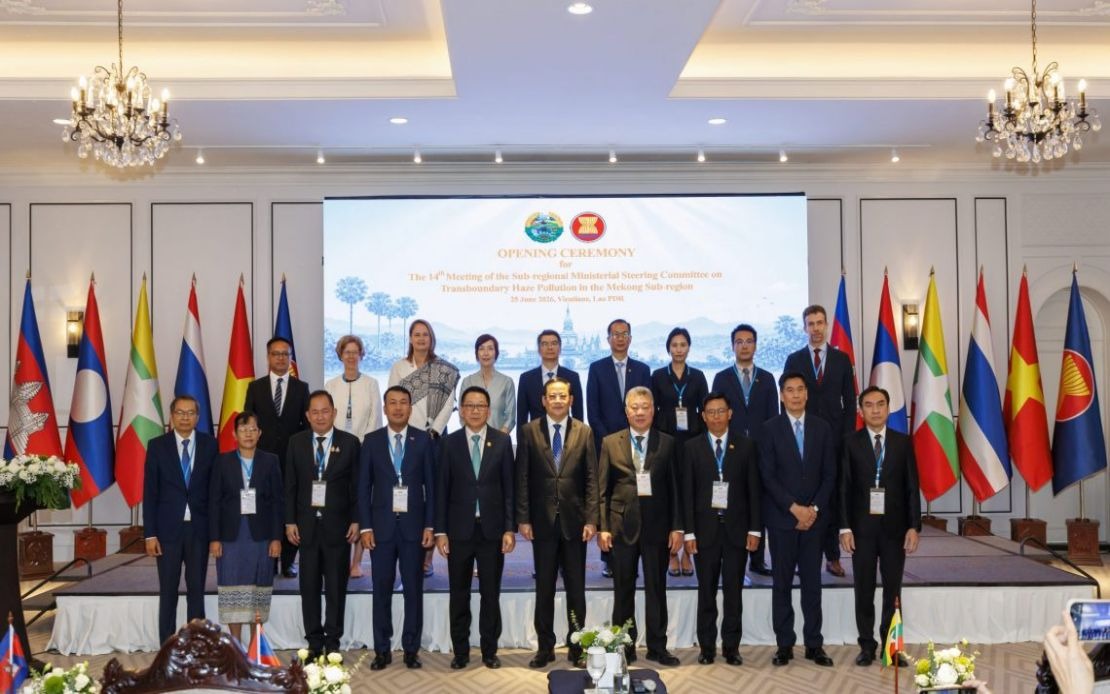
The growing alarm prompted regional governments to convene the 14th Meeting of the Sub-Regional Ministerial Steering Committee on Transboundary Haze Pollution in the Mekong Sub-Region on June 25 in Vientiane, Laos. At this gathering, Lao Prime Minister Sonexay Siphandone articulated the scale of the challenge confronting the Greater Mekong Subregion, characterising forest fires and resulting air pollution as existential threats that have already inflicted substantial losses across multiple sectors. The biodiversity implications alone are severe, he cautioned, but the damage extends into human health and the broader economic fabric of the subregion.
Data presented at the ministerial meeting illustrated the worsening trend. Between December 2025 and May 2026, fire hotspot detection increased by approximately eight per cent relative to the corresponding period the previous year — a clear indication that suppression efforts have not kept pace with escalating ignition risks. This trajectory is particularly alarming given that the region is supposedly entering its monsoon season, a period traditionally associated with greater moisture and reduced fire probability.
The paradox of intense heat persisting despite seasonal rainfall patterns underscores the influence of climate change and El Niño dynamics on regional weather systems. Ho Chi Minh City residents have endured an unusual combination of heavy rains and extreme temperatures simultaneously, while Bangkok has suffered from acute, unrelenting heat that has strained urban infrastructure and public services. Meteorological experts attribute these anomalies directly to disrupted climate patterns and the latent influence of El Niño conditions, which can suppress or redirect monsoon moisture.
The Lao Ministry of Agriculture and Environment has issued explicit warnings about potential El Niño impacts during the rainy season ahead. Their projections suggest that certain areas of the Mekong region could experience temperatures reaching 35 to 38 degrees Celsius accompanied by erratic precipitation patterns. This combination creates dual hazards: while some zones face intense heat and desiccation, others may experience irregular downpours interspersed with prolonged dry spells. Water bodies are expected to decline in several regions, exacerbating conditions for drought, agricultural stress, and elevated wildfire vulnerability.
The cascading consequences of such scenarios would be severe. Drought conditions threaten food security across farming communities reliant on consistent water availability for crops and livestock. Forest fires, once ignited during dry periods, spread rapidly across peatlands and tropical forests, generating the smoke and particulates that constitute transboundary haze. This pollution does not respect national borders; winds carry aerosols hundreds of kilometres, affecting populations in countries that may have contributed nothing to the fires themselves. Malaysia, with its position downwind of Indonesian and Thai wildfire zones during certain seasons, understands this vulnerability acutely.
Recognising the inefficacy of unilateral action, ASEAN member states represented at the Vientiane meeting pledged coordinated efforts to reduce fire hotspot density and suppress transboundary haze pollution, particularly during the approaching dry season. Such pledges require concrete mechanisms: enhanced cross-border monitoring systems, rapid-response firefighting teams, agricultural practices that reduce fuel loads, and enforcement of land-use regulations that prevent conversion of forests to fire-prone plantations. Implementation challenges remain formidable, however, particularly in remote border regions where state capacity is limited and economic pressures drive land conversion.
Weather scientists have further elevated concern levels by cautioning that a possible Super El Niño event — an exceptionally powerful iteration of the phenomenon — may develop during the current year. A Super El Niño would amplify temperature anomalies and moisture disruptions far beyond typical El Niño episodes, potentially creating unprecedented fire conditions across the Mekong basin. The prospect has prompted meteorological agencies throughout Southeast Asia to enhance monitoring and forecasting capabilities.
For Malaysia and other ASEAN nations, the implications are multifaceted. Beyond the immediate health impacts of inhaling haze — respiratory illnesses, eye irritation, and exacerbation of chronic conditions — transboundary smoke affects visibility, disrupts aviation, imposes costs on healthcare systems, and damages ecosystems. Agricultural output may suffer if pollen and ash contaminate crops, while tourism dependent on clear skies and clean air faces revenue uncertainty. Regional economic integration means that supply chain disruptions in one country ripple across the entire subregion.
The ministerial committee's focus on the dry season represents pragmatic prioritisation, since this period historically witnesses the greatest fire activity. However, climate change is rendering traditional seasonal patterns increasingly unpredictable, necessitating year-round vigilance. Enhanced early-warning systems that integrate satellite data, ground-based fire detection networks, and meteorological forecasting can provide crucial advance notice, enabling authorities to pre-position resources and issue public health advisories.
Crucially, transboundary haze prevention requires addressing underlying drivers: land-use policies that incentivise forest conservation over conversion, agricultural techniques that sequester carbon and resist burning, and economic frameworks that price environmental degradation. Without tackling these structural issues, ministerial pledges and coordinated responses, while essential, remain reactive rather than transformative.
The gathering in Vientiane, though representing a commitment to intensified cooperation, also highlights the limits of regional coordination when global climate patterns increasingly dominate local weather systems. As El Niño influences strengthen and urban heat islands expand across the Mekong's cities, governments face the sobering reality that preventing transboundary haze requires not only subregional coordination but also meaningful global climate action to stabilise the underlying atmospheric conditions driving these destructive cycles.

