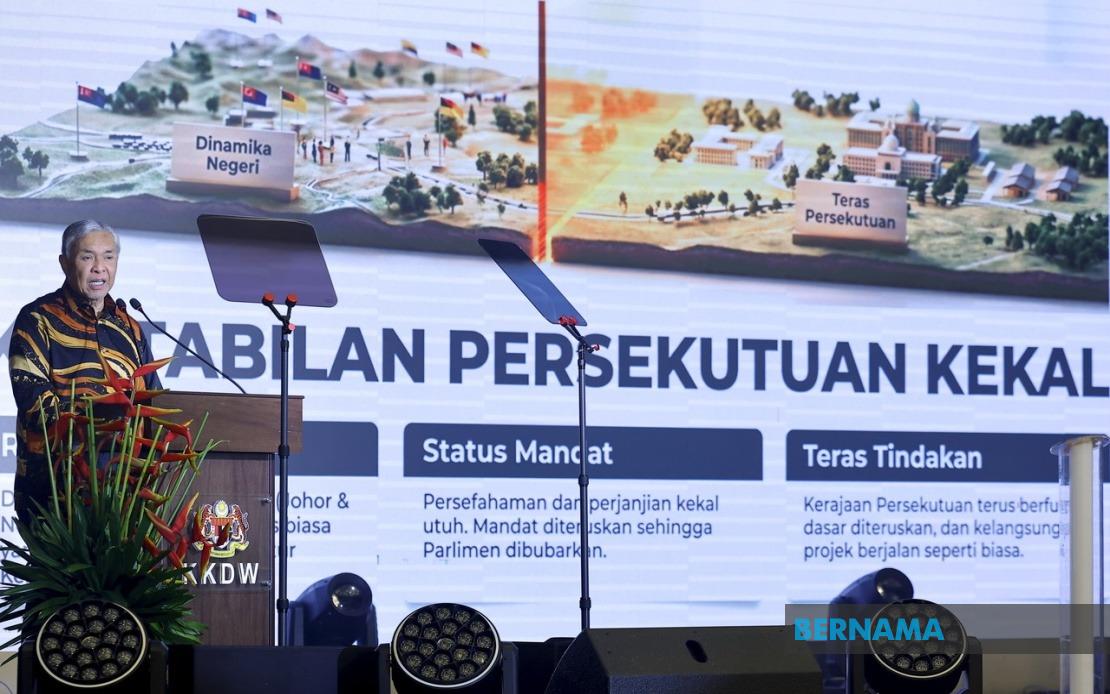
Barisan Nasional's Melaka chapter has formally announced its intention to capture every one of the 21 state assembly seats it presently occupies when voters go to the polls for the 16th state election. The ambitious sweep targets come as BN chairman Datuk Seri Dr Ahmad Zahid Hamidi confirmed that Melaka Chief Minister Datuk Seri Ab Rauf Yusoh, who simultaneously holds the reins of the state BN apparatus, has communicated this objective to the federal leadership in no uncertain terms.
At the Rural and Regional Development Ministry's monthly gathering in Putrajaya on August 6, Ahmad Zahid elaborated on the coalition's strategic positioning. The chief minister's resolve to maintain Melaka's current composition represents a significant statement of confidence in BN's popularity and organisational capacity within the state, which has witnessed considerable political volatility in recent years. This determination signals that the state party machinery views its incumbent position as defensible across all constituencies, rather than identifying specific seats as particularly vulnerable to challenge.
However, Ahmad Zahid's remarks introduced an important caveat that reflects the pragmatic realities of contemporary Malaysian coalition politics. While Melaka BN pursues this maximalist territorial goal, the coalition has signalled its readiness to engage in negotiations with allied parties regarding seat distribution and electoral cooperation. This flexibility represents standard practice within BN's broader ecosystem, where component parties have historically negotiated power-sharing arrangements prior to state and federal elections.
The coalition chief indicated that any potential understandings with other parties would require formal ratification from BN's apex decision-making apparatus rather than being finalised unilaterally by state-level leaders. This hierarchical approval structure ensures that any electoral pacts align with the national coalition's strategic interests and does not undermine negotiations happening simultaneously in other states or at the federal level. The chief minister's openness to discussions, therefore, operates within defined parameters set by central leadership rather than representing a blank cheque for local accommodation.
Melaka's electoral landscape provides important context for understanding these ambitions. The state has experienced significant political turbulence since 2018, including changes in administration and shifting alliances between major political blocs. BN's current grip on all 21 seats reflects its recovery from the losses it suffered in the 2018 general election when the coalition's decades-long dominance faced unprecedented challenges. The state's ability to serve as a BN stronghold once again underscores the coalition's revival in certain regions and suggests that the party has successfully rebuilt its grassroots organisation and voter appeal in Melaka.
The timing of this announcement matters considerably within Malaysia's broader political calendar. With several state elections anticipated across the federation in coming months, each state's positioning influences national narrative momentum and resource allocation. Melaka's high-profile declaration of intent to defend comprehensively across all seats sends a signal to other BN state chapters about coalition confidence and expected performance standards. Conversely, it sets expectations among voters and opposition parties about the competitiveness of Melaka's electoral contest.
Opposition parties will likely scrutinise BN's seat-by-seat viability claims and identify constituencies where they perceive genuine opportunities for breakthroughs. The comprehensive nature of BN's defensive ambition suggests the coalition views no seat as truly safe for rivals, yet electoral mathematics rarely validate such blanket assessments. Opposition formations, particularly Pakatan Harapan and other groupings, will deploy their resources strategically against constituencies where demographic trends, incumbent performance, or local grievances suggest receptiveness to change.
Melaka's position as a relatively compact state with significant urban and rural constituencies creates distinct competitive dynamics. The state's economy depends substantially on manufacturing, tourism, and small and medium enterprises, sectors vulnerable to macroeconomic fluctuations and policy changes. Bread-and-butter issues affecting these communities will likely form central battlegrounds across all constituencies, and whichever coalition addresses these concerns more convincingly will harvest electoral dividends regardless of current seat occupancy.
For Malaysian observers, Melaka's electoral contest carries implications extending beyond the state itself. The state serves as a bellwether for broader coalition performance and voter sentiment regarding economic management and governance quality. If BN successfully defends its comprehensive position, it would reinforce narratives about coalition resurgence and provide momentum for federal-level political manoeuvring. Conversely, if opposition formations breach significant numbers of seats, it would suggest lingering voter reservations about BN despite recent polling suggestions of improvement.
The statement from Ahmad Zahid also illustrates how Malaysian coalitions balance internal ambition with external flexibility. Public declarations of absolute territorial conquest serve domestic political purposes by energising party members and projecting confidence, yet private willingness to negotiate with partners demonstrates political maturity and recognition that electoral outcomes involve numerous variables beyond single-party control. This duality has characterised Malaysian politics for decades and remains evident in how BN approaches the Melaka contest.
As the state election date draws closer, the actual distribution of candidates and resource allocation will reveal whether BN's stated commitment to defending all seats translates into concrete campaign investments or represents more aspirational positioning. The density of party machinery activation, candidate quality, and on-ground organising will ultimately determine whether the 21-seat ambition becomes reality or whether opposition forces capitalize on any vulnerabilities that extended defensive commitments might create.

