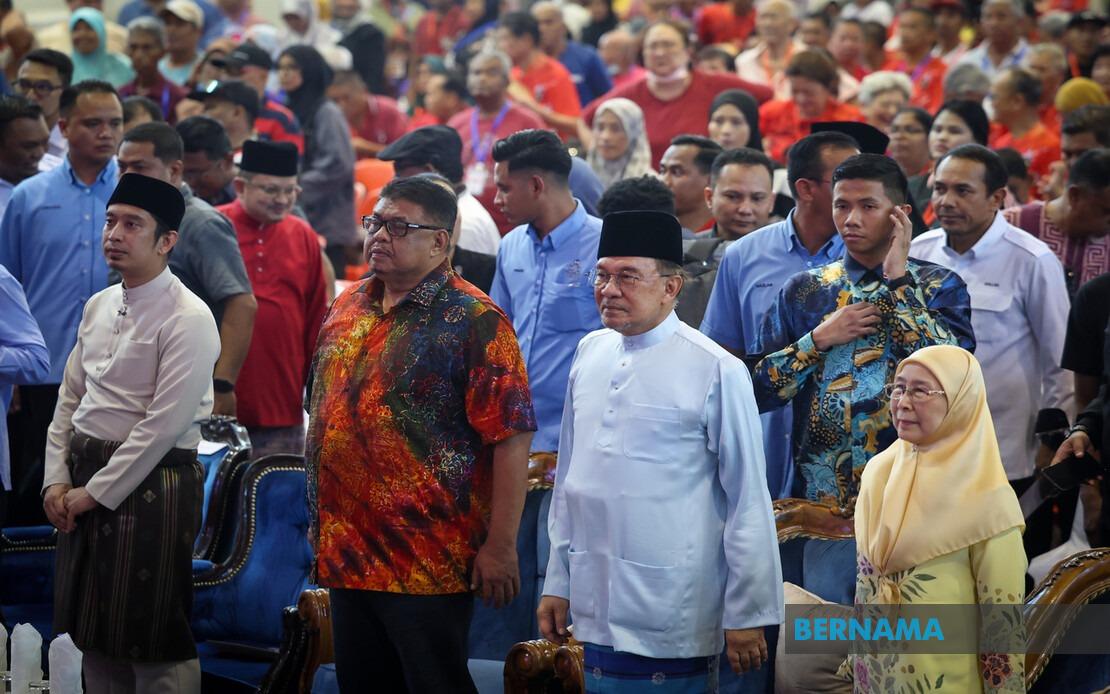
Melaka is positioning itself as a leader in environmental management, leveraging legal frameworks, technological innovation and strategic planning to transform how the state preserves and develops its natural heritage. Chief Minister Datuk Seri Ab Rauf Yusoh outlined the strategy during the National Landscape Day 2026 celebration, highlighting a multi-faceted approach that combines conservation with community engagement and economic development.
At the foundation of Melaka's landscape strategy lies enforcement of the Tree Preservation Order under the Town and Country Planning Act 1976, a legal instrument designed to protect valuable trees that define the state's visual and ecological character. This regulatory approach represents a shift in how Malaysian states manage urban and rural greenery, moving beyond ad-hoc conservation efforts toward systematic protection of botanical heritage. The mechanism allows authorities to control tree felling and modification, ensuring that development proceeds without destroying the natural assets that contribute to Melaka's identity and livability.
Building on this legal framework, the state introduced the Melaka State Landscape Guidelines in 2022, establishing comprehensive standards for how implementing agencies, local authorities, developers and other stakeholders should approach landscape projects. These guidelines function as a shared playbook, ensuring consistency across the state and raising expectations for how development integrates environmental considerations. By setting expectations upfront, the guidelines reduce conflicts between conservation and progress while ensuring that new projects enhance rather than diminish the landscape.
The technological dimension of Melaka's approach distinguishes it within the Malaysian context. The MyTrees@Melaka system, developed beginning in 2017, transforms tree management from a largely manual, decentralised process into a digitised, integrated operation. To date, the system has compiled 70,753 tree inventory records through collaboration among the four local authorities and the Melaka Forestry Department. This comprehensive database enables evidence-based decision-making about which trees to preserve, where to plant new ones, and how to allocate maintenance resources effectively. For a state managing thousands of trees across urban and rural areas, such systematic tracking translates into more reliable preservation and more strategic expansion of the canopy.
The practical results of these efforts are visible in planting initiatives. As of June, Melaka had successfully established 10,588 new trees throughout the state, each recorded and monitored within the digital system. This data-driven approach contrasts with earlier models where trees were planted without comprehensive follow-up, leading to high mortality rates and wasted resources. By ensuring that every planted tree is tracked and maintained based on recorded data, Melaka aims to achieve higher survival rates and more sustainable urban and rural greening.
Beyond tree management, the state is pursuing a broader environmental vision through the Aspiring Melaka Geopark initiative, which seeks to connect geological heritage, biodiversity, cultural assets and local identity. This framework recognises that sustainable landscape development encompasses more than trees alone; it involves integrating diverse natural and cultural elements into a coherent whole. The geopark concept positions Melaka's landscape as an educational and tourism resource, generating economic value for communities while incentivising conservation. When landscapes become economically valuable through sustainable tourism and education, stakeholders have stronger motivation to preserve them.
Three major landscape projects implemented in 2025 illustrate how these principles translate into tangible changes. The SDG Park @ Sungai Melaka, Kampung Felda Air Kangkung Recreation Park and Taman Kejiranan Pulai Indah represent investments in public spaces that serve both environmental and social functions. Rather than simply planting trees or creating manicured gardens, these projects aim to generate community spaces that residents use regularly, directly improving quality of life while strengthening connection to the natural environment.
The state is intensifying this momentum through three additional MADANI Recreational Park projects scheduled for implementation, including upgrades to the Dataran Sejarah Ayer Keroh landscape, the Ayer Keroh Art Lanai and the Bukit Beringin Masjid Tanah MADANI Recreational Park. These initiatives signal a sustained commitment rather than a one-off effort, with resources allocated across consecutive years to build momentum. The framing of these projects emphasises that progress encompasses more than construction and economic metrics; it includes ecosystem preservation and enhancement of public wellbeing. This messaging is significant in the Malaysian context, where development pressures often override environmental considerations in policy discussions.
The National Landscape Day 2026 celebration itself demonstrated the breadth of stakeholder engagement underlying Melaka's approach. Nearly 3,000 participants attended the four-day event, including landscape architecture professionals, local authority representatives, industry players, academics and landscape enthusiasts. The gathering featured 12 local authority pavilions showcasing creativity and distinctive landscape identities, creating space for knowledge exchange and demonstration of best practices. Such platforms strengthen professional networks and encourage healthy competition among local authorities to excel in landscape management.
Melaka's comprehensive strategy offers insights relevant to other Malaysian states and cities grappling with rapid urbanisation and environmental pressures. The combination of legal protections, comprehensive guidelines, digital systems and strategic investments in public green space represents an integrated model rather than isolated initiatives. By anchoring landscape management in data and embedding it within broader development planning, Melaka demonstrates how environmental stewardship can proceed alongside economic growth. The state's emphasis on community engagement and public space creation addresses a critical gap in many Malaysian development projects, which often prioritise infrastructure over livability.
Looking forward, the sustainability of these efforts depends on sustained political commitment and adequate funding. Melaka's approach requires ongoing investment in technology, training for local authority staff, and maintenance of green spaces. However, the state's track record and the presence of Prime Minister Datuk Seri Anwar Ibrahim and Housing and Local Government Minister Nga Kor Ming at the National Landscape Day event suggest that the initiative enjoys high-level support. This backing creates conditions for the state to maintain momentum and potentially inspire comparable efforts across the region, establishing a model for how Malaysian states can integrate environmental management into broader development visions.

