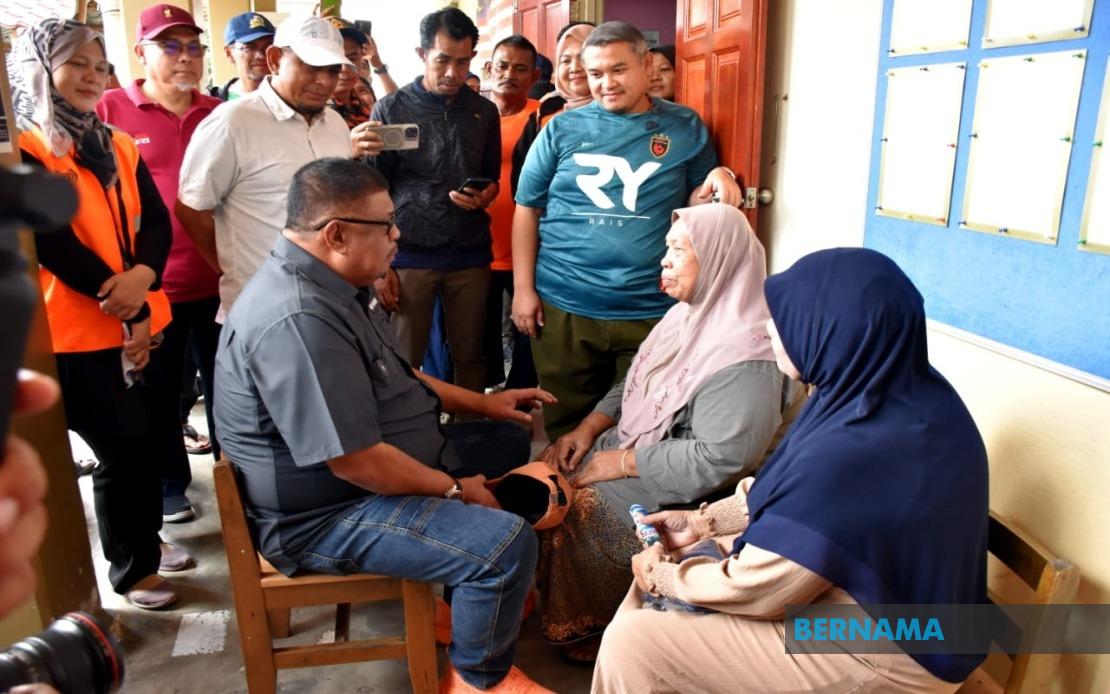
Melaka Chief Minister Datuk Seri Ab Rauf Yusoh has pledged decisive action to address the chronic flooding that has blighted Tanjung Minyak for over three decades, vowing to implement comprehensive solutions after recent downpours displaced nearly 1,000 residents across the state. His commitment came during a visit to evacuees sheltering at Sekolah Kebangsaan Tanjung Minyak 2, where he outlined plans to systematically evaluate all available proposals from government agencies and technical experts to identify sustainable remedies for the water-prone locality.
The latest deluge represents a watershed moment for the long-suffering community. Authorities recorded rainfall surpassing 100 millimetres in both Melaka Tengah and Alor Gajah districts by mid-afternoon, marking levels that exceeded even the precipitation during Tropical Storm Senyar last year. This exceptional weather overwhelmed the area's drainage infrastructure, with water retention systems buckling under the load and spilling into residential zones. The scale of displacement underscores the vulnerability of local drainage systems when confronted with meteorological extremes that have become increasingly frequent in Malaysian states.
The Chief Minister's statement revealed that approximately 900 evacuees from roughly 300 households are currently accommodated across multiple relief shelters throughout Melaka. He stressed that state authorities will maintain welfare provision and support services until residents can safely return to their homes. This commitment acknowledges the genuine hardship endured by communities that have endured repeated inundation, with many families having experienced multiple flooding episodes throughout the three-decade cycle of destruction and recovery.
Official responses have been mobilised across multiple government tiers to address immediate humanitarian needs. The District Office is coordinating aid distribution with the state government serving as the central clearing house for assistance. All relevant drainage, irrigation, and disaster management agencies have been instructed to maintain heightened readiness to respond rapidly when flooding occurs. State Senior Housing, Local Government, Drainage, Climate Change and Disaster Management Committee chairman Datuk Rais Yasin accompanied the Chief Minister during his site visit, signalling the cabinet-level priority assigned to resolving the crisis.
The three-decade history of persistent flooding in Tanjung Minyak reflects systemic failures in urban water management planning that extend beyond single weather events. Climate scientists increasingly warn that Malaysian regions face intensifying rainfall patterns as global warming accelerates atmospheric moisture cycling. Communities in Melaka and neighbouring Johor have become inadvertent laboratories for understanding how inadequate infrastructure buckles when meteorological systems deposit record-breaking quantities of precipitation. The fact that this month's rainfall exceeded conditions seen in the previous 20-plus years suggests the previous design parameters for drainage systems are becoming obsolete.
The Technical Director of Melaka Irrigation and Drainage Department Mohd Adnan Ahmad Fauzi previously identified excessive precipitation in Melaka Tengah and Alor Gajah as principal causes of recent flooding, noting that cumulative readings broke two decades of historical records. This technical assessment frames the challenge not as administrative negligence but as a fundamental mismatch between existing hydraulic infrastructure and the meteorological realities now confronting Malaysian urban areas. The implications extend far beyond Tanjung Minyak, as similar drainage systems throughout the peninsula face analogous pressures.
The Chief Minister's pledge to conduct comprehensive reviews of all proposals from relevant agencies suggests a deliberate move toward evidence-based decision-making rather than ad-hoc responses. Such systematic evaluation could yield insights into whether Tanjung Minyak's persistent flooding stems from poor initial drainage design, inadequate maintenance, or upstream land-use changes that have modified water flow patterns. Distinguishing between these causes matters enormously, as solutions for design failures differ fundamentally from remedies targeting maintenance deficits or upstream watershed management.
Sustainable flooding solutions in tropical Malaysian contexts typically involve multi-faceted approaches combining improved drainage infrastructure, upstream water retention strategies, improved urban planning to restrict development in flood-prone zones, and green infrastructure incorporating natural water absorption through vegetation and permeable surfaces. Some Malaysian municipalities have experimented with advanced stormwater management systems, retention ponds, and naturalised wetlands designed to temporarily store excess rainfall while allowing gradual seepage into aquifers. Whether Tanjung Minyak will benefit from such modern approaches remains contingent on whether authorities allocate sufficient budgetary resources and political will.
The timing of the Chief Minister's intervention reflects growing public impatience with recurring disasters that disable communities for extended periods and exact substantial economic costs through property damage, business interruption, and health impacts. Three decades of unresolved flooding represents a governance failure that erodes public confidence in state institutions. Communities subjected to repeated inundation reasonably expect authorities to treat such crises as matters demanding priority resource allocation and technical expertise, not perpetual bureaucratic reviews yielding incremental adjustments.
Looking forward, the critical test will be whether official statements translate into concrete infrastructure improvements with defined timelines and budgets. Malaysians have witnessed numerous political pledges on flood management that subsequently evaporated without tangible outcomes. Scepticism among Tanjung Minyak residents regarding recovery promises appears justified given three decades of unfulfilled expectations. The Chief Minister's commitment will gain credibility only when state authorities announce specific projects, allocate measurable resources, and demonstrate measurable progress in reducing flood frequency and severity.
The situation in Tanjung Minyak also illuminates broader questions about how Malaysia adapts infrastructure systems to climate realities. If rainfall records continue breaking, engineering standards conceived during previous climatic regimes will require wholesale replacement. This represents an expensive undertaking potentially affecting infrastructure budgets across multiple sectors simultaneously. State and federal authorities must grapple with whether current funding mechanisms adequately accommodate the costs of climate adaptation, or whether existing fiscal frameworks leave communities vulnerable to increasingly severe weather impacts.

