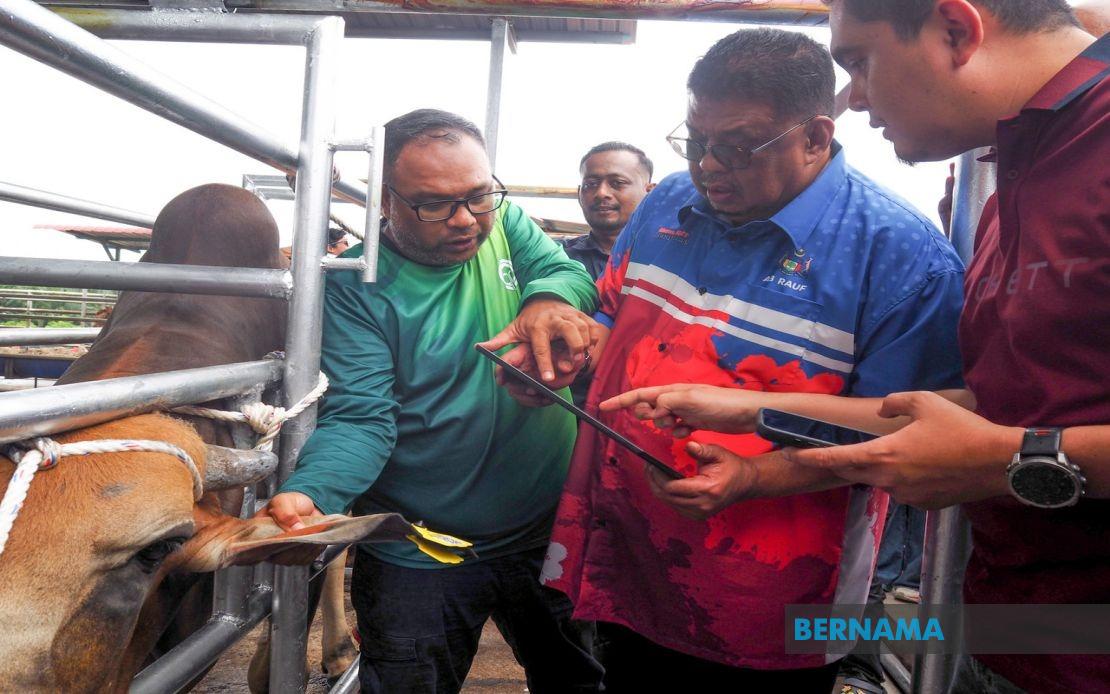
Melaka's state government has taken a significant step towards modernising its agricultural sector by introducing a QR code tagging system designed to overhaul how livestock are monitored and managed across the state. The initiative, unveiled in collaboration with the Melaka Veterinary Services Department, represents part of a broader digitalisation push to address longstanding challenges posed by stray animals and livestock-related accidents that have plagued communities and roadways.
Mahathir Mustafa, chief assistant secretary of the Local Government Unit under the Chief Minister's Department, explained that the system emerged from an idea proposed by Chief Minister Datuk Seri Ab Rauf Yusoh. By embedding unique QR codes and identification numbers into physical tags affixed to each animal, the programme transforms livestock management from a traditionally paper-based process into a smart, smartphone-accessible database. When authorities encounter an animal or need to respond to an incident, a simple scan instantly reveals the breeder's name, premises identification, and farm location—eliminating delays and confusion that previously hampered enforcement efforts.
The timing of this rollout underscores a genuine problem facing the state. Since 2023, Melaka has recorded 835 accidents specifically involving livestock and fielded more than 50 formal complaints regarding stray animals causing public disturbances or safety hazards. These figures highlight how the absence of systematic identification has made it difficult for authorities to swiftly locate and hold owners accountable. The QR system directly addresses this gap by enabling rapid owner identification at the point of incident, fundamentally shifting the accountability burden onto livestock keepers to maintain control of their animals.
By early June this year, authorities had already tagged 2,000 livestock units, establishing proof of concept for wider adoption. The state government's target is ambitious: to eventually register the entire cattle and buffalo population across Melaka, estimated at over 32,000 head. This phased expansion approach allows for operational refinement and community engagement before full-scale implementation. The deliberate pace also gives breeders time to understand and accept the system, which appears to be working—Mahathir noted that farmers have responded positively, viewing the digital trail as protective of their own interests and beneficial to the livestock industry's reputation.
A crucial technical feature distinguishes this system from simpler identification methods. Each tag remains permanently affixed to the animal throughout its lifetime, serving as the official identity document even if ownership changes hands. Rather than requiring physical tag replacement during transfers, new owners simply update their information in the eVetPermit Malaysia system, a centralised digital registry. This design minimises administrative burden while maintaining accuracy in ownership records—a particular advantage in sectors where animals are routinely bought and sold.
The monitoring capabilities extend beyond mere identification. The system enables authorities to track livestock movement patterns, facilitating disease surveillance and control measures critical to protecting both animal and public health. During outbreaks or suspected contamination events, digital records allow veterinary officials to trace animal movements and identify potentially affected premises with precision impossible under manual record-keeping. This becomes especially relevant in a densely populated state like Melaka, where farms may be in close proximity to residential areas.
To encourage participation during the critical launch phase, Melaka's government is subsidising tag installation entirely through the end of 2025, charging breeders nothing while covering the RM6.50 per-unit cost itself. This generous incentive removes financial barriers that might otherwise delay adoption. However, the subsidy is time-limited—from 2027 onwards, breeders will pay RM5 per new tag or replacement, creating a natural transition point where the programme becomes self-sustaining and farmers internalise the ongoing cost of compliance.
The collaboration between the Local Government Unit, Veterinary Services Department, and local authorities across Melaka has proven essential to rolling out the system smoothly. These entities hold complementary mandates: veterinary services maintain animal health oversight, local authorities enforce livestock regulations and stray animal control, and the local government unit coordinates implementation and registry management. Their alignment around the QR system represents a successful instance of cross-departmental coordination on a shared challenge, a model that could inform future state-level initiatives.
Melaka's initiative fits squarely within Malaysia's broader Smart City aspirations, particularly the Klang Valley and other urban-focused regions that have prioritised digital governance. While livestock management may seem unglamorous compared to smart traffic or IoT utilities, the QR system demonstrates that digitalisation yields tangible public safety benefits even in traditionally low-tech sectors. By reducing stray animal incidents and enabling faster owner accountability, the programme potentially saves lives and resources while improving the livestock industry's standing among urban populations often wary of agricultural operations.
The system also addresses an equity concern often overlooked in rural development: ensuring that smallholder and traditional farmers benefit from digitalisation rather than being left behind. By subsidising tags and providing free registration, Melaka levels the playing field, allowing even marginal breeders to participate in the smart agriculture ecosystem. This inclusive approach may prove more sustainable than top-down mandates and could serve as a model for other Malaysian states considering similar programmes.
For livestock keepers, the QR system introduces measurable accountability while offering genuine protection. A farmer with properly tagged animals can quickly prove ownership if an animal strays or is mistakenly impounded, reducing bureaucratic friction and potential disputes. Conversely, serial offenders—those whose livestock habitually escape and cause damage—become identifiable and subject to enforcement action, creating incentives for better husbandry practices across the sector.
As Melaka progresses toward registering its full livestock population, the data generated by the system will also provide valuable intelligence for agricultural planning, disease surveillance, and market monitoring. Veterinary epidemiologists will gain unprecedented visibility into animal movement patterns and health status, enabling more targeted disease prevention. State planners can use aggregated, anonymised data to understand where livestock concentrations pose the greatest public safety or environmental risks, informing zoning and regulation decisions. Over time, this information infrastructure becomes as valuable as the immediate identification benefit.
The Melaka model now invites scrutiny from other states wrestling with similar stray animal and livestock accident problems. Whether Johor, Selangor, or other cattle-rearing states adopt comparable systems remains to be seen, but success in Melaka would provide a proven blueprint and supplier relationships that could accelerate adoption elsewhere. If replicated nationally, the QR tagging system could transform Malaysia's livestock sector into a globally competitive, digitally managed industry while simultaneously enhancing public safety and farmer accountability.

