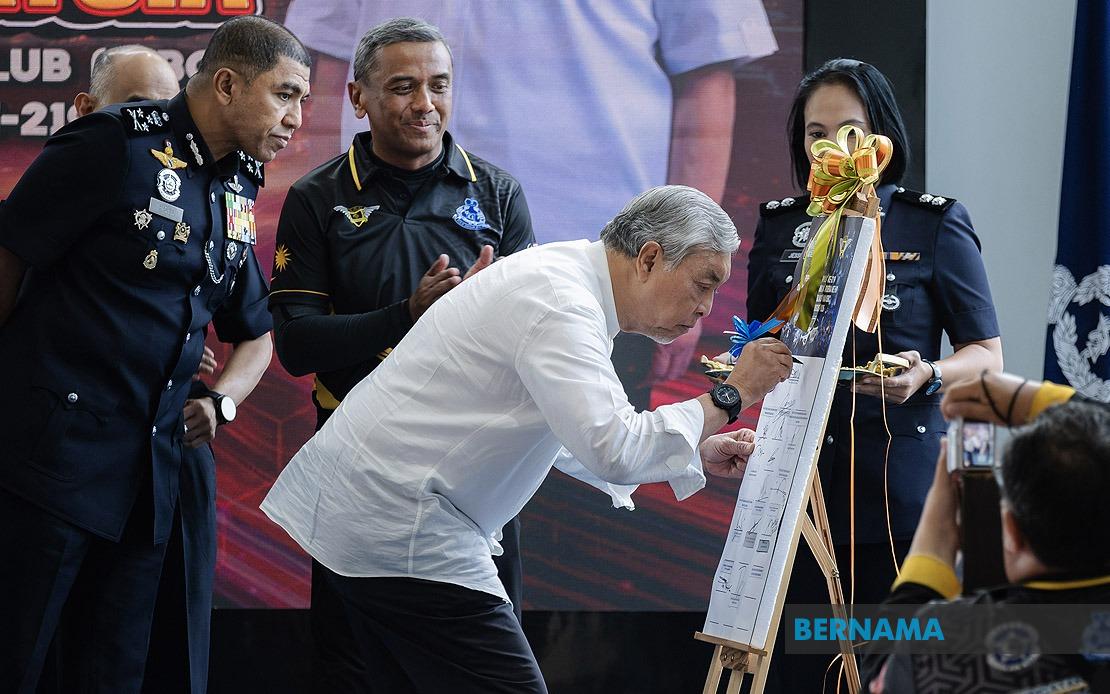
Barisan Nasional will pursue an election strategy tailored specifically to Melaka's political situation rather than transplanting the coalition models that delivered landslide victories in Johor and Negeri Sembilan, according to BN chairman and Deputy Prime Minister Datuk Seri Dr Ahmad Zahid Hamidi. Speaking after an event at the Kuala Lumpur Police Contingent Headquarters on August 21, Ahmad Zahid stressed that any political arrangement the coalition enters for the Melaka state election must carefully weigh the advantages and disadvantages at stake, rather than automatically adopting proven formulas from neighbouring states.
The divergence from established templates signals a more cautious approach to coalition-building in Melaka, reflecting calculations about local political dynamics that differ from those in Johor and Negeri Sembilan. Ahmad Zahid emphasised that negotiations over Melaka's political future must be conducted with rigorous scrutiny of both benefits and potential costs. He underlined the importance of transparency and trustworthiness in any agreements struck with coalition partners, cautioning against arrangements that collapse once initial negotiations conclude. The remarks carry implicit weight given the federal government's history of coalition management, where power-sharing deals have occasionally unravelled amid accusations of broken commitments.
Responsibility for crafting Melaka's electoral approach now rests with state Chief Minister Datuk Seri Ab Rauf Yusoh, who chairs the Melaka BN division. Ahmad Zahid has delegated to Ab Rauf the authority to conduct negotiations with potential partners, with outcomes subsequently elevated to the national leadership for comprehensive review and final approval. This hierarchical decision-making structure demonstrates BN's intent to avoid hasty or locally-driven arrangements that might contradict broader coalition objectives. The framework also suggests that any Melaka formula will ultimately serve purposes extending beyond the state itself, aligning local political settlements with national stability imperatives.
At the national level, BN-led cooperation has transcended traditional Cabinet structures, Ahmad Zahid indicated, functioning through inter-ministry coordination and whole-of-government frameworks designed to protect political stability and national interests. This architecture provides context for how Melaka negotiations will be assessed. The Deputy Prime Minister's comments suggest that state-level arrangements cannot be evaluated in isolation but must contribute to cementing the broader coalition consensus established at the federal level since the 2022 general election.
Melaka's current political configuration reflects the unity government principle embedded in federal arrangements. BN captured 21 of 28 state assembly seats in the 15th Melaka election, with Pakatan Harapan securing five seats and Perikatan Nasional two. Yet the state executive council incorporates PH assemblymen, mirroring the federal government's coalition composition. This arrangement has maintained administrative continuity while preserving the multi-party character that defines Malaysia's current political settlement. As the mandate of the Melaka state government approaches expiration on December 31, decisions about the election formula become urgent.
The question of coalition structure in Melaka carries implications beyond electoral mechanics. Melaka's strategic location in the Strait of Malacca, its historical significance, and its role as a gateway between the Klang Valley and southern Johor give the state outsized political importance relative to its population. How BN manages coalition politics in Melaka will send signals about the stability and flexibility of federal arrangements, potentially influencing political calculations in other states and providing cues to smaller coalition partners about their value within the broader framework.
Ahmad Zahid's insistence that any formula must avoid becoming a template applied mechanically across states acknowledges that Malaysian federalism does not permit homogeneous solutions. Melaka's political terrain—characterised by particular factional alignments, community compositions, and local leadership dynamics—requires bespoke approaches. This recognition distinguishes the BN leadership's public position from past eras when the coalition operated with greater centralisation and standardised coalition practices.
The commitment to honouring agreements once reached addresses a persistent vulnerability in Malaysian coalition politics. The durability of any arrangement depends on all partners perceiving enduring benefit rather than temporary advantage. By emphasising sincerity and accountability in negotiations, Ahmad Zahid attempts to build confidence among potential partners and reassure existing coalition members that commitments will be respected. This reputational stake becomes significant as BN negotiates not only in Melaka but potentially in upcoming contests in other states where similar dynamics may emerge.
For Malaysian and regional observers, the Melaka approach exemplifies how the post-2022 political settlement continues evolving through practical negotiation and testing. The outcome in Melaka will either validate the flexibility of the current federal coalition model or expose limitations in managing multiparty governance across different state contexts. As electoral cycles in other states approach, how successfully BN executes its Melaka formula may influence broader coalition durability and the sustainability of Malaysia's current political equilibrium.

