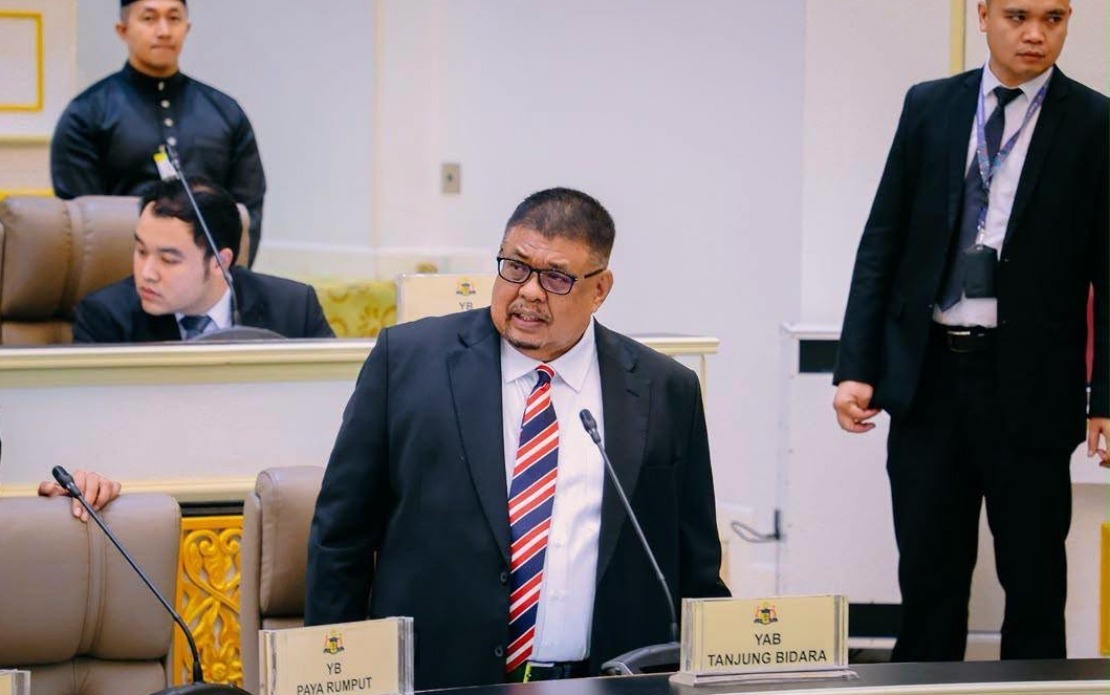
Melaka's Chief Minister Datuk Seri Ab Rauf Yusoh moved swiftly to reassure stakeholders on Monday that the state's governance and service delivery would remain unaffected following the Democratic Action Party's abrupt exit from the coalition administration. Addressing journalists at the Seri Negeri Complex in Ayer Keroh, he underscored that the state machinery would continue functioning at full capacity, with particular emphasis on maintaining momentum in administrative operations, infrastructure development, and public-facing services. The statement came less than 24 hours after four DAP assemblymen formally tendered their resignations, a departure that marked a significant realignment in Melaka's political landscape.
The withdrawal erupted following the State Legislative Assembly's approval of a constitutional amendment permitting the appointment of assemblymen—a mechanism that triggered immediate concerns within the DAP's internal strategy. The four departing representatives, Allex Seah Shoo Chin, Low Chee Leong, Leng Chau Yen, and Kerk Chee Yee, each representing constituencies across the state, cited this development as incompatible with their party's principles, prompting their coordinated exit. This sequence of events has exposed underlying tensions within Malaysia's state-level coalition politics, where regional partners increasingly assert independence rather than accepting configurations imposed by larger coalition partners.
Ab Rauf's measured response reflected a deliberate effort to decouple the departure from governance performance, a positioning that seeks to maintain investor and civil service confidence. He specifically directed assurances toward three constituencies: the business community and investors, whose continued engagement remains critical for Melaka's economic trajectory; civil servants managing day-to-day administration; and ordinary residents dependent on state services. By framing continuity as the default setting rather than an exceptional achievement, the Chief Minister signalled that governance disruptions would be minimized, a crucial message for a state seeking to maintain economic momentum amid political flux.
The appointment of an acting Chief Minister at the federal level, coupled with Melaka's ongoing infrastructure initiatives, had already positioned the state at a complex intersection of state-level autonomy and federal oversight. Ab Rauf's assurances implicitly acknowledged this context, emphasizing that the state government would maintain robust coordination with federal authorities despite the coalition reconfiguration. This coordination has become increasingly important as Melaka pursues major development projects and seeks federal funding allocations, both areas where political stability signals competence to national decision-makers.
Regarding the vacant positions left by the DAP members' departure, the Chief Minister announced that no immediate replacements would be sought. Instead, existing administrative members would absorb the responsibilities temporarily, a practical decision that avoids the political complications of appointing successors while maintaining administrative capacity. This approach prevents the perception of hasty political manoeuvring while allowing time for clearer political consolidation. The decision also sidesteps difficult questions about successor selection and potential factional disputes that might arise during a transitional period.
Ab Rauf's comments on Prime Minister Datuk Seri Anwar Ibrahim's call for further negotiations effectively closed the door on any possibility of reversal or compromise. By noting that the DAP's decision became final upon submission of resignation letters immediately after their press conference, he eliminated ambiguity about the administration's negotiating position. This firmness, combined with his acknowledgment that the parties need not become adversaries despite political separation, attempted to strike a balance between finality and civility—an increasingly important distinction in Malaysian politics where yesterday's coalition partners become today's opposition scrutineers.
The timing and manner of the DAP's departure warrant consideration within the broader Malaysian political context. For Melaka specifically, the exit removes a significant component of the Pakatan Harapan coalition that had governed the state, leaving a narrower political base that may constrain future policy initiatives or require fresh coalition arrangements. For the Malaysian electorate monitoring state governance patterns, the episode underscores how constitutional amendments—in this case, permitting appointed assemblymen—can serve as flashpoints for deeper disagreements about representation and coalition governance principles. The amendment itself raises questions about how state governments are evolving their institutional structures and what political consequences follow when such changes encounter resistance.
For investors and business stakeholders evaluating Melaka as an economic location, such political transitions create temporary uncertainty even when officials issue continuity assurances. However, Ab Rauf's explicit cultivation of investor confidence suggests awareness that Melaka's competitive position in attracting capital requires demonstration of stable, predictable governance. The state's manufacturing base, tourism sector, and nascent technology initiatives all depend on confidence that political turbulence will not disrupt regulatory frameworks or infrastructure development timelines.
The Chief Minister's expression of appreciation for the DAP representatives' cooperation throughout their governing tenure reflected political maturity and an understanding that maintaining institutional relationships matters beyond the immediate political theatre. Such gestures, often overlooked in headline coverage, signal to political actors at all levels that professional transitions are possible even when fundamental disagreements exist. This becomes particularly relevant in Malaysia's context, where political transitions frequently involve personal relationships that extend across party boundaries and ideological divides.
Looking forward, the departure creates space for Melaka's government to potentially reshape its coalition arrangements or consolidate around remaining partners. The Chief Minister's emphasis on systematic functioning and transparent service delivery suggests an attempt to position governance competence as the administration's defining characteristic during this period. For Malaysian readers monitoring state governance performance, the Melaka situation offers a test case in how administrations manage political disruption without compromising institutional effectiveness—a challenge that increasingly shapes voter assessments across the country's 13 state governments.

