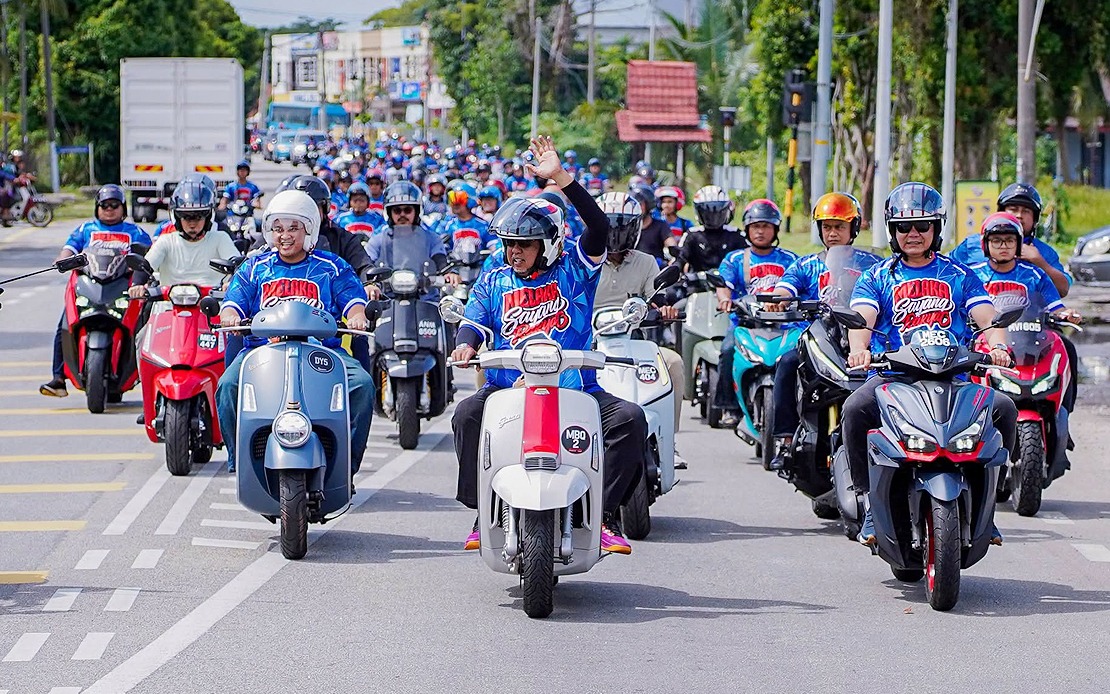
Melaka's grassroots engagement framework is entering a new phase of intensity as Chief Minister Datuk Seri Ab Rauf Yusoh unveiled an expanded WRUR initiative designed to systematically address community concerns across multiple state constituencies. The programme, launching across Tangga Batu's parliamentary zone, represents an evolution of the state government's direct-engagement strategy, moving beyond one-off community visits to establish a structured mechanism for identifying and resolving local grievances at scale.
The expanded initiative will unfold across two consecutive phases targeting the Pantai Kundor and Paya Rumput state constituencies, with a comprehensive slate of over 200 planned programmes spanning welfare assistance, community development infrastructure, educational support, youth initiatives, and business development opportunities. This breadth of scope signals the administration's recognition that effective governance requires simultaneous action across multiple policy domains, rather than treating social issues in isolation. By bundling diverse initiatives under a single branding framework, the state appears intent on creating a coherent narrative around its engagement efforts while ensuring no demographic segment feels overlooked.
The WRUR mechanism itself has matured substantially over two years of implementation. Ab Rauf characterised the initiative as an embedded, continuous engagement apparatus rather than episodic outreach timed to electoral cycles. This distinction carries political significance in Malaysian contexts, where citizens often distinguish between genuine grassroots listening and performative community relations designed to manufacture consent. The chief minister's emphasis on consistency attempts to reframe WRUR as institutional practice rather than political theatre, though sustained delivery will ultimately determine credibility.
Quantitative metrics underpinning the programme offer tangible evidence of operational scale. Across 23 implementation series nationwide, the WRUR framework has aggregated approximately 4,000 formal complaints, with nearly 70 per cent achieving resolution. Within the Tangga Batu parliamentary constituency specifically, prior engagements in Sungai Udang and Kelebang collected 359 complaints, resulting in 328 completed resolutions and 31 cases remaining under active follow-up. These figures suggest a functioning complaint-management pipeline, though the remaining 31 unresolved cases warrant scrutiny regarding bottlenecks and timeline expectations for constituents.
Distribution of material assistance during the sixth implementation cycle illustrates the programme's redistributive dimensions. Over RM150,000 in diverse aid packages reached multiple beneficiary categories, with fishing communities receiving particular attention through RM22,000 distributed among 220 fishermen and RM1,500 directed to five boat owners recovering from vessel losses. Small enterprise operators accessed RM14,000 in business equipment, while religious institutions, places of worship, students, and homeowners in financial distress received targeted support. This multi-sector approach reflects an understanding that economic vulnerability operates across occupational lines and requires differentiated intervention strategies.
Infrastructure deterioration emerged as a critical underlying issue, particularly regarding flood vulnerability that has become increasingly acute across Melaka's coastal plains. Recent flash flooding affected 73 households in Pantai Kundor, prompting the Department of Irrigation and Drainage to initiate RM50,000 in emergency cleaning and maintenance operations at Sungai Seberang Gajah, targeted for completion within a week. This reactive response, while necessary, underscores the region's chronic drainage challenges and the gap between emergency remediation and systemic infrastructure renewal.
Larger-scale infrastructure interventions signal acknowledgement of deeper structural problems requiring sustained capital investment. The department has advanced procurement procedures for RM100,000 in improvement works at Sungai Lereh, indicating recognition that drainage system rehabilitation extends beyond seasonal maintenance. More significantly, the Public Works Department has submitted federal approval requests for a RM16 million crossing culvert upgrade on Jalan Tangga Batu-Tanjung Minyak, representing a major infrastructure investment that transcends state government budgetary capacity and requires coordination with federal authorities.
This tiered infrastructure approach—combining emergency maintenance, medium-scale improvement projects, and transformational federal-level interventions—reflects practical constraints within Malaysia's federal system. State governments possess limited capital resources and require federal cooperation for major works, creating coordination challenges and implementation delays that frustrate constituents experiencing recurring flooding. The Tangga Batu initiative must somehow manage expectations around infrastructure timelines while maintaining momentum on more immediately achievable assistance programmes.
The significance of WRUR for Southeast Asian governance contexts extends beyond Melaka's specific circumstances. As countries throughout the region grapple with urbanisation, climate-driven environmental pressures, and constituent expectations for responsive governance, systematic complaint-collection and resolution mechanisms offer potential scalability. However, the sustainability of such programmes depends on institutional continuity beyond individual political tenures and adequate resourcing for follow-through on promised interventions. Malaysian state governments experimenting with these approaches generate valuable lessons regarding the operational architecture required for genuine grassroots accountability.
For Melaka residents, particularly in coastal constituencies experiencing compounding flood vulnerability and economic pressures on traditional fishing sectors, the expanded WRUR initiative represents both opportunity and litmus test. Systematic engagement channels can surface problems that might otherwise remain invisible to policymakers, yet only consistent delivery on commitments—whether assistance distribution, complaint resolution, or infrastructure projects—will determine whether the initiative evolves into a sustainable accountability mechanism or becomes another bureaucratic exercise in managed citizen engagement.

