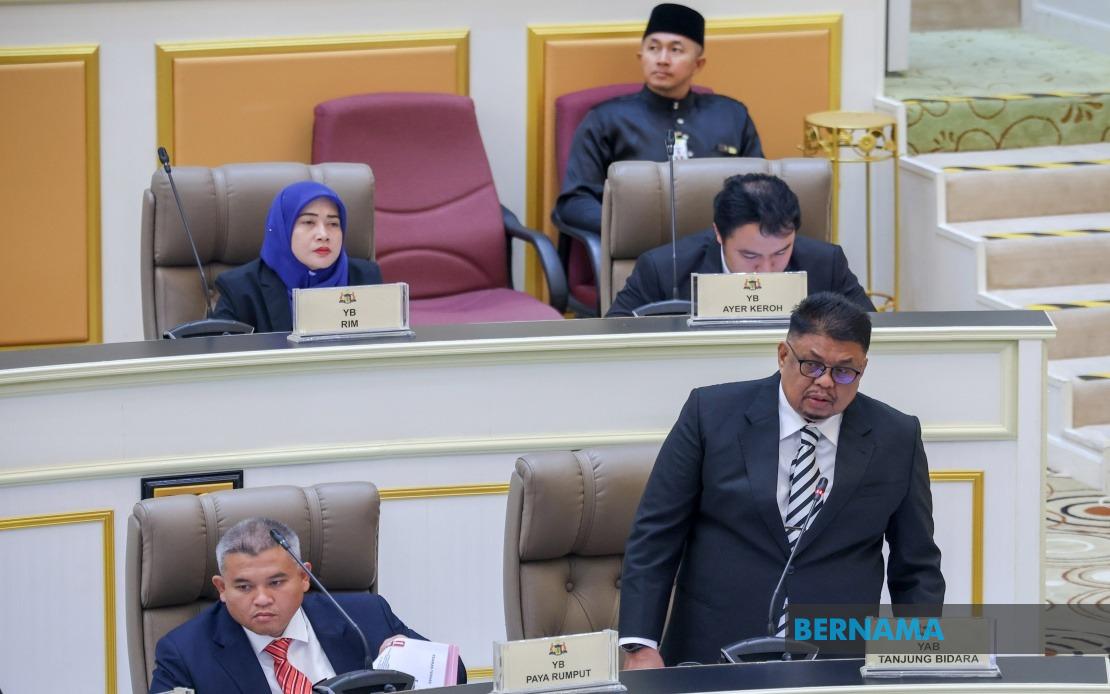
Melaka's legislative chamber has taken a significant step towards restructuring its parliamentary composition by endorsing a constitutional amendment that would introduce nominated assemblymen into the state legislature. The measure, passed on July 14, secured backing from 23 of the chamber's members, though five opposed it, reflecting some reservation about the initiative despite its ultimate approval.
The amendment represents a deliberate shift in how Melaka approaches legislative representation, moving beyond purely electoral mechanisms to incorporate appointed figures. Chief Minister Datuk Seri Ab Rauf Yusoh framed the initiative as a means to inject specialised knowledge into the assembly's functioning, arguing that individuals drawn from fields including law, economics, education, investment, technology and development could strengthen policy discussion and legislative scrutiny. This rationale mirrors approaches used in other Commonwealth legislatures, where appointed members provide technical expertise that elected representatives may not possess.
The expansion also addresses perceived gaps in representation that electoral processes may not remedy. Specifically, Ab Rauf identified women, young people, Orang Asli communities, minority ethnic groups and sector specialists as constituencies unlikely to achieve legislative seats through conventional ballot-box competition but capable of contributing substantively to state governance. This acknowledgement reflects growing recognition across Malaysian politics that electoral outcomes do not necessarily capture all perspectives essential for balanced policymaking.
Key to the amendment's articulated benefit is its potential to strengthen parliamentary oversight and deliberation. The addition of appointed members with strong professional credentials could elevate the technical calibre of debates surrounding complex governance matters. Rather than treating appointed positions as decorative sinecures, proponents suggest these individuals could scrutinise government proposals with greater independence and analytical depth than might otherwise occur, thereby enhancing the legislative body's checking function.
Notably, opposition representatives lent their support during the legislative debate, lending cross-partisan legitimacy to the measure. Dr Mohd Yadzil Yaakub, leading the opposition faction, drew parallels with the appointment of Dewan Negara members at federal level, suggesting that qualified specialists could meaningfully contribute to national and state legislative work. This alignment indicates that the amendment reflects a broader philosophical consensus rather than naked partisan calculation, though observers might note the opposition's conditional backing hinges upon transparent implementation.
The constitutional change represents the culmination of commitments made during Melaka's 2021 state election campaign, when Barisan Nasional pledged such reform as part of its broader agenda for political maturation and institutional stability. The intervening years between campaign promise and legislative realisation underscore the extended processes required for constitutional modification, a safeguard ensuring such significant changes receive sustained deliberation rather than impulsive adoption.
For Malaysia's broader governance conversation, Melaka's initiative introduces a model worthy of examination by other state governments. The scheme acknowledges that democratic representation extends beyond electoral mechanisms, a proposition that generates ongoing debate internationally. Proponents contend that appointed chambers introduce professional expertise and diverse perspectives; critics counter that such arrangements risk insulating policymakers from popular accountability and may entrench particular interest groups or establishment viewpoints.
The amendment's success in Melaka may influence discussions in other Malaysian states grappling with similar questions about legislative effectiveness and representational adequacy. Federal-level precedent through Dewan Negara appointment procedures provides constitutional familiarity, potentially reducing resistance to state-level adoption of comparable models. However, implementation mechanisms will prove crucial—whether appointments operate transparently through merit-based selection or devolve into patronage exercises will substantially determine public and specialist responses.
Implementation details remain significant. The legislation specifies capacity for up to seven appointments, providing substantial numbers whilst maintaining elected members' clear majority within the assembly. This calibration appears designed to ensure appointed members supplement rather than dominate legislative processes, preserving the elected chamber's primacy. How Melaka's government selects appointees—whether through independent commissions, ministerial nomination, or hybrid mechanisms—will signal implementation seriousness and shape perceptions of legitimacy.
The amendment also carries implications for Malaysian women's political representation, a persistent concern across the country. By creating pathways for qualified women specialists to enter legislatures outside electoral competition, particularly in technical fields where female representation remains constrained, the scheme potentially addresses structural barriers without requiring campaign resources or electoral victories. Similar logic applies to young professionals and minority community members facing conventional electoral disadvantages.
As Melaka proceeds to operationalise this constitutional amendment, careful attention to transparency and merit-based selection will determine whether appointed members genuinely enhance legislative quality or devolve into window-dressing for particular political interests. The state's experience will likely inform discussions among other state governments and potentially federal policymakers considering comparable institutional innovations. Success in Melaka could catalyse broader adoption across Malaysia's federal system, representing meaningful evolution in how Malaysian legislatures conceptualise democratic representation and professional governance contribution.

