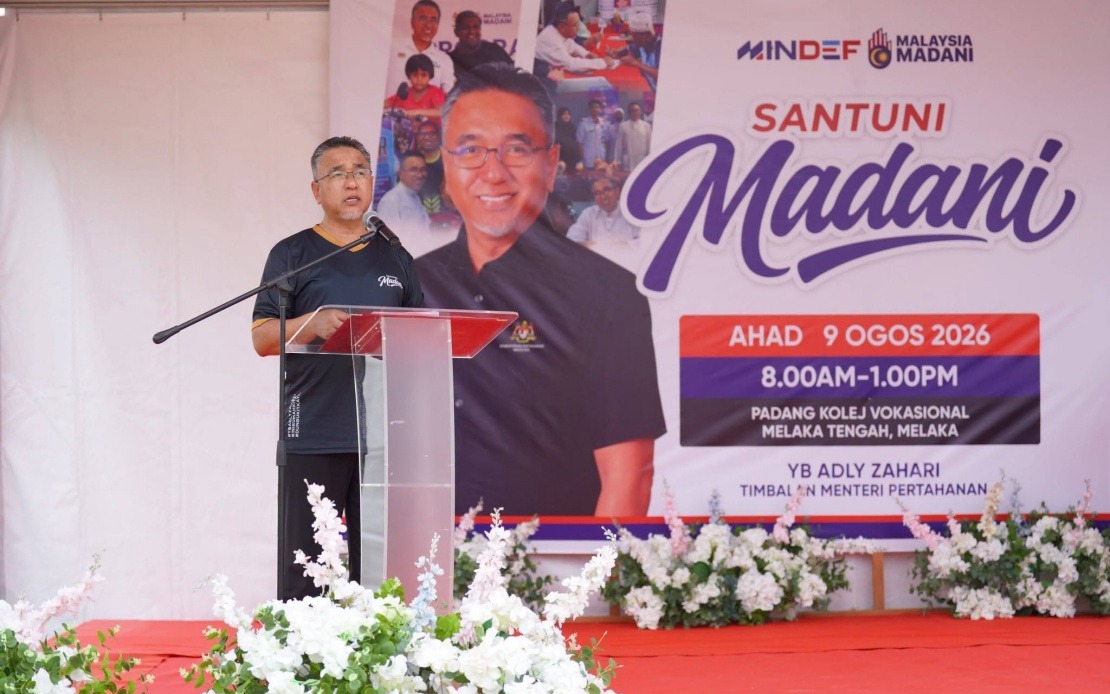
Melaka's opposition coalition is positioning itself flexibly ahead of the state election, with party leadership signalling readiness to explore partnership arrangements beyond its traditional boundaries. Adly Zahari, the Pakatan Harapan chairman in Melaka, told reporters that discussions remain fluid on both the mechanics of any cooperation and the quantum of seats individual parties would contest. The coalition has convened at least two working sessions to evaluate its electoral viability, though formal decisions at the PH leadership level have not yet crystallised.
The open-door approach reflects a broader calculation about electoral mathematics in Melaka, where the coalition currently holds just five of the state assembly's 28 seats. Adly emphasised that while the framework for external partnerships has not been finalised, the coalition actively welcomes engagement from interested parties. This messaging suggests PH recognises that its standalone capacity may be insufficient to achieve the seat gains it is pursuing, requiring some form of tactical arrangement with other political actors. The emphasis on democratic flexibility appears designed to keep options open while avoiding the appearance of desperation.
Interestingly, Adly noted that the coalition has not yet initiated substantive discussions with Melaka's Barisan Nasional chapter, despite both being part of the broader federal Unity Government framework. This suggests tensions exist at the state level that complicate the national-level cooperation between PH and BN. The condition that any partnership must align with Malaysia MADANI principles provides PH with both a unifying narrative and a screening mechanism to filter potential allies whose platforms might contradict core opposition values.
On the electoral front, PH has grounded its optimism in verifiable performance metrics. The coalition won three parliamentary seats in the 2022 general election—Alor Gajah, Kota Melaka, and Hang Tuah Jaya—providing a foundation for state-level expansion. Adly identified three additional state constituencies where PH believes it has realistic prospects: Tangga Batu, Masjid Tanah, and Jasin. These assessments suggest the party has conducted granular constituency-level analysis rather than making broad projections. Moving from five seats to a double-digit presence would substantially alter Melaka's political landscape and could create a genuine three-way competition with BN and the incumbent Perikatan Nasional administration.
PKR's state-level leadership offers a complementary perspective on the negotiations. Adam Adli Abd Halim, the Melaka PKR acting chairman, acknowledged that while formal talks with BN have not commenced, informal communications continue between individual party representatives. This distinction between formal and informal channels is significant in Malaysian politics, where back-channel dialogue often precedes public announcements. Adam Adli's framing suggests that options remain genuinely open, with all scenarios—from a PH-BN collaboration to a PH-led opposition challenge—still being evaluated based on ground-level realities.
The observation that Melaka's political dynamics are distinct from other states forming the Unity Government is revealing. Unlike Selangor, Negeri Sembilan, or Penang, where PH holds executive power, Melaka is governed by Perikatan Nasional, creating a fundamentally different political competition. This distinction explains why state-level pragmatism might diverge from federal unity arrangements. The local context takes precedence over national frameworks when electoral survival is at stake, a principle that applies across Malaysia's state-based political system.
Adam Adli's emphasis on PH state assemblymen maintaining their constituent service duties while avoiding inflammatory political rhetoric reflects a strategic posture aimed at preserving social stability perception. In a state where shifting coalitions have created governmental instability in recent years, excessive political turbulence risks alienating swing voters seeking predictable governance. By emphasising responsible conduct and public service, PKR signals that its representatives remain focused on delivery rather than purely partisan manoeuvrings. This positioning is particularly important in persuading fence-sitters that a PH victory would result in sustained governance rather than another cycle of political realignment.
The timeline implications merit consideration for Malaysian observers tracking state electoral momentum. Election dates have not been announced, but the current phase of coalition assessment suggests the timeline remains measured. The party's focus on internal PH preparations before finalising external arrangements indicates a staged approach: first solidify internal cohesion, then negotiate external partnerships, then contest. This sequencing differs from rushed electoral calculations, suggesting PH leadership believes current political conditions create a persistent rather than ephemeral opportunity.
For Southeast Asia's political watchers, Melaka's trajectory offers insights into how opposition coalitions navigate partnership dilemmas in competitive democracies with multiple viable political blocs. The PH approach—maintaining strategic ambiguity, keeping multiple pathways available, and conditioning cooperation on value alignment rather than pure opportunism—represents a middle path between rigid ideological purity and unprincipled transactionalism. Whether this flexibility translates into electoral gains or creates internal party friction will become clearer as formal negotiations commence and candidates are eventually announced.

