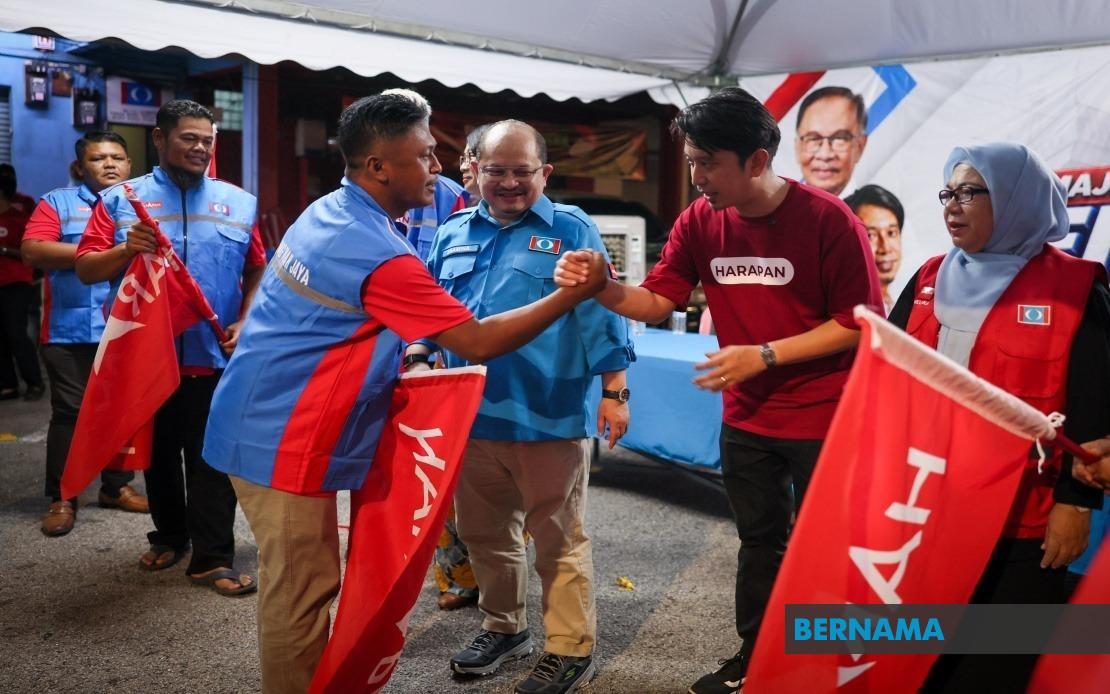
Melaka's Parti Keadilan Rakyat division is restructuring its candidate selection timeline, seeking to announce nominees well ahead of the forthcoming state election to provide newly-minted campaigners with extended preparation periods. Adam Adli Abdul Halim, serving as acting chairman of the Melaka PKR Leadership Council, outlined the party's revised strategy during comments made after officiating the launch of the Keadilan Election Machinery for the Hang Tuah Jaya branch in Taman Bukit Piatu, signalling a departure from previous difficulties in meeting nomination deadlines.
Historically, PKR's Melaka operations have grappled with announcing candidates promptly, compounded by competing organisational priorities and internal coordination challenges. This cycle has repeatedly squeezed preparation intervals for nominated contenders, potentially undermining their ground-level readiness. By moving the announcement window forward, the party acknowledges that electoral success increasingly depends not merely on candidate selection but on the depth of campaign groundwork preceding formal nomination. The earlier timeline reflects a strategic pivot toward candidate development, recognising that first-time political contestants require extended mentoring in community engagement, policy articulation, and media management.
The party's current approach involves multi-stage vetting beginning at branch and division levels before escalating to central party authorities where the party president renders final approval. This hierarchical review process, while ensuring broader input across the organisation, has historically created bottlenecks. By initiating this process earlier, PKR Melaka intends to compress the decision-making window without sacrificing the thoroughness that such screening demands. Adam Adli emphasised that rushing candidate finalisation would prove counterproductive; rather, the party is repositioning when it begins the evaluation cycle itself, creating buffer room throughout each procedural phase.
Diversity considerations underscore the accelerated timeline. PKR Melaka is explicitly targeting increased representation of women and younger politicians, reflecting broader demographic shifts within Malaysia's electorate. These candidate categories frequently require additional preparation—navigating voter perceptions, media scrutiny, and potential gender-based campaign challenges requires coaching that extends beyond what established political figures typically require. By announcing candidates earlier, the party creates space for targeted capacity-building programmes addressing these demographic groups' particular circumstances, from media training to engagement tactics tailored toward communities where such candidates may be less familiar figures.
The candidate selection acceleration forms part of a broader machinery-building exercise spanning five constituencies: Tangga Batu, Hang Tuah Jaya, Alor Gajah, Masjid Tanah, and Jasin. These localities represent strategically significant areas within Melaka's political landscape, encompassing urban, semi-urban, and rural demographics. Rather than deferring organisational strengthening until candidates are named, PKR Melaka is constructing robust party structures pre-emptively, ensuring that regardless of eventual nominee selections, the machinery exists to mobilise voters effectively. This sequencing reverses traditional campaign timelines where candidate announcement typically catalyses machinery activation.
Adam Adli, simultaneously serving as Deputy Minister of Higher Education, reinforced that solid organisational infrastructure represents the foundation upon which individual candidacies succeed or falter. A well-resourced, properly trained party machinery can substantially ameliorate weaker candidate positioning, whereas even strong candidates flounder without adequate logistical support. This philosophy reflects lessons learned across multiple Malaysian electoral cycles where institutional factors frequently outweighed personality-driven campaigns. PKR Melaka's emphasis on machinery preparation before candidate finalisation signals mature understanding of electoral mechanics beyond symbolic leadership choices.
Cooperation negotiations between PKR's parent coalition, Pakatan Harapan, and the governing Barisan Nasional represent a significant backdrop to Melaka's candidate strategy. Informal discussions have occurred between these competing political blocs, though formal negotiations establishing cooperation parameters remain pending. Adam Adli's acknowledgement that such talks remain preliminary underscores the uncertainty surrounding Melaka's electoral architecture—whether PH and BN will contest jointly, separately, or through some hybrid arrangement remains unresolved. This ambiguity necessitates PKR Melaka's flexibility in candidate preparation, as coalition arrangements could substantially alter seat allocations and campaign requirements.
The communication between PH election director Datuk Seri Amirudin Shari and Melaka Chief Minister Datuk Seri Ab Rauf Yusof regarding meeting scheduling suggests diplomatic channels remain open between these opposing coalitions. In Malaysia's contemporary political context, such inter-coalition discussions frequently precede formal negotiations, establishing rapport and identifying mutually acceptable cooperation frameworks. PKR's willingness to engage in these discussions reflects recognition that unilateral electoral contests occasionally produce outcomes benefitting neither participating party, particularly in closely-divided constituencies where vote-splitting enables third-party victories.
However, PKR Melaka has signalled preparedness to contest independently should coalition negotiations yield unsatisfactory arrangements. This stance maintains internal party pressure to secure favourable terms whilst acknowledging that opposition parties' interests diverge sufficiently that cooperation occasionally proves infeasible. By building machinery and selecting candidates along parallel tracks with coalition discussions, PKR reduces risk of electoral unreadiness should negotiations collapse. The party positions itself as equally capable of fighting PH-BN cooperation arrangements or pursuing unilateral campaign strategies.
Adam Adli's framing of cooperation discussions transcends transactional political calculation, emphasising contributions to electoral civility and democratic health. Interparty communication, he suggested, reduces likelihood of destructive campaign tactics by establishing baseline understandings about acceptable competitive norms. This rhetorical positioning reflects Malaysian electoral discourse increasingly concerned with campaign conduct, particularly following cycles marked by personal attacks and disinformation. By emphasising dialogue's democratic value beyond immediate coalition arithmetic, PKR Melaka attempts moral high ground whilst simultaneously pursuing strategic political advantage.
Malaysia's state-level electoral cycles increasingly function as intermediate checkpoints between federal elections, attracting intense scrutiny from national party leaderships. Melaka's electoral outcome carries implications beyond state-level governance, signalling voter sentiment regarding coalition performance and potentially influencing federal coalition dynamics. PKR's methodical approach to candidate selection and machinery construction reflects awareness that Melaka outcomes contribute to broader narratives about PH viability and BN resilience. The party's emphasis on preparation rather than rushed announcements projects organisational maturity and strategic seriousness likely to resonate with voters evaluating coalition competence.
Regionally, Melaka's electoral management reflects broader Southeast Asian democratic practices where coalition negotiations increasingly precede election campaigns. Thailand, Indonesia, and the Philippines have normalised inter-party negotiations and seat-sharing arrangements as standard pre-election practice. Malaysia's gradual adoption of similar frameworks, particularly at state level, indicates regional democratic evolution toward consensus-seeking approaches. PKR Melaka's parallel pursuit of machinery development and coalition talks exemplifies this emerging pattern, where electoral competition coexists with pragmatic power-sharing discussions rather than representing polar opposites.

