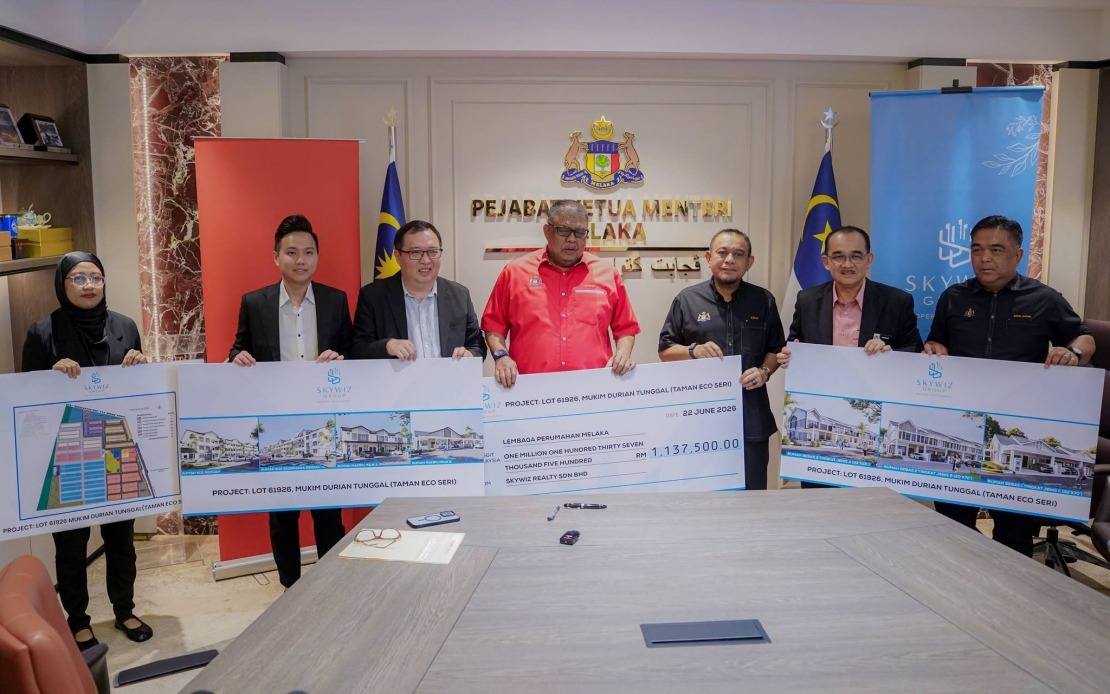
Melaka's Chief Minister Datuk Seri Ab Rauf Yusoh has launched a push to fundamentally reshape the state's approach to multi-storey property development by making lift installations a mandatory feature rather than an optional amenity. Speaking at a housing development agreement signing ceremony, Ab Rauf framed the inclusion of vertical access as fundamental to creating inclusive communities and broadening the appeal of new residential and commercial projects across the state's major property markets.
The impetus behind this initiative stems from observable challenges in Melaka's real estate sector. Significant clusters of unsold multi-storey properties in established neighbourhoods including Kota Laksamana, Banda Hilir, and Melaka Raya have remained on developers' inventories, with accessibility barriers identified as a material factor constraining buyer demand. The absence of lift facilities creates tangible barriers for elderly purchasers and residents with mobility limitations, effectively narrowing the potential buyer pool and extending vacancy periods that ultimately erode property values and developer returns.
Ab Rauf's framing of lifts as essential rather than luxury represents a significant rhetorical shift in Malaysia's property development discourse. By explicitly positioning this infrastructure as foundational to dignified housing rather than premium positioning, the state government is attempting to influence developer behaviour and buyer expectations. The proposed policy would require shoplots and three-storey residential buildings to incorporate lifts, establishing accessibility as a baseline requirement consistent with principles underlying Malaysia's increasingly stringent building accessibility standards for persons with disabilities.
This accessibility agenda aligns with Malaysia's broader demographic trajectory. The nation's rapidly ageing population, particularly concentrated in developed urban areas like Melaka, creates expanding demand for housing that accommodates reduced mobility. By institutionalising lift requirements, policymakers acknowledge that accessibility features generate genuine market value rather than imposing unnecessary costs. Properties with integrated vertical access command higher valuations and experience faster sales cycles, ultimately benefiting both developers and the long-term equity of resident purchasers.
The state government is simultaneously advancing its affordable housing agenda through the Melaka Housing Board (LPM), having completed 23,514 units to date and targeting construction of more than 38,440 additional homes. These initiatives operate in tandem: ensuring new affordable housing incorporates accessibility features prevents the creation of stranded assets that cannot serve purchasers across age groups and mobility statuses. The Melaka Sayang Rakyat (MeSRa) initiative, anchoring this housing strategy, explicitly targets inclusive state development, positioning homeownership as foundational to family stability and community cohesion.
A concrete application of this approach materialised through the signing of an Affordable Housing Development Agreement with Skywiz Reality Sdn Bhd, which will deliver 903 housing units across a 26.56-hectare development in Mukim Durian Tunggal, Alor Gajah. The project structure differentiates between subsidised and open-market housing, with 453 units designated as affordable homes comprising diverse categories: 61 low-cost houses, 54 low-medium cost properties, 200 Type A affordable units, and 138 Type B affordable homes. The remaining 450 units will target open-market segments, creating mixed-income communities that integrate price-point diversity.
The financial implications for government coffers reflect the investment required to support housing development. The Skywiz project is projected to generate RM2.38 million in returns for LPM, providing capital for reinvestment in subsequent phases of the state's housing pipeline. These returns, while modest relative to total development costs, represent ongoing revenue streams that fund future affordable housing initiatives. The state government has embedded contractual oversight mechanisms, requiring the developer to commence construction within 90 days of Form B issuance by the Hang Tuah Jaya Municipal Council, establishing enforceable timelines and quality commitments.
Monitoring mechanisms represent critical infrastructure in ensuring policy outcomes translate into actual implementation. The LPM's supervisory role extends beyond routine approvals to encompassing schedule compliance, specification adherence, and quality assurance. This active engagement reflects lessons from previous housing initiatives where nominal approvals disconnected from rigorous ongoing oversight resulted in delayed completions, specification deviations, and quality shortfalls that undermined policy objectives. By establishing explicit monitoring frameworks, Melaka's housing authority attempts to bind developer performance to contractual commitments and public accountability standards.
The broader policy framework emerging in Melaka offers instructive models for other Malaysian states grappling with ageing populations and underutilised housing stock. States including Selangor, Johor, and Penang confront comparable market dynamics: ageing demographics, accessibility barriers constraining demand, and property valuations influenced by amenities that facilitate multi-generational occupancy. Melaka's proactive repositioning of lifts as standard infrastructure rather than discretionary luxury creates a template that other jurisdictions might adapt to local contexts.
Implementing mandatory lift requirements will inevitably increase per-unit construction costs, particularly for modest affordable housing projects operating within constrained budgets. Developers will factor these expenses into pricing structures, potentially affecting affordability thresholds unless state governments simultaneously implement cost-offsetting mechanisms such as density bonuses, expedited approvals, or abated development charges. The sustainability of this policy depends on calibrating accessibility requirements against affordability imperatives, ensuring that infrastructure improvements do not paradoxically price out the elderly residents the policy intends to serve.
The initiative also intersects with Malaysia's evolving accessibility regulatory environment. The Persons with Disabilities Act 2008 and subsequent guidelines establish accessibility expectations that increasingly encompass residential environments beyond commercial spaces. State-level policies mandating lifts in domestic properties create consonance between legislation and physical development patterns, moving from aspirational accessibility standards toward enforceable physical requirements embedded in building codes and development conditions.
Ab Rauf's advocacy signals Melaka's recognition that sustainable property markets require aligning supply characteristics with evolving demographic demand. Properties positioned as lifetime residences rather than transitional investments command premium valuations and shorter marketing cycles. By institutionalising accessibility features, the state government repositions its housing stock not as temporary stepping stones but as long-term community assets that accommodate residents across life stages and mobility statuses.

