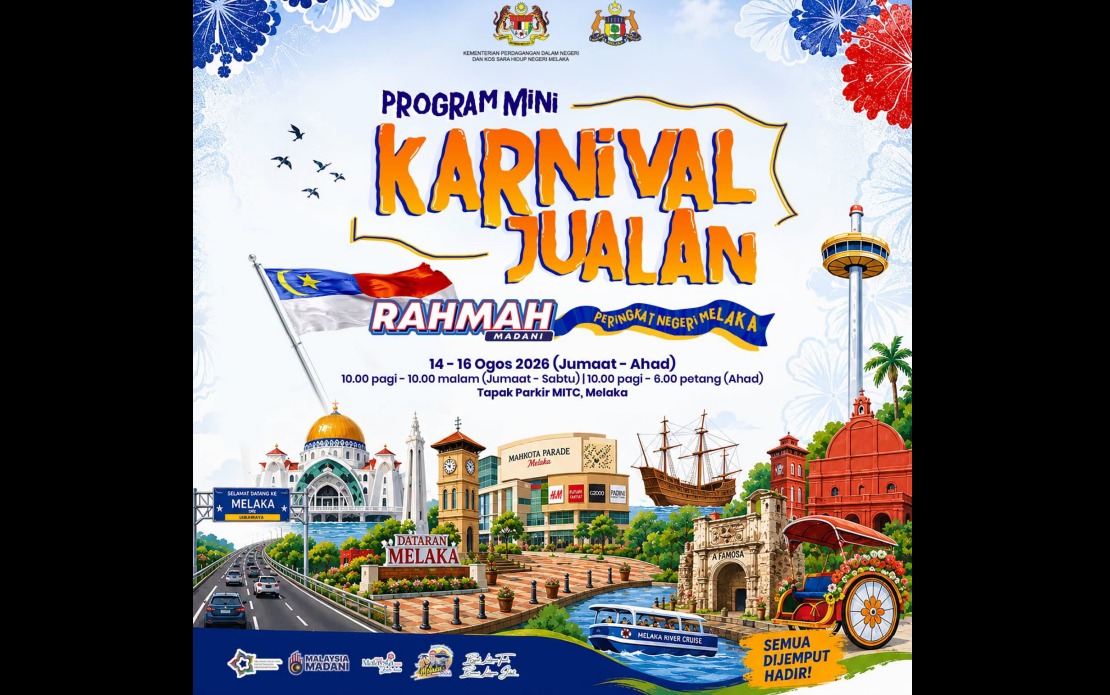
The Ministry of Domestic Trade and Cost of Living (KPDN) will launch a three-day carnival in Melaka starting tomorrow, aiming to bring government assistance programmes directly to residents struggling with rising household expenses. Held at the Melaka International Trade Centre, the event is projected to draw more than 10,000 visitors seeking affordable daily essentials and community engagement opportunities. Deputy Minister Senator Datuk Dr. Fuziah Salleh emphasised that the carnival represents a strategic pivot towards making the ministry's initiatives more accessible through an approachable, interactive environment rather than formal bureaucratic channels.
Central to the carnival's appeal is the MADANI Rahmah Sales Programme, a flagship government initiative designed to provide basic necessities at substantially reduced prices. For Malaysian households grappling with inflation and elevated living costs, this programme offers tangible relief by allowing consumers to purchase essential goods without the premium typically reflected in retail pricing. The carnival setting enables the public to understand the scope of available subsidised items while directly experiencing the cost savings firsthand, transforming what might otherwise be an abstract policy into concrete household benefit.
Beyond the affordability focus, the ministry has curated a diverse programme spanning consumer information, business development, and entertainment to broaden the carnival's appeal. Exhibition booths throughout the venue will showcase various KPDN departments and their functions, including consumer protection mechanisms, price regulation systems, and cost-of-living support initiatives. These interactive displays allow visitors to engage directly with ministry representatives, ask questions about their rights as consumers, and learn about formal complaint channels—knowledge that remains underutilised in many communities despite the potential impact on household finances.
The business matching sessions integrated into the carnival's schedule reflect recognition that affordability extends beyond consumer purchasing power to entrepreneurial opportunity. Small and medium-sized enterprises can connect with potential partners and explore collaboration possibilities in a relaxed setting, potentially strengthening local economic resilience. For Melaka's business community, this represents a government-facilitated networking opportunity without traditional conference costs, democratising access to business development support across economic strata.
Entertainment programming demonstrates careful consideration of family participation, a design choice that recognises how cost-of-living pressures affect household decision-making around recreational spending. An electronic sports tournament in partnership with Todak appeals to younger demographics, while classic car and vintage motorcycle exhibitions target enthusiasts across age groups. The children's colouring competition provides screen-free engagement for younger attendees, and live musical performances create a festive atmosphere that justifies the outing as family recreation rather than administrative obligation. This multifaceted approach transforms the carnival from a transactional experience into a genuine community gathering.
Menu Rahmah food truck operations represent a microcosm of the broader affordability mission. By bringing subsidised meals to the carnival venue, the government demonstrates its commitment to addressing food costs specifically—a category that typically consumes the largest share of lower and middle-income household budgets. Consumers can sample affordable meal options while socialising, embedding economic assistance within normal community leisure patterns rather than stigmatising subsidy recipients through separate queuing or designated assistance areas.
The timing and logistics of the carnival—operating from 10am to 10pm on Friday and Saturday, then 10am to 6pm on Sunday—acknowledge working schedules and family weekend patterns across different income groups. Extended evening hours on weekdays allow shift workers and those with irregular employment to attend, while the Sunday schedule respects religious observance and weekend family time. This operational framework reflects substantive consideration of accessibility that extends beyond physical location to temporal reality.
For Melaka specifically, the carnival carries particular significance as the state faces economic transition challenges. As a tourism-dependent region with emerging manufacturing sectors, household vulnerability to economic shocks affects diverse demographics beyond traditional poverty categories. Government visibility through such events signals commitment to multiple voter constituencies while building social cohesion around shared concerns about purchasing power. The ministry's decision to bring the carnival to Melaka rather than concentrating activities in larger urban centres like Kuala Lumpur reflects intentional decentralisation of consumer protection advocacy.
Deputy Minister Salleh's framing of the carnival as an educational initiative about KPDN's consumer protection mandate indicates strategic messaging around government effectiveness in safeguarding citizen interests. Price monitoring capabilities, enforcement actions against unfair practices, and cost-of-living intervention programmes are often invisible to average consumers unless they encounter problems. By creating spaces where these functions are demonstrated actively, the ministry addresses a persistent government communication gap—citizens frequently remain unaware of regulatory safeguards operating on their behalf until crisis or dissatisfaction emerges.
The comprehensive nature of the carnival programme—combining affordability initiatives, regulatory transparency, business networking, family entertainment, and information services—reflects sophisticated understanding that cost-of-living anxiety is multifaceted. It cannot be addressed through subsidy alone but requires complementary interventions spanning consumer awareness, business opportunity, and community confidence in government capability. The carnival format normalises government engagement as a community benefit rather than an intrusive bureaucratic presence, potentially shifting long-term public perception of the ministry's role.
Looking regionally, Melaka's carnival exemplifies an approach to cost-of-living management increasingly adopted across Southeast Asia as inflation pressures mount. Rather than purely reactive policy adjustments, governments are recognising that sustained relief requires sustained communication and direct engagement. The carnival model—combining actual economic assistance with educational and entertainment components—offers a replicable template for other Malaysian states and regional governments facing similar pressures to maintain household purchasing power while managing fiscal constraints. Success in Melaka could inform expanded similar initiatives nationwide, scaling a community-centred approach to economic support beyond traditional administrative channels.

