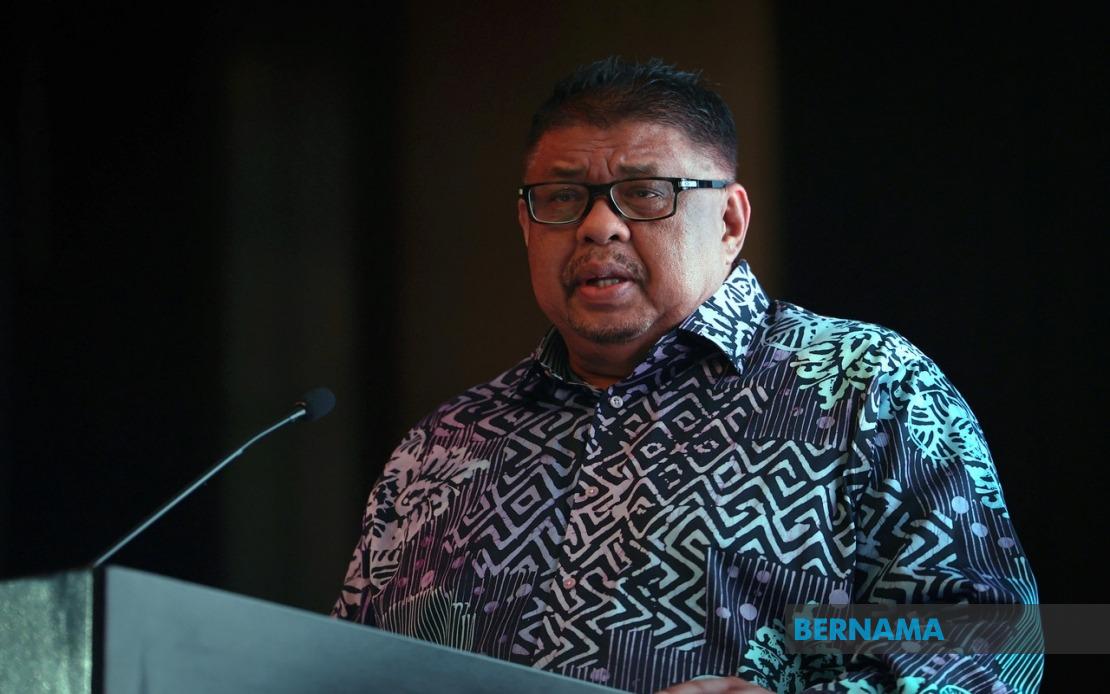
Melaka has emerged as a regional model for institutional reform, implementing more than 200 distinct initiatives aimed at embedding integrity and good governance throughout its public administration. The ambitious drive, announced by Chief Minister Datuk Seri Ab Rauf Yusoh at a recent dinner honouring the 22nd ASEAN-PAC Secretariat Meeting, reflects a deliberate strategy to reshape how the state government operates and interacts with citizens and investors alike. The effort has already yielded measurable recognition: the Malaysian Anti-Corruption Commission (MACC) identified Melaka as the second highest-performing state in its latest Public Service Corruption Level Study, a significant credential in an era when governance standards increasingly influence investment decisions and international standing.
The scope of Melaka's integrity programme extends beyond symbolic gestures or isolated reforms. Ab Rauf characterised the 200-plus initiatives as a tangible translation of the state's commitment to principled governance, anchoring what he described as a fundamental belief that integrity must guide every governmental decision. This framing suggests a systemic approach rather than piecemeal interventions—an attempt to weave integrity into the fabric of how civil servants perform their duties, how budgets are allocated, and how contracts are awarded. For a state seeking to position itself as a reliable jurisdiction for commercial investment and economic partnership, such institutional credibility operates as both a practical asset and a symbolic message to prospective investors and international partners who increasingly conduct governance audits before committing capital.
One cornerstone of Melaka's strategy is the Melaka Anti-Corruption Plan 2022-2026, a multi-year roadmap designed to systematically identify vulnerabilities within the state administration where corrupt practices might take root. Rather than reacting to scandals after they emerge, this preventive framework aims to build institutional safeguards and strengthen the internal cultures of accountability. The plan represents a shift in focus from punishment to prevention—recognising that sustainable integrity depends on robust systems and trained personnel who understand why ethical governance matters, not merely rules designed to penalise wrongdoing. By mapping corruption risks across different departments and functions, Melaka can concentrate resources on high-vulnerability areas and tailor interventions to address specific sectoral challenges, whether in procurement, licensing, or service delivery.
Transparency in public procurement has become a particular focus, reflected in the Melaka Online Tender System (STOM). This centralised digital platform consolidates tender notices, quotation requirements, company registration information, and procurement documentation into a single accessible repository. The shift to digital transparency serves multiple purposes: it reduces the scope for discretionary decision-making that might invite corruption, creates an auditable trail of transactions, and lowers barriers for small and medium enterprises seeking to bid for government contracts. By moving tender processes from opaque, paper-based systems into the open, Melaka signals to potential bidders that competition will be fair and to taxpayers that public money is being spent responsibly. For Southeast Asian readers, such digital infrastructure represents an increasingly common benchmark; neighbours investing in similar systems underscore the competitive pressure for governance improvement across the region.
Ab Rauf's remarks at the ASEAN-PAC Secretariat gathering situate Melaka's initiatives within a broader national agenda. Malaysia has set itself an ambitious target of reaching the world's top 25 countries in the Corruption Perceptions Index by 2030—a goal that would require sustained effort across all states and federal agencies. Melaka's progress contributes to this trajectory and demonstrates that sub-national governments possess meaningful capacity to drive change. However, it also raises questions about whether other Malaysian states are pursuing comparable reforms and whether the MACC will continue to publish comparative performance data that might spur competitive governance improvement or, conversely, create disparities in public sector credibility between high-performing and lagging states.
The presence of MACC Chief Commissioner Datuk Seri Abd Halim Aman at the dinner underscored the collaborative relationship between the state government and the anti-corruption authority. This partnership appears to move beyond adversarial dynamics—where anti-corruption bodies investigate breaches—towards a more consultative model in which they jointly design preventive architecture. Such cooperation can amplify the impact of anti-corruption efforts, ensuring that institutional design reflects both the insights of civil servants managing programmes and the expertise of investigators who understand how corrupt schemes typically operate. For Malaysian and regional readers watching governance trends, the Melaka model suggests that effectiveness increasingly requires bureaucracies and oversight agencies to function as allies rather than antagonists.
The 200-plus initiatives, whilst impressive in aggregate, deserve closer scrutiny regarding their distribution and depth. A genuine integrity transformation requires not merely numerous policies but meaningful implementation capacity and cultural change among civil servants. The initiatives presumably span areas such as ethics training, open data publication, conflict-of-interest protocols, whistleblower protections, and financial disclosure requirements—though the Chief Minister's statement does not enumerate them in detail. For journalists and civil society organisations in Malaysia, requesting a detailed breakdown of these 200 initiatives would illuminate whether they represent substantive structural reforms or a broader collection that includes duplicative or marginal measures.
The timing of Melaka's announcement coincides with broader governance conversations across Southeast Asia. Indonesia's recent provincial elections, Singapore's ongoing emphasis on technocratic efficiency, and Vietnam's periodic anti-corruption campaigns all reflect regional recognition that institutional integrity directly affects economic competitiveness and social stability. Melaka's positioning as a second-ranked performer in the MACC study places it within a competitive landscape where governance quality functions as a differentiator. For Malaysian states and cities competing for domestic and foreign investment, relative integrity rankings will increasingly influence decisions about where to establish operations, where to invest in real estate, and where to source goods and services with confidence in fair procurement processes.
Ab Rauf's emphasis on building investor confidence through integrity explicitly connects governance reform to economic incentives. In an era of mobile capital and distributed supply chains, multinational corporations routinely assess regulatory environments and institutional reliability before entering markets. A state known for transparent procurement, professional civil services, and low corruption risk presents a lower transaction cost for business—fewer unexpected bribes, fewer capricious policy reversals, fewer opaque procurement processes that exclude capable competitors. This economic logic helps explain why Melaka has invested substantially in institutional reform; it is not merely an ethical imperative but a practical strategy for capturing a larger share of regional and national investment flows.
Looking forward, the sustainability of Melaka's integrity drive will depend on several factors. Leadership turnover, budgetary constraints, competing priorities during economic downturns, and the difficulty of maintaining institutional discipline across large bureaucracies all pose risks to long-term momentum. Additionally, the state's performance will be measured not only by the MACC's periodic studies but by the lived experience of citizens and businesses dealing with government. If corruption persists despite proclaimed initiatives, or if procurement systems remain slow and cumbersome despite digitalisation, public confidence will erode. Melaka has raised the stakes by making integrity central to its public narrative; it must now demonstrate that the 200-plus initiatives translate into tangible improvements in how ordinary residents and investors experience state governance.

