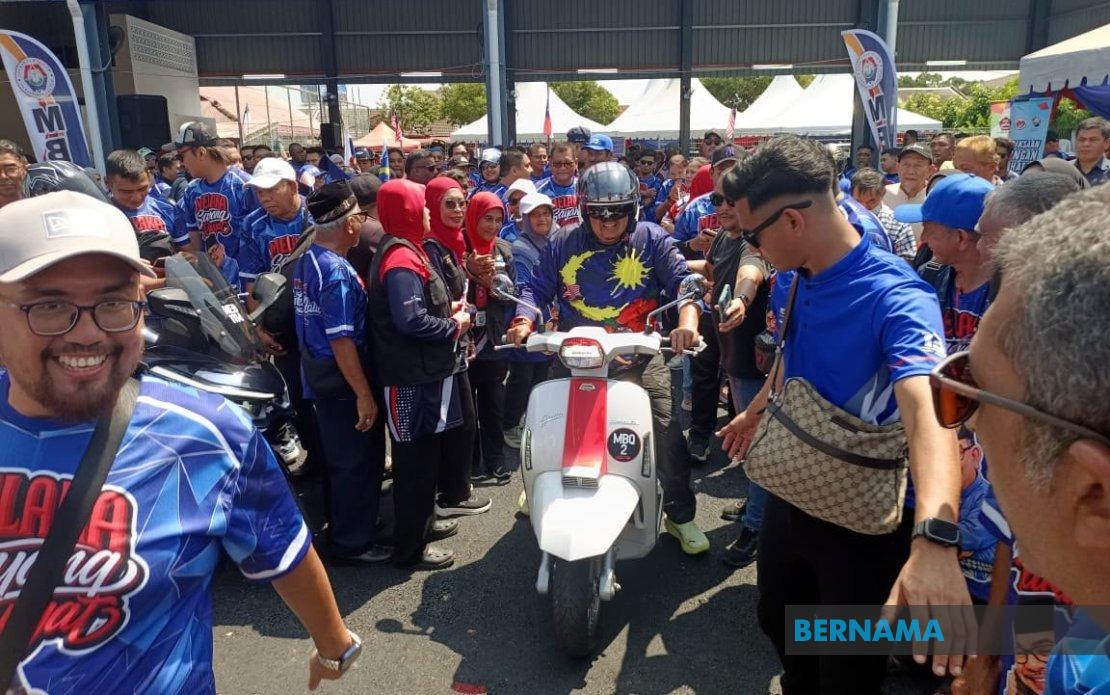
Melaka's Chief Minister Datuk Seri Ab Rauf Yusoh has positioned the state's latest round of grassroots engagement tours as evidence of sustained administrative focus rather than electoral theatre. Speaking after the 10th iteration of the 'Jelajah Ketua Menteri Sayang Rakyat' programme in the Pengkalan Batu state constituency, he characterised the initiative as a continuation of the 'Wakil Rakyat Untuk Rakyat' (WRUR) framework that predates any electoral cycle. The framing is significant in a Malaysian political context where accusations of campaign disguised as governance remain a persistent criticism levelled at ruling coalitions.
The core philosophy underpinning these tours centres on proximity and responsiveness. Ab Rauf explained that the direct engagement model permits state administrators to process public grievances with greater urgency and precision, preventing bureaucratic delays that often plague formal complaint channels. This decentralised approach to governance—where elected officials traverse constituencies to hear concerns firsthand—represents a deliberate departure from the traditional complaint-to-ministry pathway that can prove slow and impersonal.
The WRUR initiative itself originated two years prior to any current electoral atmosphere, according to the Chief Minister, establishing a track record that distinguishes the programme from cynical campaign activities. This temporal positioning matters within Malaysian politics, where voters have grown increasingly sceptical of sudden government attention during pre-election periods. By anchoring the current tour within a longer institutional narrative, Ab Rauf attempts to demonstrate continuity of purpose rather than opportunistic engagement.
During the Pengkalan Batu engagement, state officials resolved eight outstanding issues that had originated from previous WRUR and complementary 'Hari Exco Bersama Rakyat' (HEBAT) programmes. Among the more symbolic resolutions was the acquisition of land for a Muslim cemetery in the constituency. The resolution involved a Chinese property owner extending a 50 per cent discount from market valuation—a gesture that transcends mere land transaction and reflects interfaith cooperation within a diverse urban constituency. Such resolutions carry weight beyond their practical outcomes, signalling to communities that their cultural and religious needs receive official recognition and institutional support.
Material improvements in residents' living conditions formed another substantial dimension of the tour's outcomes. The state government facilitated repairs to five severely deteriorated residential structures and provided a newly constructed house valued at RM100,000 through the 'Baiti Jannati' programme, implemented in partnership with Tenaga Nasional Berhad (TNB). The nomenclature of this housing initiative—derived from Islamic tradition referring to one's home as a small paradise—attaches spiritual significance to infrastructural provision, particularly within a Muslim-majority demographic.
Community infrastructure also received attention through the Melaka Historic City Council's (MBMB) contribution of a multipurpose open hall to Pengkalan Batu. Such facilities function as nodes for community assembly, enabling neighbourhood activities from cultural events to crisis response coordination. The physical handover of such structures provides tangible evidence of government responsiveness that residents can witness and utilise immediately.
Ab Rauf emphasised that hands-on engagement of this nature proves essential for ensuring elected representatives genuinely comprehend constituency requirements. This observation touches upon a structural challenge within Malaysian governance: the potential disconnect between parliamentary representatives insulated within state capitals and the diverse, sometimes competing needs of dispersed communities. By embedding senior administration within neighbourhoods, the approach theoretically bridges this gap, though sceptics might argue it substitutes for rather than supplements systematic policy review.
The scale of the WRUR programme has expanded considerably, reaching its 25th series with only five state constituencies remaining to be covered. This comprehensive geographic sweep suggests institutional commitment to covering the full electoral map, preventing accusations that certain constituencies receive disproportionate attention. Complete coverage also serves as implicit political messaging—that no community falls beyond the government's concern or capacity to deliver.
The state government has framed these tours as mechanisms for collecting policy input, with constituent feedback ostensibly informing refinements to state administration and legislative direction. This feedback loop conceptually transforms constituent engagement from one-directional service delivery into reciprocal knowledge generation, where grassroots perspectives shape higher-level policy formulation. Whether such integration actually occurs remains a question that requires longitudinal assessment of whether grievance patterns translate into policy evolution.
For neighbouring states and federal policymakers, Melaka's approach offers an instructive case study in managing constituent expectations during periods of political uncertainty. The emphasis on problem-solving speed, visible infrastructure delivery, and direct representation engagement addresses common voter frustrations that transcend state boundaries. However, the sustained resources required for comprehensive constituency tours and rapid issue resolution remain beyond reach for less developed state administrations, potentially widening the governance capability gap across Malaysia's federation.

