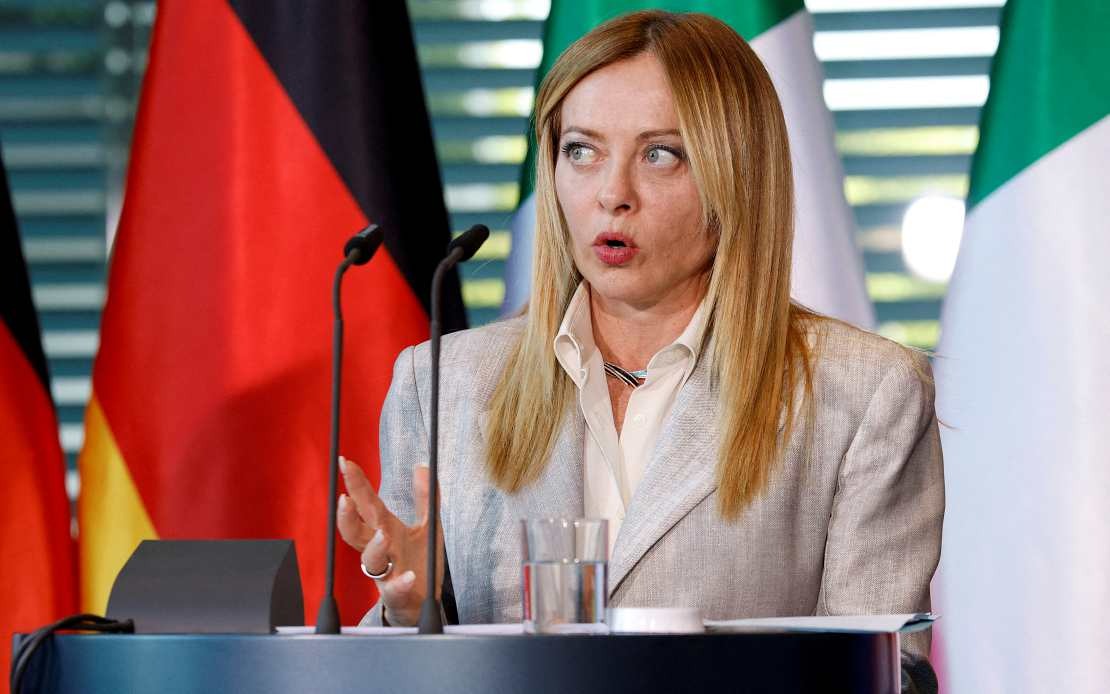
Italian Prime Minister Giorgia Meloni has placed migration management at the forefront of EU policy discussions, proposing the creation of dedicated migrant return and processing centres located beyond European borders. The ambitious initiative, to be debated at an informal gathering of EU home affairs ministers on Tuesday, represents a significant shift in how the bloc addresses irregular migration flows. Interior Minister Matteo Piantedosi will represent Italy at the virtual meeting, where the proposal is expected to dominate proceedings. The timing reflects mounting pressure within the EU to develop new strategies for managing asylum seekers and undocumented migrants, particularly following recent crises at European borders.
Rome's proposal envisages establishing these external processing facilities modelled closely on Italy's existing bilateral arrangement with Albania, which has served as a testing ground for such operations since 2024. Italy aims to finalise formal agreements with third countries—primarily targeting African nations—by year's end, setting the stage for the first centres to become operational as early as 2027. Crucially, the Italian government expects the European Union to shoulder the financial burden of establishing and maintaining these facilities, rather than individual member states bearing the costs alone. This funding mechanism reflects an acknowledgment that addressing migration represents a collective European challenge requiring pooled resources and coordinated policy responses across the continent.
The Albanian model, which Italy currently operates at its own expense and under its own legal jurisdiction, has become the blueprint for this broader European vision. The arrangement permits Italy to process asylum claims, detain migrants pending deportation decisions, and carry out expulsions of undocumented individuals beyond Italian territory. However, the track record of Italy's Albania operations reveals significant practical obstacles. Between May 2025 and mid-July 2026, only 685 migrants were transferred to the Albanian centre, with fewer than 15 per cent subsequently repatriated to their countries of origin. The modest deportation rate underscores the complexity of executing forced returns, even when the necessary infrastructure and legal frameworks exist. Additionally, maintenance costs for the Gjader facility in Albania during 2025 alone reached approximately €50 million, highlighting the substantial financial commitments required for such undertakings.
Italian courts have emerged as a structural constraint on the country's migration enforcement efforts. Judges have repeatedly intervened to prohibit the detention of migrants within the Albanian centres, issuing orders requiring their return to Italian territory. These judicial decisions reflect interpretations of both Italian constitutional law and European human rights standards that prioritise individual protections over expedited border procedures. The tension between executive migration policy and judicial oversight has created a complex legal landscape, with the courts specifically challenging expedited processing mechanisms for nationals of countries deemed safe by the Italian government. This judicial activism has frustrated policymakers but reflects deeply embedded European commitments to procedural fairness and individual rights protection.
Meloni's initiative has attracted substantial political support across the EU establishment. Twenty-two member states jointly submitted correspondence to European Commission President Ursula von der Leyen and European Council President Antonio Costa, formally requesting consideration of enhanced mechanisms to combat irregular migration. Danish Prime Minister Mette Frederiksen has explicitly endorsed the Italian proposal, positioning it as a pragmatic response to migration pressures. Greece, which itself plans to launch comparable external processing operations by 2027, has become another vocal backer. Denmark, Austria, the Netherlands, and Germany are among the leading nations driving this policy direction, indicating that the initiative resonates across diverse European political contexts and governance traditions.
African countries, particularly Rwanda and Uganda, have emerged as priority partners in these negotiations. These nations have progressed furthest along in substantive discussions with European governments regarding hosting and operating migrant processing and return facilities. The willingness of African nations to participate reflects both economic incentives offered by European states and complex geopolitical considerations around migration management in the African context. The framework would ostensibly enable more orderly processing of asylum claims and deportations while shifting the physical and administrative burden away from European territory, though questions remain about the legal protections and conditions within these external facilities.
The impetus for accelerating these discussions intensified following the Ceuta crisis in late July, when the Spanish autonomous city experienced an unprecedented influx of migrants from adjacent Morocco. Over a 24-hour period, approximately 60,000 individuals entered Ceuta, a city with a resident population of merely 85,000. The extraordinary surge overwhelmed local authorities and demonstrated the vulnerability of European border cities to rapid, large-scale migration movements. Spain responded by deploying additional police forces, Civil Guard personnel, and military units to strengthen border security and deter further irregular crossings. Mayor-President Juan Jesus Vivas made the scale of the crisis explicit on July 31, underscoring the challenge that even well-resourced European nations face when confronted with sudden, massive migration flows.
The proposed external centres would theoretically address such crises by intercepting migrants before they reach European soil and processing their claims—and potential deportations—outside EU jurisdiction. Proponents argue this approach would reduce the burden on frontline member states like Spain, Greece, and Italy while establishing more controlled, orderly procedures for asylum determination and return. The targeting of African countries as host locations reflects geographic logic, as many irregular migrants departing for Europe originate from African nations or transit through African territory. However, the approach raises substantial ethical and legal questions regarding the establishment of processing facilities in jurisdictions with varying human rights records and governance standards.
The financial architecture supporting these centres remains partially undefined, with EU funding mechanisms still under development. Italy's experience suggests that operational costs escalate rapidly, particularly when incorporating staffing, legal services, healthcare, and deportation logistics. The commitment from the European Commission to fund external facilities would represent a significant budgetary commitment, requiring negotiation with both member states and the European Parliament. Questions persist regarding oversight mechanisms, accountability standards, and adherence to international refugee law and human rights conventions within these externally-located processing centres.
For Malaysia and Southeast Asian nations monitoring European migration policy, the initiative signals important strategic considerations. As developing countries increasingly subject to external pressure regarding migration management, Southeast Asian governments may anticipate similar proposals for establishing regional processing centres. The European model demonstrates both the appeal and the challenges of externalising migration control, offering lessons regarding cost-benefit calculations, legal-judicial complications, and political sustainability. Additionally, any expansion of African-European migration agreements could alter irregular migration patterns, potentially redirecting migrants toward alternative routes, including potentially Southeast Asian transit corridors.
The proposal also reflects broader ideological shifts within European politics toward more restrictive immigration policies. Meloni's government, representing a centre-right coalition sceptical of open immigration, has made migration control a defining policy priority. The accumulation of support from 22 member states indicates that restrictive migration approaches command substantial backing across the EU political spectrum, from centre-right to far-right constituencies. This consensus shift shapes the policy space available to member states and influences how the European Union addresses migration as a component of internal and external governance.
Implementation of external processing centres by 2027 would represent a watershed moment in European migration governance. Success would likely encourage expansion and institutionalisation of the model, potentially establishing a parallel asylum processing system outside European territory. Conversely, should the centres encounter operational, financial, or legal obstacles similar to those experienced in Albania, policymakers may require alternative strategic approaches. The coming months will determine whether the political consensus translates into effective institutional development and whether third countries prove willing partners in hosting these facilities on acceptable terms.

