The Menu RAHMAH programme continues to gain traction across Malaysia, with Domestic Trade and Cost of Living Deputy Minister Datuk Dr Fuziah Salleh confirming that 3,210 food and beverage premises had registered as operators as of July this year. This expanding network reflects a growing willingness among food service proprietors to participate in government-backed initiatives designed to address the rising pressures on household finances that continue to concern Malaysian consumers and policymakers alike.
The distribution of participating establishments reveals interesting patterns in how different food service segments have embraced the scheme. Food stalls and food court operators lead the charge with 1,016 registrations, demonstrating particularly strong uptake among traditional food service venues that serve the broadest cross-section of Malaysians daily. Beyond this dominant category, the programme has attracted restaurants, hawker operators, mobile food truck vendors, and bazaar-based food sellers, creating a diverse ecosystem of affordable dining options spread across residential areas, commercial districts, and public gathering spaces.
Depending on government messaging and political strategy, the characterisation of Menu RAHMAH as a permanent rather than temporary initiative carries significant weight. By framing the programme as integral to long-term policy rather than a stopgap emergency measure, the government signals its commitment to sustained intervention in food affordability—an increasingly central issue for lower and middle-income households grappling with inflation. This positioning also provides reassurance to participating merchants that their investment in compliance and menu standardisation aligns with a durable framework rather than fleeting bureaucratic initiative.
Geographic distribution remains a key focus area, with particular attention paid to high-demand locations including Rest and Service Areas along major highways. These R&R facilities attract millions of travellers annually and represent strategic nodes where affordable meal options directly benefit interstate commuters, long-distance lorry drivers, and families undertaking road trips. The expansion into such locations reflects careful consideration of where cost-conscious Malaysians congregate and where access to reasonably priced meals significantly enhances their travel experience and logistics economics.
The Ministry of Domestic Trade and Cost of Living (KPDN) has invested in promotional infrastructure designed to sustain and accelerate programme growth. The 'Jom Cari Menu RAHMAH' campaign works to increase public awareness and foot traffic to participating outlets, effectively functioning as targeted marketing support for smaller merchants who might otherwise lack resources for extensive promotion. Simultaneously, the ministry has engaged traders' associations and industry bodies, recognising that buy-in from organised business networks proves more efficient than approaching thousands of individual proprietors separately.
Complementing Menu RAHMAH is the MADANI RAHMAH Sales Programme (PJRM), which targets essential consumer goods rather than prepared meals. As of July 2026, PJRM had been executed 19,322 times across the nation, surpassing an annual target of 17,500 implementations and recording over 25.4 million individual transactions. This volume underscores the substantial demand for subsidised bulk purchases of necessities, suggesting that many households actively seek out government-supported shopping opportunities to stretch stretched budgets.
The range of items covered under PJRM—including chicken, fish, eggs, cooking oil, flour, rice, fresh vegetables, fruits, and household necessities—reflects a deliberate strategy to target inflation in basic food staples that represent core components of Malaysian household expenditure. By offering savings of between 10 and 30 per cent compared to conventional retail prices, the programme directly reduces the effective cost of nutrition and essential household operations for participants. Over 600 state constituencies and 40 Federal Territory zones now host PJRM implementations, representing extensive territorial coverage targeting communities identified as genuinely requiring such assistance.
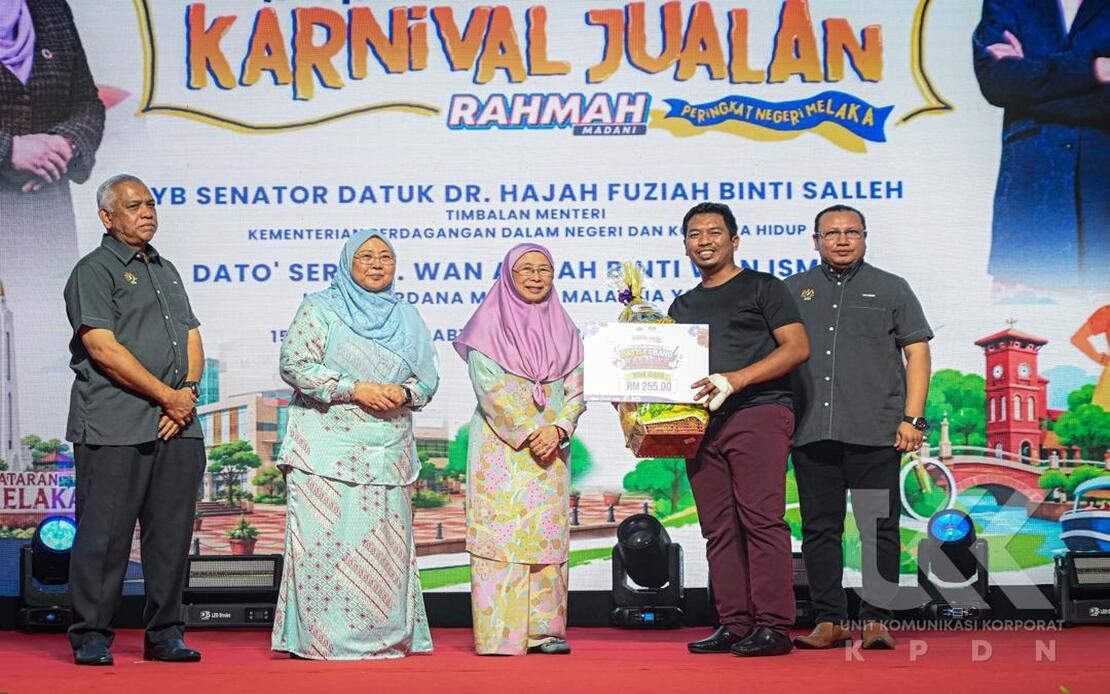
The ministry's approach has increasingly incorporated experiential engagement with consumers through large-scale community events. The KPDN Mini Carnival held in Melaka recently brought together multiple government initiatives under one umbrella, creating a one-stop venue where residents could encounter Menu RAHMAH operators, purchase goods through PJRM, explore government services, and engage in business networking. Featuring 27 traders offering competitively priced goods alongside entertainment including competitions and esports tournaments—in partnership with Todak—the event attracted nearly 3,000 visitors on its opening day alone.
These initiatives must be understood within Malaysia's evolving cost-of-living landscape, where inflation and structural economic pressures have created genuine hardship for substantial segments of the population. While Menu RAHMAH and PJRM represent supply-side interventions—essentially government subsidisation of food access—they form part of a broader political economy strategy addressing what remains a persistently contentious issue. The programmes' visibility and their integration into community-level engagement demonstrate how contemporary Malaysian governance increasingly channels cost-of-living relief through direct consumer access rather than abstract macroeconomic policy.
The expansion of these programmes also carries implications for food service sector economics in Malaysia. By establishing price floors and standardised menu structures, the government effectively influences competitive dynamics within food retail. Small operators gain advantage through government promotion and cost transparency, while larger chains must navigate a landscape where consumers expect certain meals at Menu RAHMAH-standardised prices. This restructuring of market expectations may eventually reshape how Malaysian food service businesses price and market offerings across different consumer segments.
Looking ahead, the sustained growth of Menu RAHMAH and PJRM will likely depend on maintaining merchant enthusiasm and consumer awareness. As the programmes mature beyond their initial launch phase, the challenge shifts from recruitment to retention—ensuring that operators continue participating despite tight margins, and that consumers remain aware of participating outlets in their localities. The government's investment in promotional campaigns and community engagement events suggests awareness of this sustainability challenge and a determination to institutionalise these mechanisms as permanent features of Malaysian consumer support infrastructure.

