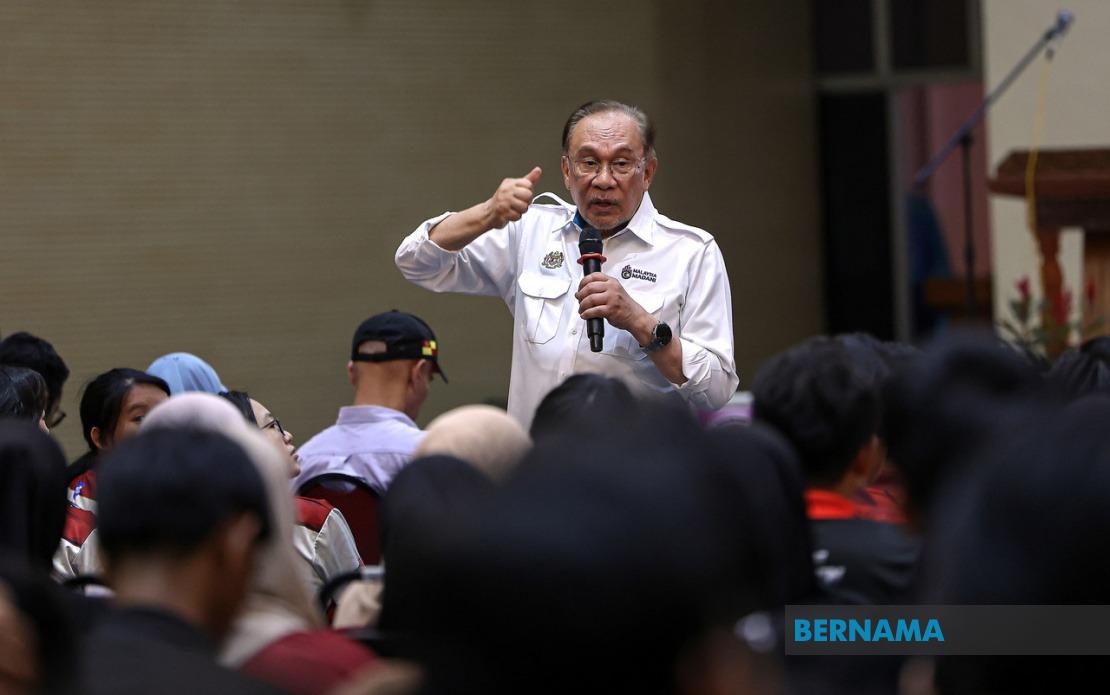
Prime Minister Datuk Seri Anwar Ibrahim has outlined a recalibrated approach to matriculation programme admissions that attempts to reconcile two competing educational priorities: recognising academic merit and ensuring equitable opportunities for economically disadvantaged students. Speaking at the Jelajah Rakan Muda programme in Seremban on July 22, Anwar stressed that the government's intake strategy incorporates both meritocratic principles and targeted support mechanisms designed to broaden access to higher education pathways.
At the core of the revised framework lies a commitment to automatic entry for students achieving exceptional SPM results. Those securing ten A grades—the maximum possible in the Sijil Pelajaran Malaysia examination—will gain guaranteed matriculation places irrespective of their ethnic or socioeconomic background. This threshold-based approach signals a willingness to prioritise raw academic achievement at the highest levels, a policy position that carries significance given ongoing national conversations about educational selection methods and social mobility.
The prime minister explicitly underscored that this merit-based pathway transcends communal boundaries. His statement that students "whether they are Chinese, Indian or Malay" achieving ten A grades would receive automatic admission represents a deliberate articulation of race-neutral academic advancement. This framing reflects broader government messaging about inclusive meritocracy, though it also acknowledges persistent concerns among non-Bumiputera communities regarding access to government-funded tertiary education schemes historically reserved for Bumiputeras.
Simultaneously, Anwar reaffirmed the continued operation of Bumiputera quota provisions within the matriculation system. Rather than presenting this as a contradiction to merit-based selection, he contextualised the quotas as addressing structural inequalities rooted in demography and geography. The provisions, he explained, function to assist students from rural and interior regions, with explicit mention of Sabah and Sarawak—states where accessibility to quality secondary education and examination coaching remains uneven relative to urban peninsular centres.
This dual-mechanism approach reflects the political complexity surrounding educational access in Malaysia. The matriculation programme itself has long functioned as a primary gateway to public university admission, making its intake criteria consequential for hundreds of thousands of families annually. Historical debates have centred on whether the system adequately serves merit-based advancement or whether quota protections inadvertently limit opportunities for non-Bumiputera applicants despite their examination performance. Anwar's framing attempts to navigate these tensions by establishing clear thresholds—the ten A benchmark—while preserving safeguards for geographically and economically marginalised communities.
The emphasis on rural and interior areas warrants particular attention for Malaysian policymakers. Educational disparities between urban and remote regions remain pronounced, with students in interior areas of Peninsular Malaysia, Sabah, and Sarawak typically facing greater resource constraints, longer distances to examination centres, and limited access to private tuition—factors that depress SPM results independently of academic potential. By anchoring quota justifications to these structural realities, the government positions Bumiputera provisions as developmental policy rather than purely communal preference, a rhetorical shift with implications for how educational equity debates progress.
The Youth and Sports Minister Dr Mohammed Taufiq Johari's attendance at the Seremban event underscores the youth-focused dimension of this policy articulation. The Jelajah Rakan Muda programme targets younger voters and citizens, suggesting the government views matriculation intake principles as relevant to broader youth engagement strategies. Educational access consistently ranks among young Malaysians' primary policy concerns, making transparent communication about university entry mechanisms politically valuable.
Implementing this balanced framework presents practical administrative challenges. Determining which students qualify as economically disadvantaged or geographically disadvantaged requires robust verification mechanisms. The definition of "rural and interior areas" must account for regional variations—what constitutes remoteness in Selangor differs substantially from Sarawak's geography. Additionally, ensuring that the ten A automatic entry pathway functions smoothly while maintaining quota procedures demands coordination across matriculation institutions and the Education Ministry.
The policy also intersects with broader educational reform discussions in Malaysia. Some observers have advocated for reducing reliance on single-examination achievement metrics, arguing that SPM results reflect socioeconomic advantages as much as innate ability. Conversely, proponents of merit-driven systems contend that high-achieving students should face minimal barriers to advancement regardless of background. Anwar's approach attempts accommodation rather than resolution of these tensions, potentially satisfying neither faction entirely while maintaining political balance.
For Southeast Asian context, Malaysia's matriculation framework carries regional significance. Several neighbouring countries grapple with comparable tensions between meritocratic selection and equity-focused admission policies in tertiary education. Malaysia's experience navigating these pressures—and the specific mechanisms chosen—may inform policy discussions across the region regarding how to construct inclusive yet rigorous higher education access systems.
Looking forward, the efficacy of this two-track system will depend on transparent implementation and periodic review. Monitoring whether the automatic entry threshold genuinely expands opportunities for high-achieving students across all communities, while simultaneously assessing whether quota provisions adequately support disadvantaged students, will generate evidence for potential adjustments. The government's willingness to recalibrate these mechanisms in response to outcomes will likely determine whether the policy achieves its stated objective of fairer educational access.

