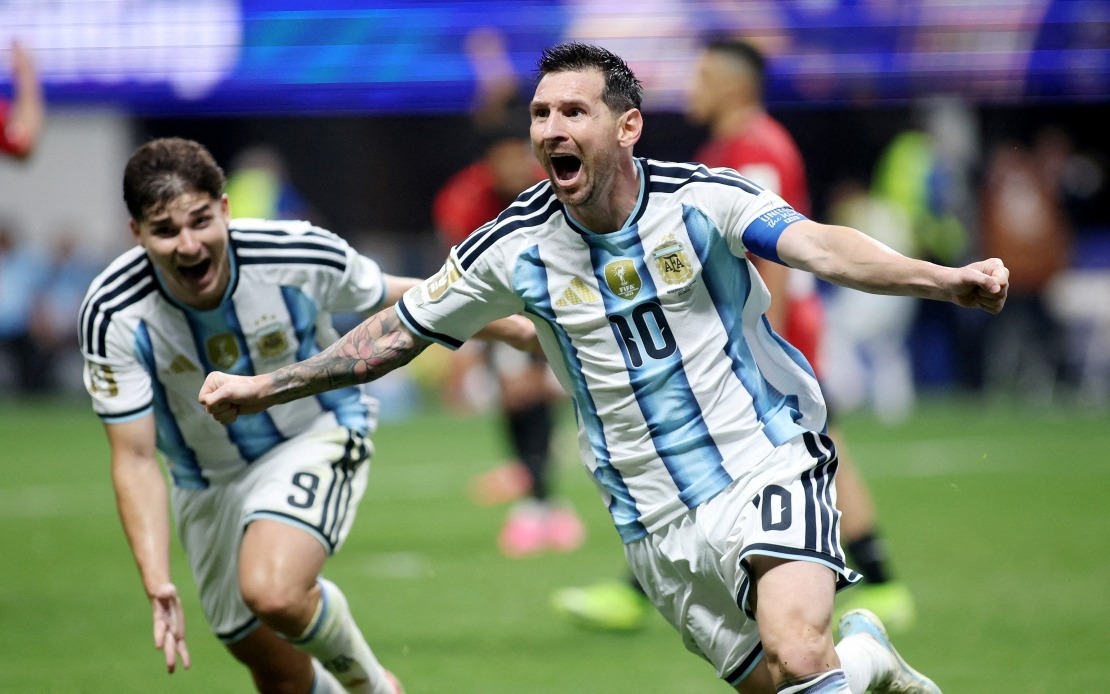
Lionel Messi's enduring presence at the World Cup stage demonstrates one of sport's most remarkable longevity narratives. At 39 years old, the Argentine forward has returned to international football's grandest tournament less than two years after what many assumed would be his farewell. With eight goals already tallied in this summer's competition, Messi stands level with France's Kylian Mbappé atop the scorer's ranking—a position that underscores his continued capacity to perform at the highest level despite his advancing age. The stakes are particularly high as Messi pursues a second World Cup crown, having led his nation to victory in Qatar in 2022 with seven striking contributions that included two in the final itself.
The 2022 championship appeared to provide a perfect conclusion to Messi's World Cup narrative, particularly given the squad's collective motivation to deliver the trophy before their talismanic captain's retirement. That victory over France on penalties seemed destined to be his international swansong, cementing a legacy already considered among football's greatest. Yet circumstances have aligned differently. Messi's continued excellence and Argentina's ambitions have kept him engaged with the competition at an age when most players have long since stepped away. His return has confounded those who believed his World Cup story had concluded in the Lusail Stadium, reigniting questions about what additional chapters remain in his extraordinary career.
What renders Messi's current campaign particularly noteworthy is not merely his scoring tally but the context in which he accumulates it. The Golden Boot—awarded to the tournament's leading scorer—remains one of the few individual accolades absent from his glittering trophy collection. During Qatar 2022, Mbappé claimed this honour despite finishing on the losing side, netting a hat-trick in the final itself. The Frenchman currently holds a marginal advantage in the three-way statistical breakdown that encompasses assists and minutes played, though Messi's relentless threat means this designation could shift with each fixture. England's Harry Kane and emerging prodigy Jude Bellingham, both carrying six goals, represent credible challenges from the competition's deeper stages, having progressed further than eliminated contenders such as Erling Haaland.
Messi's accumulated World Cup goal tally has ascended to 21, a figure that underscores his historical significance whilst simultaneously highlighting an uncomfortable reality. Mbappé requires merely one additional goal to draw level with the Argentine maestro, and given the France forward's trajectory, the permanence of this record appears uncertain. The two players have jointly eclipsed Miroslav Klose's previous benchmark of 16 goals—a milestone that stood for more than a decade before this summer's extraordinary offensive displays dismantled it. Kane has simultaneously climbed the historical rankings with 14 goals to his name, demonstrating that multiple generations of strikers are challenging the previous statistical foundations of World Cup achievement.
Beyond individual scoring records, Messi has authored multiple entries into the tournament's historical ledger. He and Cristiano Ronaldo have become the inaugural male players to appear in six separate World Cups, a distinction reflecting their phenomenal durability at elite level. Both have surpassed Lothar Matthaus' previous appearance record of 25 matches, with Messi poised to make his 33rd appearance on Wednesday—a margin of six further appearances than Ronaldo. This remarkable cumulative experience has provided Messi with an institutional knowledge of the competition's rhythms that few possess, translating tactical intelligence and mental resilience developed across nearly two decades of participation.
Messi's World Cup trajectory commenced with a single strike during his debut in 2006, when he was merely a teenage prospect navigating his first exposure to international football's highest platform. The subsequent 2010 tournament saw him draw a blank, suggesting perhaps that World Cup success might elude his career narrative. Yet his fortunes transformed dramatically in 2014, when Argentina's home tournament yielded four goals and an agonising final defeat to Germany. The intervening cycle in Russia 2018 produced a solitary contribution, positioning him as an inconsistent tournament performer entering the Qatar campaign.
The 2022 World Cup fundamentally altered this perception. Scoring seven goals at age 35, Messi produced his most prolific tournament performance, remarkably exceeding his combined output from his previous four World Cup appearances. This statistical explosion did carry one notable caveat: four of his seven goals originated from penalty conversions, demonstrating both his composure from the spot and Argentina's tendency to be awarded dead-ball opportunities. This pattern has resurged in the current competition, though with more troubling implications. Messi dispatched a penalty kick wide during Argentina's group-stage encounter with Austria and witnessed another effort saved by Egyptian goalkeeper Mostafa Shobeir in the knockout phase, leaving his World Cup spot-kick conversion rate at a modest four of eight across open play—excluding the pressure-cooker environment of penalty shootouts.
Where Messi has demonstrated exceptional proficiency is in penalty shootout situations, succeeding in all three opportunities he has faced across World Cup history. These included matches against the Netherlands during both the 2014 tournament and the 2022 final, the latter representing the pinnacle of his international career to date. The contrast between his modest open-play penalty record and his flawless shootout performance suggests a particular mental fortitude emerging specifically when sudden-death circumstances materialise. This psychological dimension adds nuance to simple statistical assessments, hinting at how Messi elevates his performance when the stakes transform from tournament progression to outright elimination.
The broader implications of Messi's continued excellence extend beyond individual achievement to encompass Argentina's collective ambitions and the evolution of professional football itself. That a player of Messi's age can remain a primary attacking focal point whilst competing against players a generation younger challenges conventional wisdom regarding athletic decline and career trajectories. His presence fundamentally alters opposing tactical approaches, forcing defences to devote substantial resources to nullifying his threat—a burden that creates space and opportunities for supporting teammates. For Malaysian and Southeast Asian observers, Messi's longevity offers instructive case studies regarding training methodology, recovery protocols, and the mental resilience required to sustain excellence across multiple decades.
As Messi prepares for his latest challenge, the question of finality recurs with increasing poignancy. Whether this current tournament represents his definitive World Cup appearance remains unknowable, though such a conclusion appears increasingly probable. The opportunity to secure a second championship would represent an almost unimaginable conclusion to an already legendary career, providing a symmetry that would render his World Cup narrative as distinctive as his club achievements. Should Argentina progress and ultimately triumph, Messi would cement his status not merely as football's greatest individual talent but as a player capable of delivering supreme collective success across separate decades—a distinction that would transcend statistical records entirely and enter the realm of genuine historical immortality.

