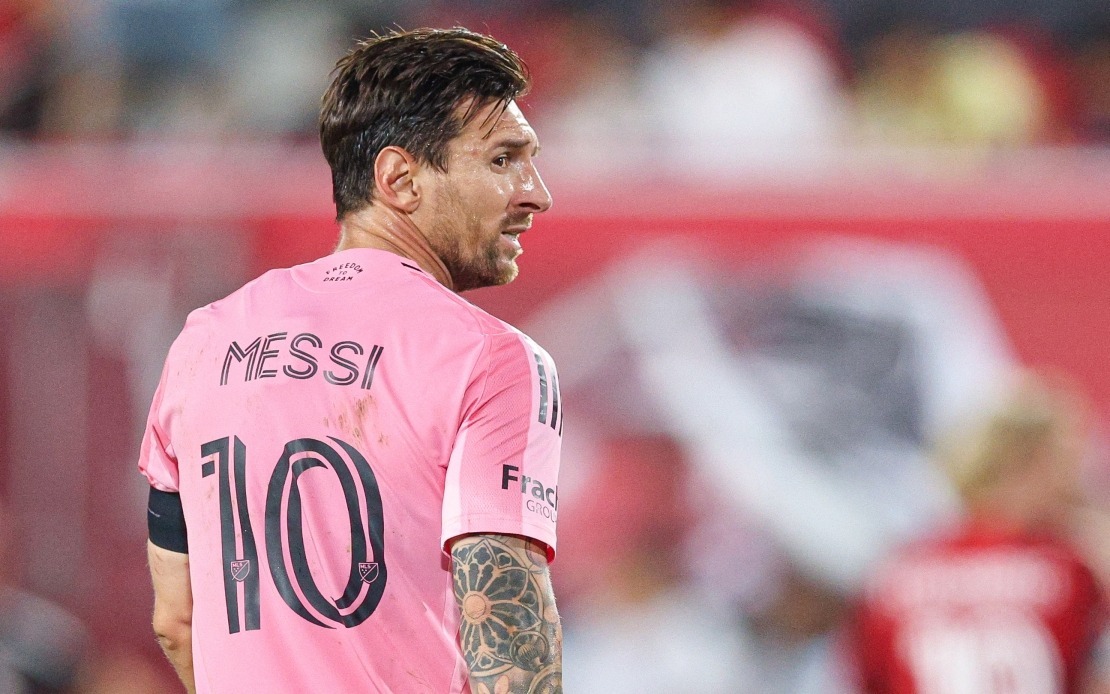
Lionel Messi made an emotional return to competitive football on Wednesday, taking the field as a half-time substitute for Inter Miami in their 3-2 defeat to Leon during the Leagues Cup group stage finale. The Argentina captain's appearance came just days after he posted an anguished social media statement questioning whether he could continue his football career following the death of his father, Jorge, who had guided his rise to becoming one of sport's greatest talents.
The timing of Messi's return reflects the raw nature of his grief. His poignant statement issued in the days prior revealed a man grappling with profound loss and uncertainty about his path forward. In deeply personal language, he addressed his late father directly: "You were by my side from the beginning; there was so little left until the end. Why couldn't you hold on just a little longer so we could finish it together?" The post conveyed genuine anguish, with Messi expressing bewilderment about continuing without his lifelong guide and confidant.
Jorge's influence on his son's career trajectory cannot be overstated. From the moment Lionel was fourteen years old, his father served as his agent, witness to an extraordinary ascent through Barcelona's youth system into global football prominence. Jorge was present for Messi's crowning achievement as Argentina captain at the 2022 FIFA World Cup in Qatar, a moment that vindicated decades of dedication. The relationship transcended professional representation—Jorge was a constant emotional anchor, a parent who lived for his son's achievements and remained invested in every milestone.
Messi had not played since before Jorge's passing last week. He missed Inter Miami's 2-1 loss to Monterrey on Saturday and attended a private funeral service at a cemetery in Perez, a town near his hometown of Rosario. The private nature of the ceremony underscored the family's desire to grieve away from the public spotlight that has defined Messi's existence since childhood. Yet for a player of his stature, privacy remains virtually impossible—the entire football world watched and waited to learn whether grief would claim football's greatest contemporary talent.
In his statement, Messi revealed something particularly poignant: his father had urged him to play in one final World Cup despite deteriorating health. This was the motivation that sustained him through Argentina's World Cup run this summer, where they reached the final before losing 1-0 to Spain in extra time. The knowledge that Jorge would not live to see Messi play another World Cup adds layers of melancholy to recent months. The unfinished journey—the sense that one last tournament together would have provided closure—haunts Messi's words.
For Malaysian and Southeast Asian football observers, Messi's decision to return carries particular resonance. Asian football culture places immense value on filial piety and family obligation, concepts that Messi's public reflections have made universal. His hesitation about continuing represents a genuine crisis of meaning for someone whose identity has been entirely consumed by football since early adolescence. The question "I don't know how to carry on" speaks to something deeper than athletic performance—it addresses identity, purpose, and the structures that have defined a life.
Inter Miami coach Guillermo Hoyos demonstrated profound empathy in his postgame comments, drawing parallels to his own paternal loss. "I've always said that this is a very painful thing and it takes a long time," he reflected. "When I lost my father, it was hard. He was my guide. I needed him in many cases and I felt alone." His words acknowledged that what Messi faces transcends football—it is fundamentally about losing someone whose guidance has been essential to every major decision. Hoyos's recognition of Messi's pain as a man rather than merely as a player demonstrates the human dimension often obscured by celebrity status.
Opposition coach Javier Gandolfi offered a different perspective, choosing to emphasize Messi's character and ability. Describing him as perhaps the finest player in football history, Gandolfi observed that Messi demonstrated his quality both on the pitch and through "some other actions I would see at a distance," a cryptic reference that likely pointed to his comportment and resilience during an extraordinarily difficult period. Such commentary suggested that Messi's presence—despite the emotional turbulence—remained commanding.
The return to action raises broader questions about grief, professional obligation, and the psychological demands placed on elite athletes. Messi's appearance for Inter Miami might be interpreted several ways: as a sign of resilience and commitment, as a mechanism for processing grief through the familiar structure of football, or as adherence to professional duty at a moment when personal devastation would justify withdrawal. Different cultures emphasize different virtues in such circumstances.
For Malaysian fans and observers, Messi's situation resonates particularly in a region where family bonds remain central to social identity. His public declaration of uncertainty about continuing resonates with universal human experience—the fear that loss might render previous pursuits meaningless. That he returned to the pitch despite this uncertainty speaks to both professional discipline and the transformative power of doing what one knows best during periods of profound grief.
The road ahead remains uncertain. Whether Messi's return to Miami marks the beginning of gradual healing and renewed commitment, or whether deeper introspection about his future will eventually lead to retirement, only time will reveal. What is clear is that the partnership between father and son—forged in Rosario over three decades ago—will continue defining Messi's narrative, even as Jorge's physical presence has departed. The football itself may prove the best memorial, though that remains Messi's choice to make.

