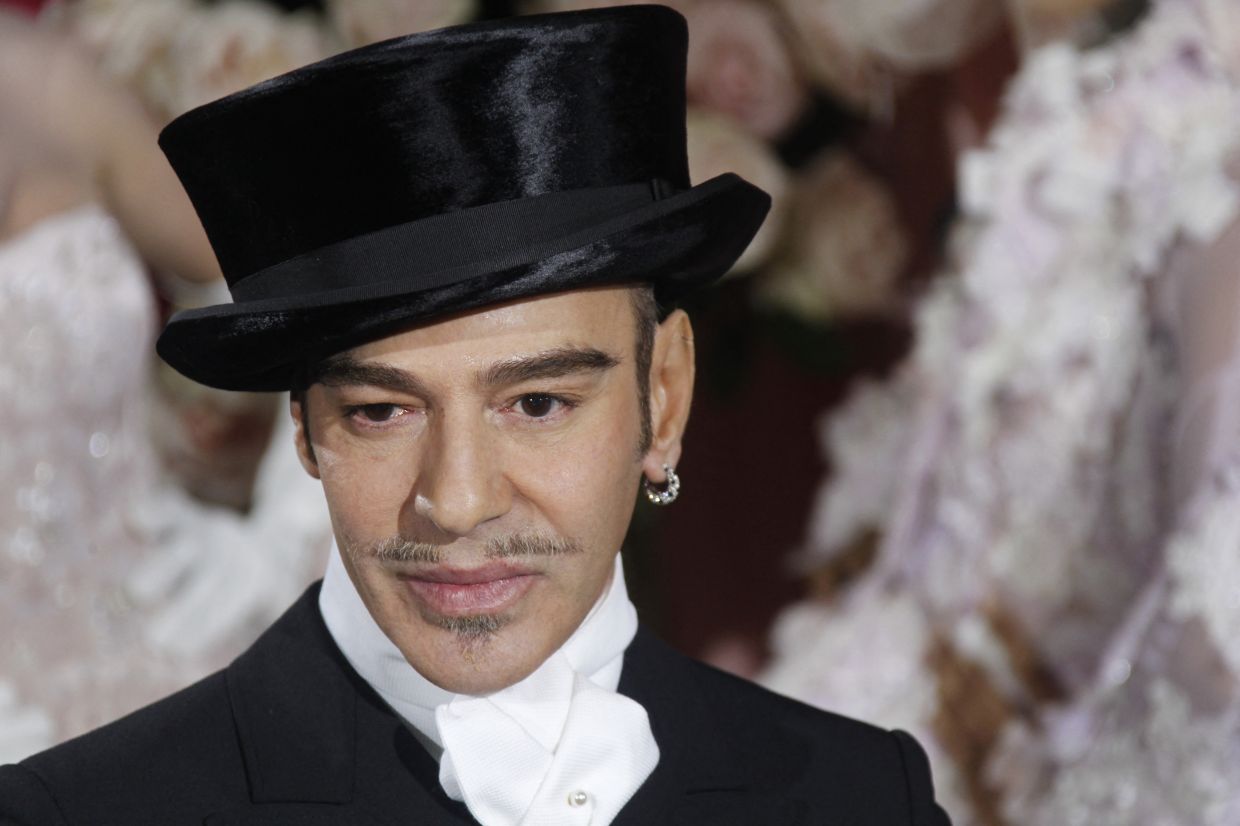
The Metropolitan Museum of Art has announced that its 2025 Met Gala exhibition will centre on John Galliano, the British fashion virtuoso whose extraordinary design vision was eclipsed by a career-defining scandal that saw him fall from the very apex of the luxury fashion world. The Costume Institute at the Met will become only the third venue to mount a major retrospective of a living designer, a recognition that underscores Galliano's undeniable influence on contemporary fashion despite the controversy that has marked his recent decades.
Galliano's trajectory in haute couture represents one of fashion's most dramatic arcs—a rise to the creative directorship at Christian Dior, arguably the most prestigious position in luxury design, followed by a precipitous fall. For nearly fifteen years, he steered the vision of the storied French house, his imaginative collections defining an era of extravagant, theatrical styling that captivated fashion editors and celebrities worldwide. Yet in 2010 and 2011, a series of antisemitic and racist remarks—including video footage of him expressing admiration for Adolf Hitler—went viral, triggering widespread condemnation and prompting legal action. A Paris court subsequently convicted him of making public insults based on race, religion, ethnicity, and origin.
The fallout from these revelations was swift and unforgiving. Dior terminated his position, and his eponymous label severed ties with him as well. For several years, Galliano disappeared from the public eye, engaging in what the museum characterises as both private and public rehabilitation efforts. The trajectory of his comeback began in 2014 when Maison Margiela, the experimental Belgian fashion house based in Paris, extended an offer of redemption by appointing him as creative director. For the following decade, he channelled his formidable talents into building Margiela's reputation as a house of conceptual innovation and technical mastery, effectively repositioning himself within the industry.
The decision to mount a full retrospective raises profound questions about artistic legacy, ethical accountability, and the possibility of redemption. The Metropolitan Museum has explicitly acknowledged that this exhibition cannot and will not sidestep Galliano's misconduct. A statement issued by the institution emphasised that the show will address "the derogatory conduct that fundamentally altered his career and public reception," whilst also examining "how artistic achievement should be understood alongside ethical accountability." This dual focus reflects a broader cultural conversation about separating an artist's work from their personal failings—a conversation particularly resonant for galleries and cultural institutions navigating the #MeToo era.
Curator Andrew Bolton, who oversees most of the Met's major fashion exhibitions, framed the retrospective as an examination of "both how Galliano has remapped the world through fashion and how his conduct, its consequences, and changing cultural values have reshaped our understanding of his work." This framing suggests that the exhibition will not simply celebrate Galliano's aesthetic innovations in isolation but will instead weave his transgression and its aftermath into the narrative of his artistic development. The curatorial approach signals an institutional commitment to complexity and nuance rather than sanitised retrospection.
Preparation for the exhibition has required extraordinary sensitivity. The Met confirmed that museum leadership, including chief curator Bolton, Galliano himself, and Vogue Editor-in-Chief Anna Wintour, held meetings with Jewish community leaders in New York to solicit their perspectives and ensure the exhibition would be handled appropriately. These consultations underscore the gravity with which the institution approached the project and the recognition that any retrospective touching on antisemitism demands engagement with affected communities.
The exhibition structure reflects this multifaceted approach. The first section, titled "Bearings," will directly confront the rupture caused by Galliano's conduct, detailing his dismissal from Dior and his label, his legal conviction, and his subsequent treatment for substance addiction and acknowledgment of his actions. Rather than treating these elements as regrettable footnotes, the museum elevates them to primary curatorial concern, ensuring visitors encounter the full historical record. This approach distinguishes the exhibition from a conventional retrospective that might marginalise or obscure such material.
The subsequent sections broaden the focus to encompass Galliano's creative vision. "Horizons" will explore the sources that fuel his imagination—including history, geography, art, storytelling, and theatrical performance—demonstrating how his mind synthesises cultural references and narratives into garments. The final section, "Atlas Of Transformation," will concentrate on his technical mastery, examining his experimentation with construction, his craftsmanship, and the innovations he has introduced to haute couture over his career. Together, these three sections construct a portrait of an artist whose imaginative capacities remain formidable even as his ethical failures remain indefensible.
For Southeast Asian fashion enthusiasts and the region's growing luxury market, this exhibition carries particular significance. Galliano's influence on haute couture has extended globally, with his theatrical approach to fashion resonating in markets where flamboyance and narrative-driven design carry cultural resonance. Malaysian and regional consumers of high fashion have long recognised his impact through the collections that trickle down from luxury flagships to contemporary boutiques. The Met's exhibition, by taking seriously both his contributions and his failures, offers a model for how fashion institutions might engage with complicated legacies.
The May 2025 Met Gala, which traditionally launches the Costume Institute's new exhibition, will undoubtedly attract intense scrutiny. The red carpet will become a stage where fashion's elite navigate the tensions between celebrating artistic achievement and acknowledging ethical accountability. This balance—neither erasure nor simple redemption—represents the exhibition's central challenge and, potentially, its most enduring contribution to how the fashion world reckons with its own complicated histories.
The retrospective also signals a shift in how cultural institutions approach fallen figures. Rather than permanent cancellation or uncritical rehabilitation, the Met is proposing a third path: sustained, honest examination that refuses easy resolution. Whether this model proves persuasive or merely controversial will become apparent when the doors open in May, offering audiences the opportunity to form their own conclusions about how to value artistic genius alongside personal transgression.

