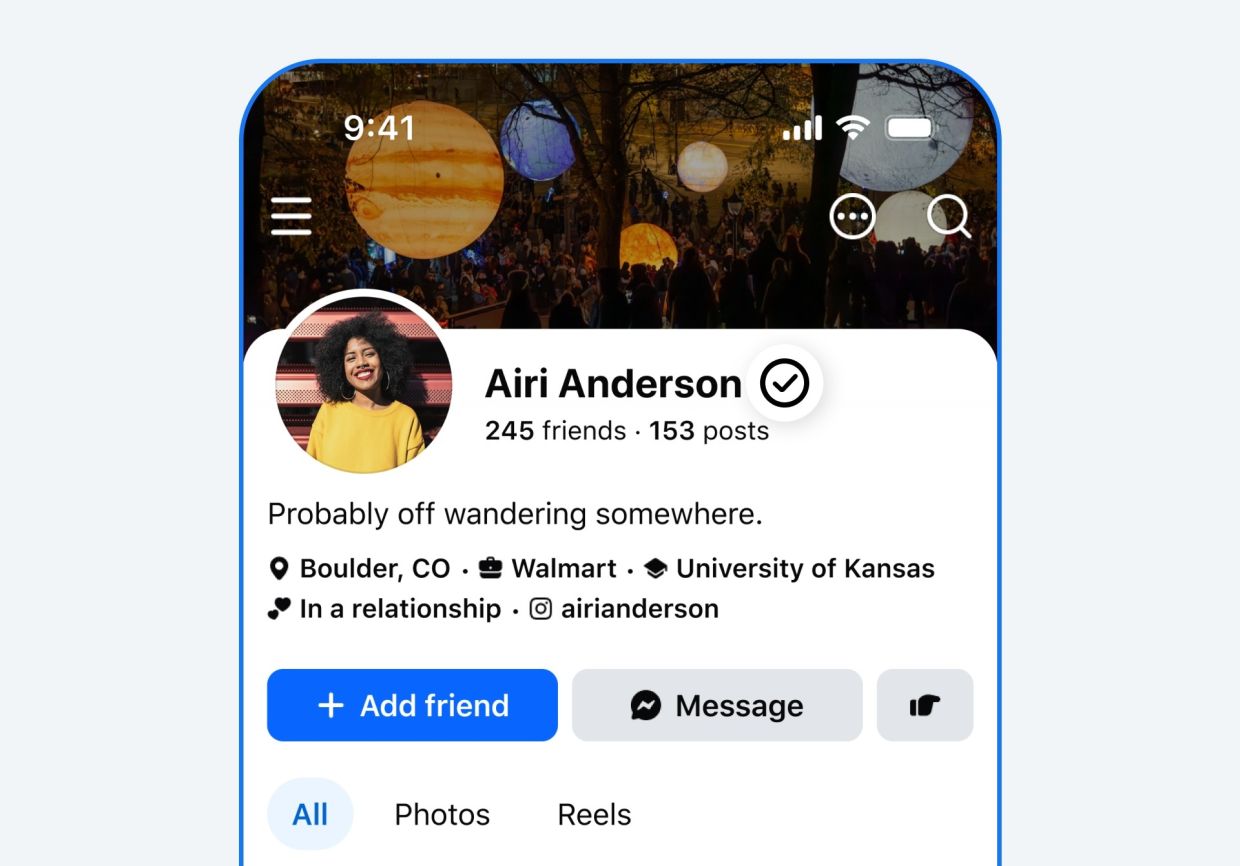
Meta is deploying a new verification system for Facebook that will offer selected users around the world a complimentary authentication badge starting July 27, marking the technology giant's latest effort to combat surging fraud on its platforms. The badge programme, which differs from the company's existing paid Meta Verified subscription, requires eligible users to complete a brief video selfie process that Meta will compare against photographs already visible on their accounts. The company expects the verification process to take only a few minutes, with facial data being automatically purged within 30 days of approval, though users retain the badge indefinitely.
The rollout represents a significant strategic shift for Meta's leadership, particularly following Mark Zuckerberg's recent declaration that the company is "betting on people" as artificial intelligence makes digital profiles, images, and communications increasingly easy to fabricate convincingly. Tom Alison, who heads Facebook's operations, similarly positioned the badge initiative as integral to preserving what he termed "real connections between real people." This framing reveals Meta's acknowledgement that user confidence in platform authenticity has become central to its competitive positioning, especially as deepfake technology and AI-generated content proliferate across social networks globally.
Access to the badge comes with specific eligibility criteria. Users must be at least 18 years old, maintain accounts in good standing without evidence of scams, fraud, deceptive conduct, or other inauthentic behaviour patterns. Notably, accounts and pages operating under Meta's Professional Mode designation are excluded from the programme. The company has stressed that the badge functions narrowly: it confirms only that the individual passing the selfie comparison resembles the person pictured on their profile. Meta explicitly clarifies that the badge does not endorse users, verify the authenticity of their marketplace listings, guarantee trustworthiness, or certify that sellers own advertised items or will fulfil transactions.
The verification tool carries particular significance for Facebook Marketplace, where hundreds of millions of users transact with complete strangers monthly. Meta's data reveals that Marketplace receives 430 million item listings and 44 million vehicle listings globally each month, whilst one in three young American adults on Facebook visit the service daily. The scale of these transactions, combined with the inherent risks of commerce between unknown parties, creates substantial vulnerability to fraud schemes. Consumer fraud reports submitted to the United States Federal Trade Commission indicate that Americans lost more money in 2025 to scams originating on Facebook than on any other social-media platform, with shopping deception representing the most frequently reported fraud category across all social media combined, totalling US$2.1 billion (RM8.57 billion) in reported losses.
Andras Cser, a vice president and principal analyst at Forrester Research, characterises the badge system as addressing fundamentally "a reputation and user trust problem." Whilst verification mechanisms do introduce friction into user interactions, they can simultaneously facilitate more confident commercial transactions by providing lightweight assurance of account authenticity. However, Cser notes a critical limitation: Facebook Verified does not satisfy formal, jurisdiction-specific know-your-customer requirements that are standard in regulated financial industries. This distinction matters considerably for Malaysian and Southeast Asian users operating in countries with increasingly stringent financial regulations and anti-money-laundering requirements.
Other technology platforms have already demonstrated the commercial value embedded within verification systems. LinkedIn reports that more than 100 million of its members have adopted verification features, with verified members experiencing up to 60 percent higher profile visibility and 50 percent greater engagement rates on their posts. Tinder, which operates a video-selfie verification system similar to Meta's new badge programme, reports that verified accounts have reduced interactions with fraudulent or deceptive users by more than 50 percent in markets where the system operates. These precedents suggest that Meta's Facebook badge, even without explicit algorithmic preference, may create de facto commercial advantages as cautious Marketplace buyers gravitate toward sellers displaying verification credentials.
Meta's return to facial recognition technology for identity verification carries historical weight and considerable regulatory baggage. The company discontinued its broader facial-recognition system in 2021, publicly committing to delete more than one billion facial templates due to regulatory uncertainty and societal privacy concerns. However, Meta preserved narrower applications of facial recognition, including identity verification and fraud prevention purposes. This selective reinstatement of biometric technology reflects Meta's calculated judgment that targeted, limited-scope facial recognition serves legitimate security functions whilst abandoning the broader surveillance apparatus that generated public and regulatory backlash.
James E. Lee, president of the Identity Theft Resource Center, a nonprofit organisation assisting victims of identity theft and fraud, characterises the verification programme as potentially constituting "a good use of biometrics," yet he emphasises that Meta has not disclosed sufficient technical detail to enable independent evaluation of its effectiveness or security architecture. Lee raises a sobering but realistic concern: cybercriminal actors are undoubtedly already developing sophisticated techniques to circumvent the verification system, whether through spoofing verified profiles or exploiting undisclosed vulnerabilities in Meta's facial-comparison algorithms. This adversarial dynamic between fraud prevention and fraud innovation will likely persist indefinitely, with Meta requiring continuous refinement of its systems.
The badge initiative arrives alongside another Meta product launch targeting commercial users. The company is introducing Seller, a standalone iPhone application designed for frequent United States Marketplace merchants, incorporating AI-generated listing capabilities, inventory management systems, performance analytics, and unified messaging infrastructure. Meta describes its target users as individuals operating side ventures or small enterprises, with the company exploring mechanisms allowing established businesses to list merchandise directly on Marketplace. These complementary initiatives reflect Meta's broadening vision of Marketplace as a legitimate commercial infrastructure layer comparable to dedicated e-commerce platforms.
For Malaysian and Southeast Asian readers, Meta's verification system carries particular relevance given the region's rapidly expanding digital commerce ecosystem and increasing regulatory scrutiny of online platforms. Several Southeast Asian nations, including Singapore, Indonesia, and Thailand, have implemented or are implementing stricter digital commerce regulations and fraud prevention requirements. Whilst Meta's facial-recognition badge does not satisfy formal regulatory know-your-customer standards, it represents a meaningful intermediate step toward establishing baseline user confidence. The programme's success in reducing fraud-related losses and building consumer trust in online transactions could influence how regional regulators evaluate platform self-regulation capabilities versus mandated identity verification systems.
The expansion of verification badges across Meta's ecosystem—beginning with Marketplace, Groups, and Dating before extending to general Feed posts—signals the company's intention to make authenticity verification increasingly central to user experience architecture. This structural emphasis on identity confirmation reflects Meta's recognition that platform credibility ultimately depends upon user confidence that interactions involve genuine individuals rather than impersonators, bot networks, or fraudulent operators. As artificial intelligence becomes increasingly capable of generating convincing but entirely fabricated online personas, mechanisms confirming basic human authenticity may become essential infrastructure for any social platform seeking to maintain user trust and commercial viability.

