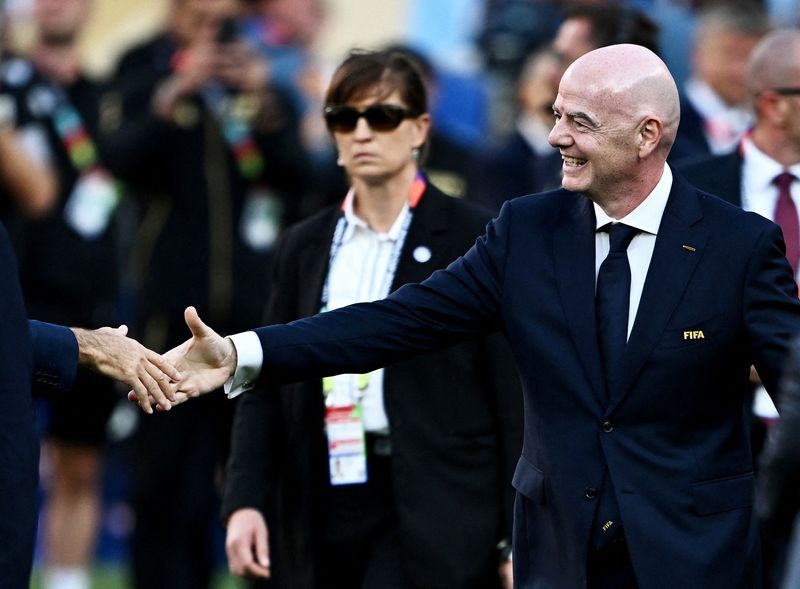
FIFA President Gianni Infantino faces a fractured coalition of international football bodies following his now-shelved proposal to monetise World Cup commercial rights, with support from major football nations like Mexico and Argentina standing against vocal opposition from Europe, Asia, and parts of Africa. The schism reveals how the Swiss administrator's governance approach has polarised the world's football confederations, each interpreting institutional legitimacy and procedural fairness differently as they contemplate his candidacy for a fourth term at the FIFA Congress in Morocco next March.
Mexico's decision to back Infantino carries particular weight given that the nation co-hosted the most recent World Cup and remains deeply embedded in regional decision-making. The Mexican Football Federation has departed from the position taken by CONCACAF, its own continental governing body, which had demanded a "comprehensive reckoning" with Infantino's presidency. This split within CONCACAF underscores how individual national associations are weighing their own interests and relationships with FIFA's central administration against broader regional solidarity.
Similarly, Argentina's Football Association has sent a formal letter of support, framing Infantino's decade-long tenure as having delivered institutional development and transparent governance structures. The Argentines acknowledged the World Cup commercialisation proposal as problematic, admitting that it generated uncertainty and involved procedural missteps, yet argued that the appropriate path forward involves continuing under Infantino's leadership rather than dismantling his authority through unconventional means.
The continental picture reveals stark divisions that complicate any narrative of unified opposition to the FIFA president. Africa's confederation endorsed Infantino unanimously at a meeting in Rabat this week, providing him significant support from the African vote bloc at FIFA's Congress. Meanwhile, South America's CONMEBOL adopted a middle position, rejecting any removal process that bypassed the formal vote involving all 211 FIFA member associations. This institutional conservatism, shared by Mexico's federation, suggests that while many confederations criticise Infantino's commercial proposal, they prefer procedural channels over extra-institutional pressure campaigns.
Europe and Asia have taken the hardest line. UEFA committed to boycotting the World Cup and other FIFA competitions, an extraordinary escalation that reflects deep mistrust of Infantino's decision-making. Asia's confederation expressed solidarity with both UEFA and CONCACAF, widening the alignment against the FIFA president. These positions signal that wealthy, well-resourced confederations are willing to weaponise their participation in FIFA competitions to force governance change.
The original controversy stemmed from Infantino's proposal to sell portions of the World Cup's commercial future to secure additional revenue. FIFA subsequently apologised for both the proposal itself and the flawed processes surrounding it, pledging to review the mechanisms that permitted such a significant initiative to advance without broader consultation. The admission effectively conceded that procedural failures had occurred, though FIFA maintained that no actual governance rules were breached and that the mistakes related to communication rather than substance.
For Southeast Asian readers, this institutional drama carries implications beyond football. It illustrates how multinational sporting organisations balance centralised authority with distributed decision-making across diverse regional bodies, each with distinct interests and risk tolerances. Malaysia's own position within FIFA and the Asian confederation may well reflect these broader tensions, particularly as FIFA navigates the transition toward its next strategic cycle.
The absence of a credible alternative candidate challenging Infantino in March's election remains a critical factor bolstering his position despite the controversy. Two months earlier, his reelection had appeared inevitable; now, while opposition has hardened among some confederations, no unified alternative leadership has coalesced. This absence of competition may allow Infantino to survive the current crisis if the formal voting structures remain on his side.
Croatia's withdrawal of support signals that individual national federations, distinct from their continental confederations, are making independent assessments. England and Albania preceded Croatia's move, suggesting that established European football nations are using their withdrawal as leverage to influence FIFA's future governance direction. These individual withdrawals carry symbolic weight but lack the institutional force of confederation-wide positions.
The FIFPRO players' union characterised the commercial rights proposal as a "profound abuse of presidential power," escalating the language beyond governance disputes into questions of executive overreach. This framing appeals to broader constituencies concerned about power concentration within FIFA, though unions lack voting rights at the Congress itself.
The March Congress will ultimately determine whether regional confederation divisions, national federation withdrawals, and boycott threats prove sufficient to dislodge Infantino or whether his support from Africa, South America, and significant national associations provides enough ballast to secure reelection. The outcome will shape FIFA's institutional evolution for another four-year cycle, affecting everything from competition formats to commercial arrangements that influence the sport globally and throughout Southeast Asia.

