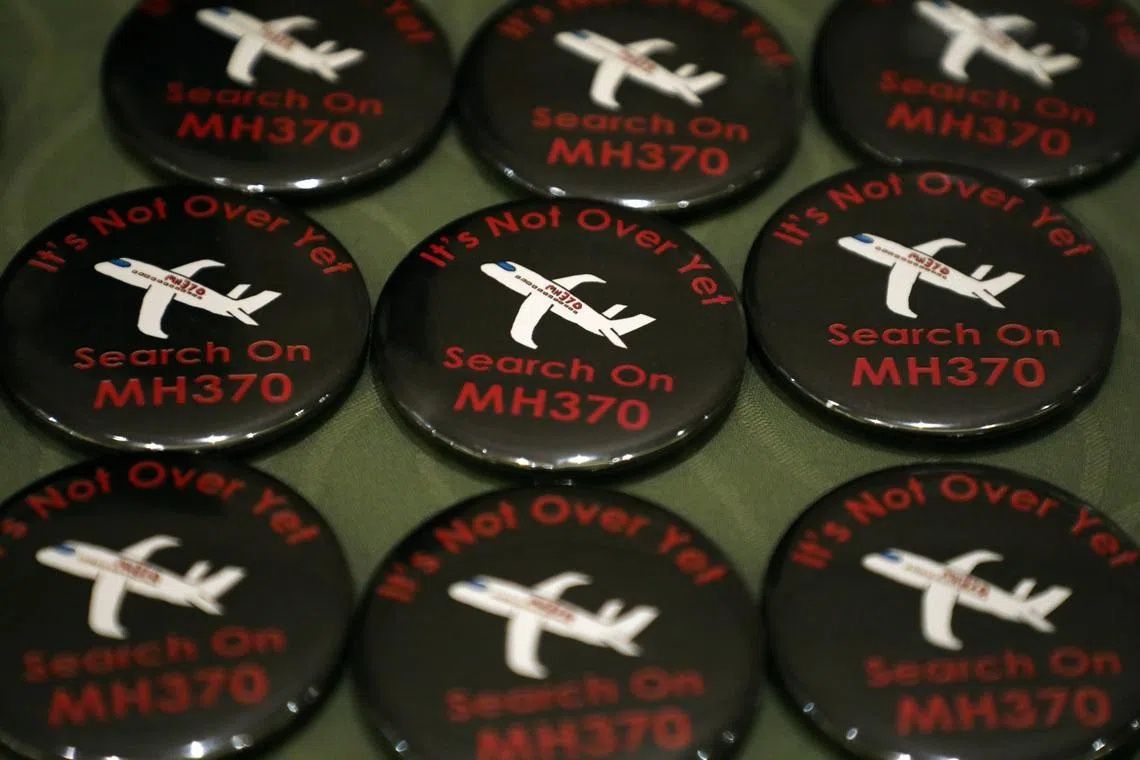
A Beijing court has begun examining an appeal filed by relatives of Chinese nationals aboard Malaysia Airlines flight MH370, the Boeing 777 that vanished 12 years ago with 239 people aboard in what remains aviation's most perplexing unsolved mystery. The families' decision to challenge an earlier court order underscores their frustration that financial settlements, however substantial, do not address the core issue: establishing what actually happened to the aircraft and the lives it carried.
The initial ruling, issued by a Beijing court in December, required Malaysia Airlines to compensate eight families of Chinese passengers with 2.9 million yuan ($410,000) each. However, two families have lodged appeals, asserting that the judgment failed to confront the essential factual uncertainties surrounding the aircraft's fate. The hearing began on Tuesday, though proceedings were closed to media observers, limiting public visibility into the families' arguments and the court's response.
Li Eryou, whose 69-year-old son was aboard the flight, expressed his anguish outside the courtroom with language that captured the emotional toll of more than a decade without resolution. He described feeling insulted by the court's approach, likening its treatment of the case to that of a routine domestic traffic accident rather than an international aviation catastrophe. His remarks highlighted a central complaint: that the compensation amount seemed disproportionately small relative to the magnitude of loss, reflecting what he perceived as the court's failure to grasp the case's significance.
Of the 239 people on board when the aircraft departed Kuala Lumpur for Beijing on March 8, 2014, approximately two-thirds were Chinese nationals, making the disappearance particularly significant for China. Yet despite extensive international search operations that rank among aviation's largest undertakings, neither the aircraft nor its black boxes have ever been recovered. The absence of physical evidence has meant that investigators and families alike have been forced to operate largely in a realm of competing theories rather than established facts.
Variations of explanatory theories have circulated throughout the investigation. Some experts have proposed that pilot suicide or deliberate actions might have diverted the aircraft; others have suggested hijacking. Technical failure scenarios have also been advanced, including one hypothesis suggesting that an onboard fire in electronic components released smoke that incapacitated passengers and crew, allowing the aircraft to continue flying on autopilot until fuel exhaustion forced it down somewhere over the Indian Ocean, the region where search efforts have concentrated.
Jiang Hui, whose mother was a passenger, articulated what appears to be a common sentiment among appellants: the court's role should extend beyond awarding compensation to establishing accountability and clarifying circumstances. In conversation with media outside the courthouse, he stressed that the compensation ruling addressed only monetary aspects of the tragedy and ignored the families' primary objective. That objective remains achieving clarity about the aircraft's final moments and locating tangible remains that might provide closure and enable proper grieving rituals according to cultural traditions.
The distinction between legal compensation and factual resolution represents a fundamental divide in how different stakeholders view the case. Malaysia Airlines, named in the proceedings, has maintained its position despite the judgment, and no substantive admissions of corporate responsibility or operational failure appear to have emerged from the first ruling. Jiang Hui noted pointedly that over 12 years, no party has formally apologized to the families, leaving them without even symbolic acknowledgment of suffering endured.
The passenger manifest revealed that nationals from 14 countries were aboard, though the geographic distribution has shaped the litigation landscape. Malaysia, which supplied 50 passengers and crew members, has not faced pending cases against the airline within its jurisdiction. This absence of domestic legal action in Malaysia contrasts with the active litigation pursued by Chinese families, positioning Beijing courts as a primary venue for pursuing accountability.
Recent developments suggest that recovery efforts remain ongoing. Malaysia announced last month that the search for MH370 will extend through June 2027, undertaken by the private firm Ocean Infinity. Two separate search phases beginning in March 2025 concluded without locating significant debris or evidence, disappointing families holding persistent hope that continued efforts might ultimately succeed. Jiang Hui expressed measured gratitude for Malaysia's commitment to extended searching, while advocating that families themselves be permitted to organize and finance independent search missions alongside official efforts.
For Malaysian readers and Southeast Asian observers, the appeal hearing carries particular resonance given the region's role in the tragedy and subsequent investigation. Malaysia's government and national airline remain central figures in the narrative, even as questions of accountability intersect with international law and jurisdictional complexity. The families' determination to pursue legal remedies in Chinese courts reflects broader patterns of victim advocacy in transnational disasters, where multiple legal systems may simultaneously attempt to address liability and compensation.
The families' insistence on factual establishment over financial settlement also points to a deeper question about justice in aviation disasters. Compensation addresses material loss but cannot replace the existential need for understanding. As Jiang Hui stated with apparent resignation to practical reality, the aircraft will not surface spontaneously; discovery requires sustained, resourced searching. Whether such searching will ultimately succeed remains uncertain, but the families' continued pursuit of answers demonstrates that even after 12 years, the emotional and moral dimensions of the tragedy persist unresolved.
As the appeal proceedings continue, the case remains emblematic of aviation's capacity to inflict profound loss upon scattered families across continents, whose collective demand for truth outlasts initial investigations and commercial settlements. The Beijing court's examination of the appeal will test whether legal systems can move beyond distributing compensation to grapple with the broader imperative of establishing facts in complex transnational disasters where evidence remains fundamentally elusive.

