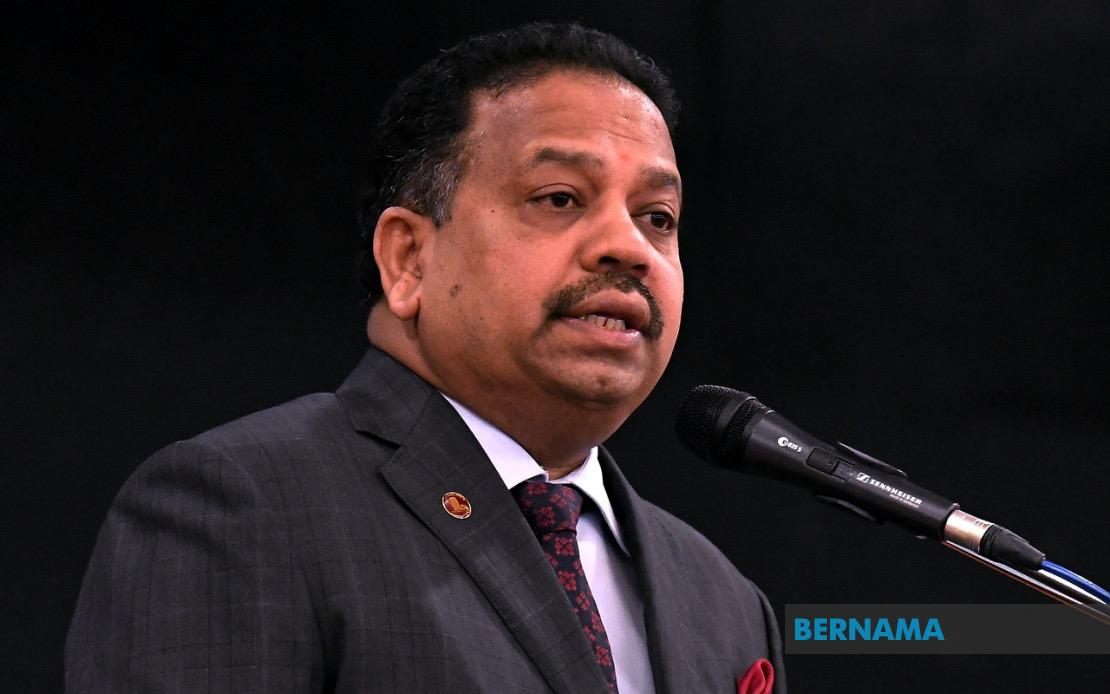
The Malaysian Indian Congress enters the Johor state election campaigning with renewed optimism about its standing among the Indian electorate, with party president Tan Sri S.A. Vigneswaran projecting confidence that voters from the community will throw their weight behind Barisan Nasional candidates in tomorrow's polls. Speaking at a press conference in Kulai, Vigneswaran anchored his optimism to what he characterised as a productive working relationship between MIC and both federal and state governments, suggesting that this partnership has enabled meaningful progress on issues affecting Indian Malaysians.
The party's four candidates contesting the 16th Johor state election represent a concentrated effort to maintain MIC's foothold in the state. K. Raven Kumar is running for the Kemelah seat, V. Rugendran for Kahang, P. Pannir Selvam for Perling, and R. Kumaran for Bukit Batu. Vigneswaran framed the election as an opportunity to elect representatives capable of working constructively with the state administration rather than merely opposing it from the sidelines. This emphasis on collaborative governance reflects a broader strategy within BN to position itself as a stabilising force focused on practical delivery rather than adversarial politics.
Throughout the campaign period, the MIC leadership has emphasised what Vigneswaran described as a mature political approach, deliberately steering clear of personal attacks on opposition figures and competitors. Instead, the party has trained its messaging on substantive solutions to everyday problems faced by constituents, a tactical choice that distinguishes MIC's positioning within the broader BN framework. This restraint, party officials argue, reflects institutional maturity and a commitment to elevating political discourse beyond partisan scoring.
However, the campaign has been shadowed by a controversial funding allegation that Vigneswaran moved quickly to address and refute. A Tamil-language online portal reported that MIC had received government funds totalling RM221 million, a claim the party leadership has flatly rejected as inaccurate and misleading. Rather than dismiss the report summarily, Vigneswaran provided substantive clarification about the nature of government support that MIC-linked institutions actually receive, drawing a careful distinction between party funding and developmental assistance extended to educational bodies.
The actual arrangement involves annual grants to AIMST University, a non-profit higher education institution administered through a foundation structure rather than as direct party support. Since Datuk Seri Anwar Ibrahim assumed the office of Prime Minister in 2023, the government has allocated RM25 million annually to the university, including in the current financial year. Vigneswaran explained that these funds are deployed for specific operational purposes: upgrading residential facilities, installing renewable energy systems, and managing overhead costs that would otherwise translate into higher fees for students.
The transparency measures surrounding these allocations underscore an important governance point for Malaysian readers concerned about proper fund utilisation. All disbursements undergo auditing processes, and Vigneswaran emphasised that the allocation structure deliberately aims to maintain affordability for students by reducing the burden institutions might otherwise pass on through increased fees. This distinction between party financing and institutional grants reflects how political organisations in Malaysia's coalition system often work through allied foundations and educational bodies to deliver public services and community benefit.
Faced with what MIC characterises as a defamatory misrepresentation, the party has instructed its legal representatives to issue a formal letter of demand to the portal, requesting both a correction of the factual record and a retraction of the allegations. This legal response represents a calculated move to establish a clear public record ahead of the election, preventing the narrative from taking root among voters who may lack detailed knowledge of the funding arrangements. For Malaysian readers following closely, this incident illustrates the intersection of digital media accountability, political communication, and the challenge of combating misinformation during election cycles.
The broader context of these developments reflects ongoing tensions between coalition partners and opposition voices regarding the proper use of government resources and institutional support. In Johor, where BN has traditionally held significant sway, the election tomorrow will test whether messaging discipline and demonstrated governance competence can outweigh any voter fatigue or scepticism about establishment politics. The MIC's four-seat challenge in this state election carries implications beyond electoral mathematics, signalling the party's capacity to mobilise its traditional voter base during a period of intensified political competition.
For Indian Malaysian communities specifically, the election presents choices about representation and the weight their votes carry within the broader political architecture. MIC's argument rests on demonstrated channels of influence with government at both federal and state levels, enabling responsive action on matters ranging from education access to business participation and cultural preservation. Whether this institutional embeddedness translates into voter support will become clear once the ballots are counted tomorrow, with implications for how BN courts minority communities in future contests.
The party's pre-election positioning reflects a calculated strategy of emphasising stability, institutional competence, and proven advocacy capabilities rather than radical reformism or dramatic policy commitments. Vigneswaran's confidence about Indian voter support ultimately rests on the proposition that tangible governance outcomes and maintained channels of political representation matter more to constituents than opposition rhetoric or external controversies. The Johor election will provide a concrete test of whether this proposition holds ground among Malaysian Indian voters.

