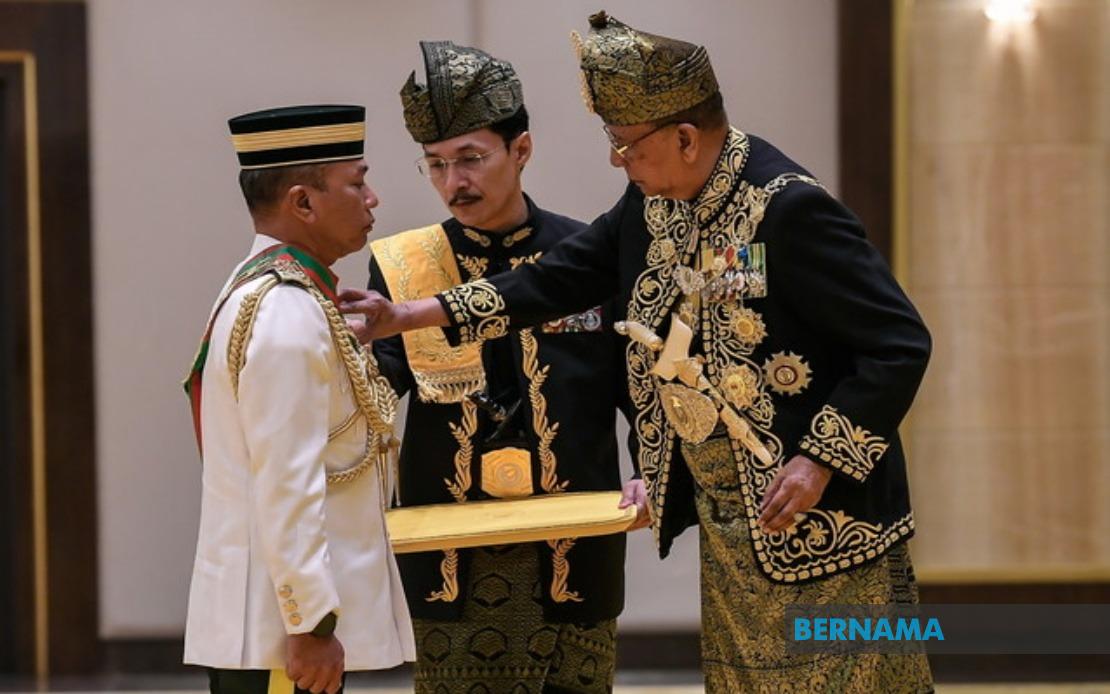
Istana Anak Bukit in Alor Setar witnessed a grand ceremony on July 5 as Kedah's royal court distributed honours and medals to mark the 84th Birthday Celebration of Sultan Sallehuddin Sultan Badlishah, Al Aminul Karim. Leading the distinguished recipients were two of Malaysia's highest-ranking security officials: Chief of Defence Forces General Tan Sri Malek Razak Sulaiman and Inspector-General of Police Tan Sri Mohd Khalid Ismail, both receiving the Darjah Dato' Seri Setia Pahlawan Yang Amat Dihormati (S.S.P.K), an honour that carries the title of Datuk Seri Setia Pahlawan.
The ceremony represents Kedah's tradition of recognising distinguished service and contributions to the nation and state during significant royal occasions. The honours system reflects the sultanate's role as a constitutional monarchy that acknowledges public servants, military personnel, and community leaders who have made noteworthy contributions. For Malaysian readers, such royal honours carry considerable prestige and recognition within government hierarchies and society at large, particularly in states with active sultanates that maintain ceremonial and symbolic authority.
Beyond the two top recipients, the honours list extended to administrative and legislative figures within Kedah's governance structure. Datuk Syed Khairol Anuar Syed Abidin received the honour of Orang Besar Enam Belas, reflecting his status within the state's hierarchy, while Datuk Mohamad Che Nai was conferred the title of Orang Besar Tiga Puluh Dua. These traditional titles, rooted in Kedah's sultanate system, denote positions of responsibility and standing within the royal administration and continue a centuries-old practice of formal recognition.
Four individuals received the Darjah Dato' Setia Diraja Kedah (D.S.D.K), carrying the title of Datuk Setia Diraja, representing mid-tier recognition for sustained service. Kedah's police chief Datuk Adzli Abu Shah received the Darjah Dato' Setia Pahlawan (D.D.S.P), acknowledging his leadership of the state's law enforcement operations. These appointments underscore how state-level honours complement federal recognition systems, allowing sultanates to recognise their own security and administrative figures directly.
Two prominent political and administrative figures—Major (Rtd) Mansor Zakaria, a member of Kedah's state executive council, and Afnan Hamimi Taib Azamudden, chief of PAS Youth—received the Darjah Setia Sultan Sallehuddin Kedah (S.S.S). This dual recognition reflects Kedah's political landscape, where both state executive members and opposition party leaders are acknowledged for their contributions, suggesting an inclusive approach to honouring diverse societal contributors regardless of party affiliation.
Nine individuals were elevated to recipients of the Darjah Setia Diraja Kedah (S.D.K), including key state officials and healthcare professionals. Syeikh Mohamad Subhi Abdullah, director of Kedah's State Islamic Religious Affairs Department, received recognition alongside Maznim Ismail from the Langkawi Development Authority, Ir Mohd Fisal Ismail from the state's Public Works Department, and Zulkifli Romli, general manager of the Muda Agricultural Development Authority. This cohort demonstrates the breadth of recognition, spanning religious administration, economic development, and agricultural initiatives that form pillars of Kedah's governance and economy.
Healthcare professionals also featured prominently within the S.D.K honours category, reflecting Malaysia's emphasis on recognising medical excellence and public health contributions. Dr Jamaliah Omar, deputy director of the Health Ministry's Dental Health Programme, and Dr Adam Mohd Zakaria, head of Neurosurgery at Sultanah Bahiyah Hospital, were among those recognised. Dr Manisekar K. Subramaniam, a senior consultant general surgeon at the same hospital, similarly received honour, underscoring how state ceremonies acknowledge frontline medical personnel who serve Kedah's residents. For Malaysian healthcare workers, such state-level recognition provides career validation and reflects how professional excellence is valued beyond federal appointments.
The private sector and real estate development received acknowledgement through Yeoh Su Guan, chairman of the Real Estate and Housing Developers Association Kedah/Perlis branch, and Jaffri Ahmad, president of Bismi Empire Sdn Bhd. Their inclusion signals that state honours extend to business community leaders and entrepreneurs contributing to Kedah's economic development and urban growth, recognising the interconnection between public administration and private enterprise in advancing state prosperity.
Beyond the prominent appointments, Sultan Sallehuddin conferred honours upon 250 additional recipients across multiple honour categories, demonstrating the comprehensive nature of the recognition exercise. Thirty-one individuals received the Ahli Mahkota Kedah (A.M.K), while five were appointed as Ahli Setia Pahlawan (A.S.P). A broader group of 31 recipients gained the Bintang Perkhidmatan Cemerlang Kedah (B.C.K), recognising excellent service, and 43 were honoured with the Bintang Kebaktian Masyarakat (B.K.M), which acknowledges community dedication and public spirit.
Additional honour categories distributed during the ceremony included the Ahli Cemerlang Semangat Jerai Kedah (A.S.K) to five recipients, the Pingat Perkhidmatan Cemerlang Kedah (P.C.K) to 55 individuals, the Pingat Jasa Kebaktian (P.J.K) to 40 recipients, and the Pingat Perkhidmatan Lama (P.P.L) to 15 recipients. This structured distribution across multiple categories ensures that contributions ranging from long service to exceptional public spirit receive appropriate recognition, creating a tiered system that acknowledges various forms of excellence and dedication.
For Malaysia's state honours systems, such ceremonies serve multiple purposes beyond ceremonial tradition. They reinforce institutional loyalty among civil servants and security personnel, validate professional contributions across sectors, and demonstrate how federalism allows state sovereigns to maintain meaningful roles in recognising merit and service. The prominence of defence and police leadership receiving top honours reflects the continuing security priorities facing Malaysia's leadership, particularly given regional geopolitical considerations and domestic stability concerns that have shaped recent policy discourse.

