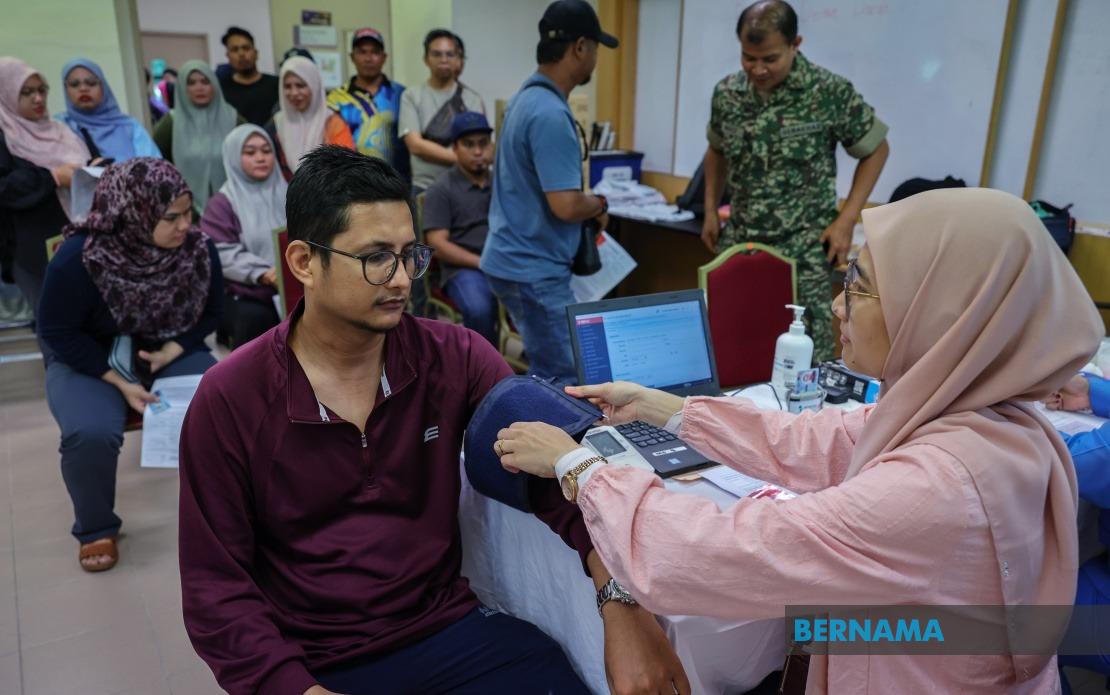
The Malaysian armed forces have brought comprehensive healthcare services directly to communities in Kuala Ketil through an ambitious civil-military cooperation initiative that underscores the military's expanding role in civilian welfare. Held at Sultan Abdul Halim Mu'adzam Shah International Islamic University (UniSHAMS) from July 9 to 11, the "Military with the People" programme demonstrated how defence personnel can leverage their medical expertise and infrastructure to address gaps in healthcare access at the grassroots level. The timing of the initiative, coinciding with the completion of the Basic Commando Course (Series AK/1/26), reflected a deliberate strategy to channel military resources toward community benefit while reinforcing positive relations between the armed services and the general population.
The healthcare delivery model employed by the military centred on two complementary assistance programmes: the Medical Community Assistance Programme (MEDCAP) and the Dental Community Assistance Programme (DENCAP). These frameworks, operating under the broader Civil-Military Cooperation (CIMIC) rubric, allowed military medical personnel to conduct screenings, provide treatments, and dispense health education in a temporary clinical setting established within the university grounds. The accessibility of these services proved particularly valuable in a district like Baling, where rural communities often face geographical barriers to accessing specialised dental care and comprehensive health evaluations. By removing the constraints of formal appointment systems and clinic bureaucracies, the military created an informal healthcare environment where residents could receive immediate attention without the typical delays associated with the public health system.
Response from attendees demonstrated strong community appetite for such initiatives. Siti Salmiah Said, a 28-year-old factory worker, exemplified the practical benefits families derived from the programme. Rather than navigating the cumbersome process of scheduling dental appointments, she obtained immediate scaling treatment whilst her husband received similar care and her six-year-old son underwent a filling procedure. Her testimony highlighted how military deployment of medical capability addresses not merely healthcare deficits but also the inefficiency of conventional civilian clinic operations, where appointment scheduling and waiting periods consume substantial personal time. For working individuals whose schedules cannot easily accommodate traditional clinic hours, the temporary deployment model offers tangible advantages.
The programme's efficiency extended to broader health assessments beyond dental intervention. Adam Ruzlan, a 26-year-old legal assistant, received unexpected immediate treatment rather than the superficial check-up he anticipated, coupled with professional oral health counselling. This combination of diagnosis, intervention, and patient education reflects a holistic approach that transcends mere service delivery and engages populations in understanding their health status and preventive obligations. The ability to screen for conditions including tartar buildup and decay, whilst providing guidance on subsequent care pathways, transforms the military's intervention from episodic treatment into a catalyst for sustained health consciousness.
For older attendees, the programme rekindled memories of previous military community engagement whilst demonstrating technological and operational advancement. G. Devindran, a 37-year-old factory worker whose father served as a commando, contrasted his current experience with a similar initiative from nearly three decades earlier, noting the dramatic improvements in service speed and facility quality. His comprehensive health assessment—encompassing dental filling, blood pressure monitoring, blood glucose screening, and Body Mass Index calculation—illustrated the integrated nature of contemporary military healthcare delivery. Such multi-parameter screening capability, requiring coordination across medical specialties and equipment deployment, represents significant logistical achievement for a temporary deployment.
The programme's capacity to handle medical emergencies, though minor, further validated its value as a community health resource. When a 12-year-old boy experienced dizziness and nausea during the event, Civil Defence Force (APM) personnel responded immediately, conducting systematic vital sign monitoring including temperature, blood pressure, and oxygen saturation assessments before administering appropriate medication. Housewife Norhasliza Nayan's endorsement of this emergency response, combined with her explicit suggestion that health initiatives should feature at other large-scale public events, reflects broader recognition that military medical capabilities constitute underutilised community assets that could enhance public health resilience across the state.
The operational structure supporting DENCAP involved dental officers such as Captain Dr Muhammad Afiq Ishak from the 2nd Medical Battalion, who articulated the programme's strategic emphasis on foundational treatments whilst maintaining population health awareness. Rather than attempting complex restorative procedures requiring long-term follow-up, the military's dental approach focused on scaling, extractions, and simple fillings—interventions appropriate for temporary deployment whilst remaining clinically meaningful for recipients. The programme's referral pathway for individuals with potential underlying conditions including hypertension and diabetes ensured that screening functioned not merely as isolated testing but as a gateway toward sustained clinical engagement with the formal health system through the Baling District Health Office.
Lieutenant Dr Atiff Abdul Aziz, Medical Officer at the Special Warfare Training Centre, identified the institutional architecture underpinning CIMIC operations, particularly the strategic partnership between the Ministry of Health and military authorities. The involvement of the Baling District Health Office in delivering general health screenings and mental health awareness initiatives represented genuine inter-agency collaboration rather than unilateral military provision. This partnership model distributes both capabilities and responsibilities, ensuring that temporary military deployment complements rather than displaces civilian health infrastructure. The mental health dimension proved particularly significant, as reducing social stigma around psychological wellbeing reflects contemporary public health priorities that extend beyond traditional medical interventions.
The blood donation component, managed through Sultan Abdul Halim Hospital (HSAH) in Sungai Petani and targeting approximately 100 bags daily, demonstrated how CIMIC operations simultaneously address acute resource constraints within the transfusion medicine system. Blood shortages persistently challenge Malaysian hospitals, particularly in rural areas where donation participation remains limited. By integrating blood collection into the broader community health event, the military enabled the health system to strengthen supplies whilst engaging healthy community members in voluntary contribution to national health security. This convergence of immediate community health benefits with systemic health system strengthening illustrates the multiplier effects achievable when defence capabilities are strategically applied to civilian welfare.
The Kuala Ketil initiative reflects broader Southeast Asian trends wherein armed forces increasingly reposition themselves as providers of public goods in healthcare, disaster response, and infrastructure development. For Malaysia, where civil-military relations remain constitutionally and historically complex, such community-oriented medical programming offers a mechanism for demonstrating military value beyond conventional security functions whilst building institutional legitimacy through tangible population benefits. The programme's location in Kedah, a state where healthcare infrastructure development remains ongoing, underscores the geographic selectivity of CIMIC operations targeting communities with legitimate service gaps. Future scaling of such initiatives across other states and districts could substantially expand healthcare access for rural populations whilst strengthening the socioeconomic dimensions of national defence policy. The overwhelmingly positive reception from attendees and the institutional cooperation demonstrated by health authorities suggest that replicating this model represents feasible policy that simultaneously advances public health equity and civil-military integration objectives.

