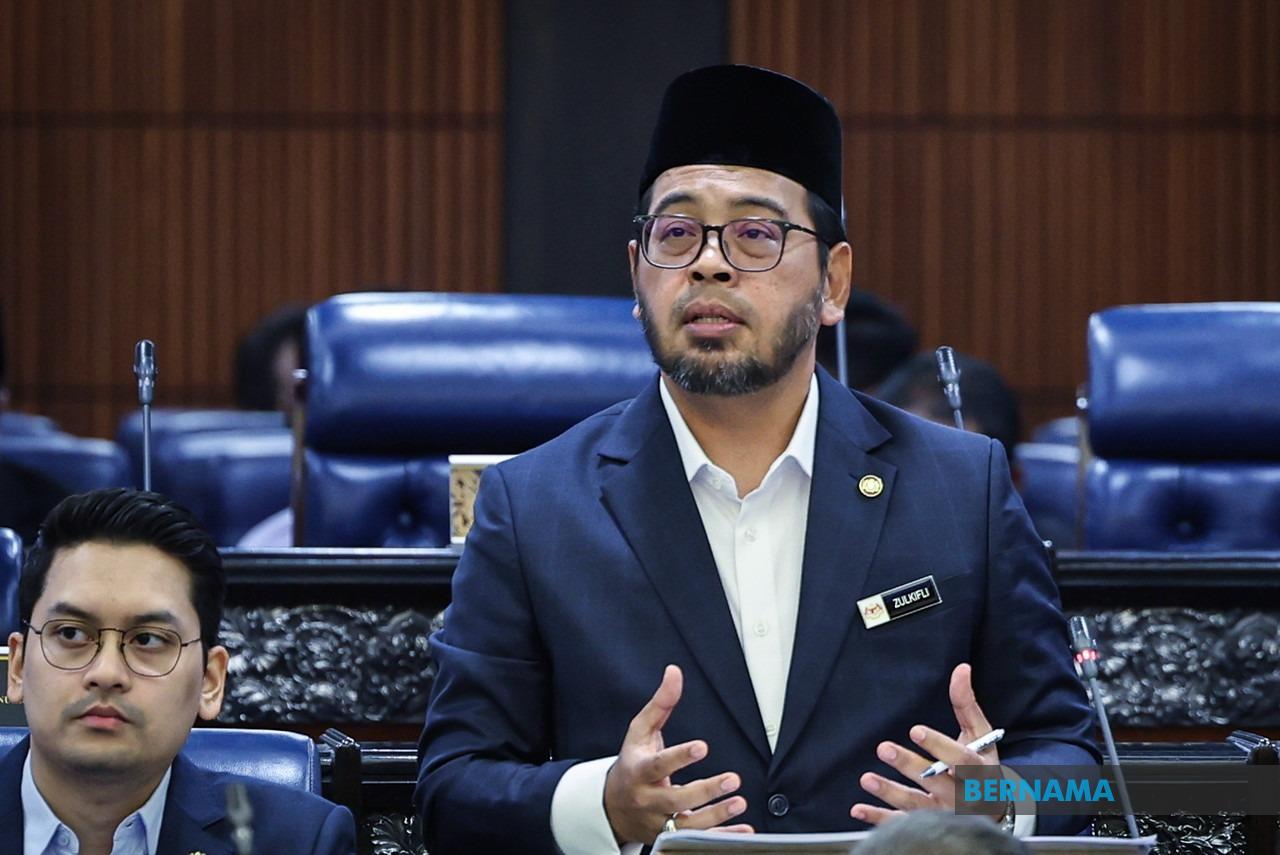
Religious Affairs Minister Dr Zulkifli Hasan has laid bare the mechanisms behind Tabung Haji's financial collapse, employing an accessible analogy involving a fictional single mother to help Malaysians understand how the Islamic pilgrimage fund deceived depositors and regulators for years. Speaking during parliamentary debate on the Royal Commission of Inquiry report into TH on August 11, Zulkifli compared TH's predicament to that of a woman named Mak Cik Senah who appears prosperous because she receives substantial dividend payments, yet obscures a critical legal principle: dividends can only legitimately be distributed when a fund's assets exceed its total liabilities and obligations.
The minister's narrative exposed a disturbing pattern where TH's fund managers inflated asset values purely on paper to create the false appearance of profitability. Depositors celebrated receiving handsome returns while remaining unaware that the institution's underlying financial position had deteriorated dramatically. What appeared as sound financial performance from the outside masked a systematic depletion of savings. Fund managers were, in effect, distributing what Zulkifli termed "invisible money"—returns that had no genuine backing—a practice that constitutes fraud comparable to Ponzi schemes or the notoriously deceptive Skim Pak Man Telo investment scandal that deceived Malaysian investors decades earlier.
The RCI's investigation confirmed that TH's financial statements prior to 2018 were deliberately manipulated to misrepresent the fund's true financial health. This distortion enabled TH to declare profit distributions that bore no relationship to actual performance. Crucially, the inquiry found that these distributions violated the requirements of the Tabung Haji Act itself, since the fund's assets—including the pooled deposits of millions of pilgrims—did not exceed its mounting liabilities. The legal framework existed to prevent exactly this scenario, yet systematic breaches occurred repeatedly without intervention.
One primary method of deception involved an accounting technique called Realisable Asset Value, conducted outside the scope of audited financial statements. This approach artificially inflated the book value of TH's assets relative to its liabilities, creating a mirage of solvency. Complementing this tactic, TH employed what Zulkifli described as creative accounting, violations of Malaysian Financial Reporting Standards, and deliberate changes to impairment policies that obscured the true financial picture. Each maneuver was calculated to maintain the illusion of a thriving institution generating impressive returns.
The auditing profession's role in this scandal deserves scrutiny. PricewaterhouseCoopers' 2018 report confirmed the existence of this financial manipulation. More strikingly, of TH's total assets valued at RM4.6 billion, only RM556 million—roughly 12 percent—had been assessed by professional valuers. The overwhelming bulk of the asset portfolio remained unverified by independent specialists, yet TH used these inflated figures to justify generous profit distributions to depositors. Ernst & Young, another major firm, was not TH's primary auditor but was contracted merely to review pro forma statements that TH itself had prepared, representing a troublingly narrow scope of independent verification.
Zulkifli's legislative account emphasizes that TH's decision to distribute profits while the gap between assets and liabilities continuously widened represented a direct violation of the governing statute. This breach was not a minor technical infraction but a fundamental breach of fiduciary duty that jeopardized the institution's financial viability for future generations of depositors. The minister drew an explicit parallel: just as Mak Cik Senah would face financial ruin if her apparent prosperity were revealed as mere accounting fiction, TH's depositors faced the prospect of losing their accumulated savings entirely, with no rescue mechanism available from private or charitable sources.
The government's intervention proves the magnitude of the crisis. Authorities were compelled to inject over RM10 billion into TH to prevent complete institutional collapse and catastrophic loss for millions of depositors whose life savings lay within the fund. This bail-out represented not merely a financial rescue but a recognition that TH holds profound cultural and religious significance for Malaysia's Muslim community. The fund has historically served as the primary vehicle enabling ordinary Muslim families to fulfil the Hajj pilgrimage obligation, positioning it as far more than a commercial entity.
The scale of government expenditure warrants serious reflection on opportunity costs. Zulkifli underscored that the RM10 billion rescue package, had it been deployed toward public infrastructure, could have funded the construction of dozens or potentially hundreds of hospitals, schools, mosques, and community facilities that Malaysia desperately requires. This counterfactual highlights how mismanagement at a single institution diverted resources that might have addressed critical gaps in healthcare, education, and religious infrastructure across the nation.
For Malaysian depositors and the broader public, the TH scandal represents a cautionary lesson in institutional governance and regulatory oversight. The case demonstrates how sophisticated accounting techniques, inadequate independent auditing, and weak enforcement of statutory requirements can combine to enable prolonged financial deception. Millions of Malaysians placed trust in an institution backed by government auspices, only to discover that their savings had been systematically depleted through fraudulent accounting. The discovery that fewer than 12 percent of stated assets had been professionally valued raises uncomfortable questions about the adequacy of Malaysia's auditing and regulatory frameworks for overseeing major financial institutions.
The implications resonate beyond TH itself. The scandal suggests that other government-linked companies and statutory bodies may require enhanced independent oversight and more rigorous asset verification procedures. The fact that a major international audit firm's involvement could not prevent years of accounting fraud suggests that current auditing standards or enforcement mechanisms may be insufficient. For ordinary Malaysians saving for retirement, education, or major life events through various institutionalized schemes, the TH experience underscores the imperative of demanding transparent, independently verified financial reporting and robust regulatory supervision.
Moving forward, the government's response to RCI recommendations will test whether Malaysia can implement meaningful reforms. The bailout, while protecting depositors, cannot undo the breach of trust or the lost opportunity costs. Zulkifli's use of accessible analogy serves an important democratic function—translating complex financial crimes into language that non-specialist citizens can comprehend and judge. As TH rebuilds under new management and governance structures, the broader system must evolve to prevent similar scandals from eroding public confidence in government-backed financial institutions that serve essential social and religious functions.

