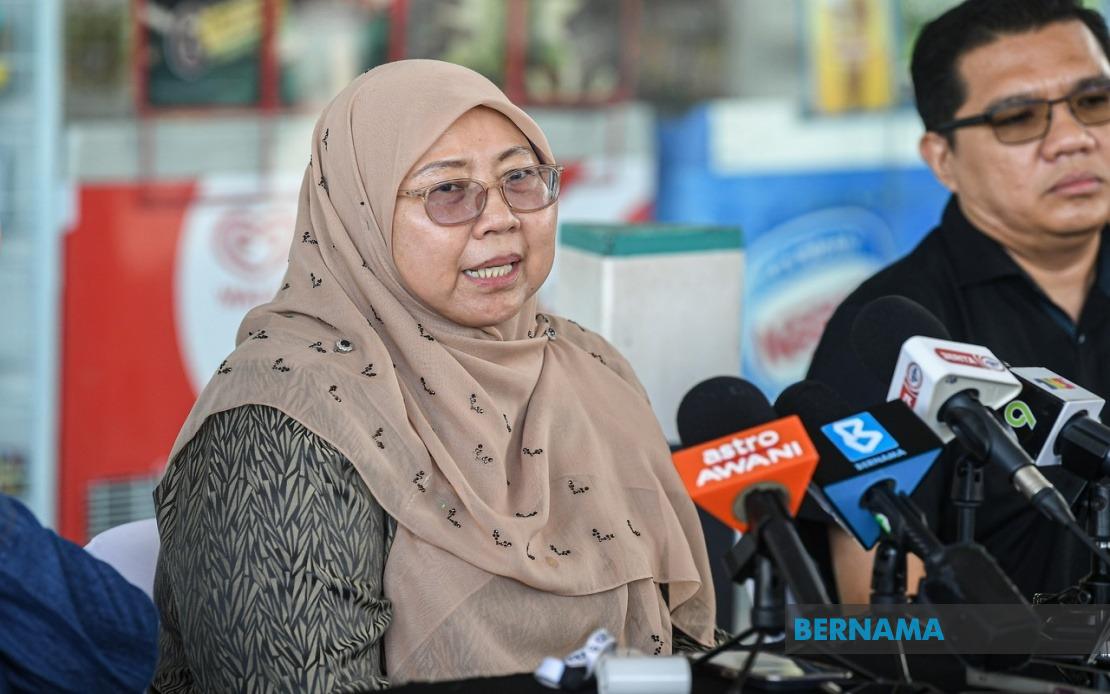
The Pakatan Harapan coalition has moved swiftly to downplay a series of incidents targeting its campaign infrastructure in Johor, asserting that the roadblocks will not slow its push toward victory in the state election scheduled for July 11. Speaking at a press conference in Johor Bahru on July 2, PKR secretary-general Datuk Fuziah Salleh acknowledged that party officials have documented several disruptive episodes but characterised them as isolated and ultimately inconsequential to the broader campaign strategy. She noted that the opposition federation has documented the removal and destruction of campaign posters, the defacement of billboards, and the torching of party flags, yet maintained that the coalition's operational capacity and public engagement programme remain undiminished.
The incidents represent a common feature of Malaysian electoral contests, where rival campaigns occasionally resort to damage of competitor materials as a show of strength or intimidation. Fuziah, who also serves as Deputy Minister of Domestic Trade and Cost of Living, made her remarks during a broader media engagement focused on the government's Budi MADANI diesel subsidy assistance initiative, signalling that the administration is maintaining its policy messaging even amid the electoral fray. The timing of her comments reflects the coalition's confidence that isolated vandalism and flag-burning episodes will not resonate with voters or alter the campaign narrative that PH wishes to establish.
What emerges from Fuziah's remarks is a picture of a well-resourced campaign operation moving at considerable pace across contested constituencies. Each PH candidate maintains an exhausting schedule that stretches from dawn to late evening, with party operatives conducting up to ten separate events per day to maximise voter exposure. This intensity of ground activity suggests that the coalition views the Johor contest as strategically significant and is willing to invest considerable organisational effort to secure victory. For Malaysian observers, the scale of this engagement reflects broader trends in how the country's major political coalitions now conduct state-level campaigns, moving beyond traditional rallies toward an almost constant presence in communities.
PH's leadership has also received encouraging feedback from key voter demographics, particularly youth and first-time electors who represent a growing share of the Johor electorate. Fuziah highlighted that support from these groups has been notably positive, indicating that the coalition's messaging may be resonating with younger voters who were either too young to participate in the 2018 federal election or who have shifted their political preferences in the intervening years. This demographic shift carries importance not only for Johor but for broader peninsular politics, as younger voters often drive electoral surprises and can amplify or diminish incumbent advantages. Should PH indeed consolidate youth support in Johor, it would signal a potentially significant realignment in the state's political structure.
A minor clarification issued by Fuziah regarding candidate pledges in Skudai and Perlis state seats underscores the distinction between electoral posturing and formal policy commitments. Some PH candidates had released statements outlining local initiatives such as addressing waste collection problems, which several observers interpreted as a partial manifesto. Fuziah sought to reframe these commitments as constituency-level pledges rather than comprehensive state policy platforms. This semantic distinction matters in Malaysian politics, where manifestos carry legal and reputational weight; candidates making commitments that are subsequently unfulfilled can face voter backlash in future elections. By clarifying that candidate pledges represent individual dedication to constituency welfare rather than binding coalition policies, PH appears to be establishing lower public expectations for specific localised outcomes while reserving the right to announce broader state-level policies at a party level.
The full Pakatan Harapan manifesto for the Johor contest was scheduled to be unveiled the day following Fuziah's remarks, suggesting that the coalition intended to present a comprehensive policy framework ahead of the official campaign's closing phase. This timing is calculated to maintain media attention and voter engagement during the final stretch before July 11 polling. In Malaysian electoral tradition, manifesto launches often serve as focal points for media coverage and provide candidates with talking points for final constituency visits. A well-constructed manifesto can also inoculate a coalition against accusations that it lacks a coherent vision for state governance, a charge that often surfaces when observers perceive candidates operating independently without clear central direction.
The Johor state election involves 172 candidates contesting across all constituencies, reflecting the state's substantial political footprint within Malaysia's federal system. Johor's electoral significance derives not only from its size but also from its historical weight in Malaysian politics and its economic importance as a manufacturing and services hub. Control of Johor state government provides a coalition with both symbolic victory and material resources through state patronage mechanisms. For Pakatan Harapan, capturing or retaining Johor holds particular importance given the state's mixed political history and the presence of residual support for rival coalitions.
Early voting for the Johor election was scheduled for July 7, providing a four-day window before the main polling day. Early voting mechanisms have become increasingly important in Malaysian elections, as they allow certain voters—particularly those in security services, election officials, and others with legitimate reasons—to cast ballots ahead of the formal election day. The volume of early voting can sometimes signal underlying voter sentiment or coalition mobilisation capacity, though careful interpretation is required because early voters represent a distinct demographic cohort. PH's campaign intensity throughout June and early July appeared designed to capitalise on this entire voting window, ensuring that supporters understood voting procedures and were motivated to participate in both early and regular voting periods.
The alleged sabotage incidents that prompted Fuziah's public reassurance represent a minor but symptomatic aspect of Malaysian electoral politics. Campaigns routinely involve competitive destruction of rival materials, ranging from poster removal to billboard defacement to flag burning. While such conduct technically violates electoral regulations and can result in legal consequences if perpetrators are identified, enforcement remains inconsistent across states and federal territories. For voters, these incidents often blur together into a general atmosphere of electoral competition rather than standing out as individually significant events. Fuziah's strategy of acknowledging the incidents while dismissing their importance reflects the standard political response: validate that supporters have noticed the disruptions, but deny that they indicate weakness or affect campaign viability.

