Malaysia's commitment to strengthening its electrical and electronics industry has moved into sharper focus as the Ministry of Investment, Trade and Industry charts a course to ensure the country remains indispensable to the world's technology manufacturers. The strategic push reflects growing recognition that maintaining leadership in this sector is essential to the broader economy, with semiconductors, advanced sensors, and telecommunications components representing critical pillars of national competitiveness.
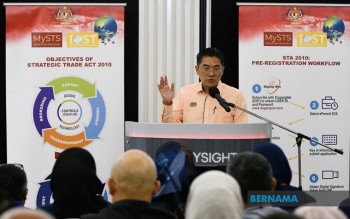
Deputy Investment, Trade and Industry Minister Sim Tze Tzin underscored the centrality of the E&E sector to Malaysia's economic architecture during remarks made in George Town following his opening of the 2010 Strategic Trade Act Customer Day and the STA Northern Region Clinic programme in Bayan Lepas. The electrical and electronics industry, he emphasized, functions as a primary engine driving Malaysia's participation in complex global value chains that span design, manufacturing, and distribution networks stretching across continents. This positioning translates directly into sustained foreign investment, technology transfer, and high-skill employment opportunities that buttress living standards across multiple regions.
The northern corridor, encompassing Penang and its surrounding industrial zones, occupies a particularly pivotal position within this ecosystem. Home to hundreds of world-class technology manufacturers and semiconductor operations, the region has evolved into one of Asia's most densely concentrated hubs for advanced electronics production. These facilities collectively process intricate semiconductors destined for everything from consumer electronics to automotive systems and industrial equipment, making the region's stability and productivity consequential for manufacturers worldwide. Malaysia's historical dominance in semiconductor assembly, testing, and packaging operations has created an industrial base that would be extraordinarily difficult for competitors to replicate quickly, yet the ministry recognizes this advantage cannot be taken for granted.
The establishment of targeted engagement platforms such as the STA Northern Region Clinic demonstrates MITI's understanding that sustained sectoral strength requires continuous dialogue between government agencies and industry participants. The programme, which drew 86 attendees, functioned as an advisory forum addressing the practical challenges manufacturers encounter when navigating regulatory frameworks governing product classification, permit applications, and interactions with licensing bodies. By providing direct guidance on compliance requirements and internal audit procedures, the ministry reduces friction points that might otherwise impede operational efficiency or create barriers to market participation.
Export control compliance has assumed heightened importance within this framework, reflecting the reality that advanced technology products operate within carefully managed international regulatory environments. The semiconductor and advanced electronics sectors sit at the intersection of commercial enterprise and national security considerations, particularly as geopolitical tensions have intensified scrutiny over technology flows. Malaysia's reputation as a trustworthy partner in global supply chains depends substantially on its ability to enforce rigorous compliance standards while maintaining the operational flexibility that manufacturers require. MITI's emphasis on orderly conduct of technology sector activities and international trade signals recognition that even minor lapses in compliance could jeopardize the country's standing with trading partners and multinational corporations making investment decisions.
The ministry's appeal to successful companies to distribute prosperity among their workforce represents an often-overlooked dimension of sustaining competitive advantage. Malaysia's strong trade performance during the opening months of the year created conditions enabling corporations to expand profit margins and reinvest in operations, yet translating this commercial success into improved employee welfare directly influences retention of specialized talent and maintenance of worker productivity. The relationship between fair compensation structures and industrial competitiveness operates through multiple channels: companies retaining experienced engineers and technicians avoid costly recruitment and training expenditures, while satisfied workforces demonstrate higher engagement and lower absenteeism. In an industry where precision and consistency determine product quality, these human factors carry outsized significance.
The semiconductor and electronics manufacturing landscape faces mounting pressures from multiple directions that make Malaysia's proactive positioning strategically sound. Supply chain disruptions arising from pandemic aftereffects, geopolitical fragmentation of technology markets, and increasing competition from lower-cost production regions have created an environment where only jurisdictions combining operational excellence, regulatory stability, and workforce capability can reliably attract investment. Malaysia's combination of technical expertise, established manufacturing infrastructure, and government commitment to sector development provides meaningful differentiation, yet complacency would be imprudent given the dynamic nature of global manufacturing economics.
The collaboration model that MITI emphasizes—wherein government works alongside industry to identify obstacles and develop solutions—reflects lessons learned across multiple economic cycles. Successful technology hubs internationally derive their resilience from treating manufacturers not as passive policy recipients but as active participants in governance and regulatory design. When companies feel government understands their operational realities and adjusts policies accordingly, investment commitments typically demonstrate greater stability and longer time horizons. Conversely, regulatory frameworks perceived as burdensome or unresponsive invite companies to evaluate alternative locations, a calculus that operates continuously in multinational corporation boardrooms.
Looking forward, Malaysia's challenge extends beyond defending existing market share toward positioning for emerging technological paradigms. The electronics industry is undergoing profound transformation as artificial intelligence, Internet of Things, and 5G telecommunications reshape product architectures and manufacturing processes. Regions maintaining leadership in semiconductors and advanced sensors will likely capture disproportionate value from these transitions, provided they can attract investment in new fabrication capabilities and research facilities. MITI's current emphasis on sector strengthening implicitly recognizes that positioning Malaysia to benefit from these shifts requires sustained attention to regulatory environment quality, workforce development, and international partnership maintenance throughout the coming years.

