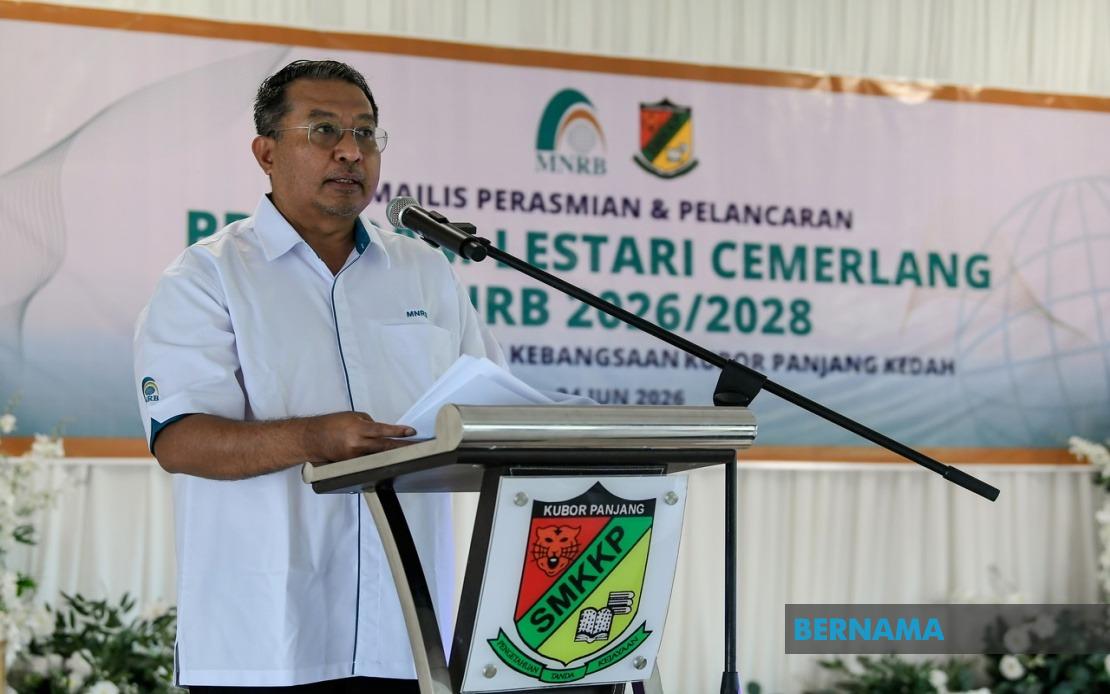
MNRB Holdings Berhad, the investment holding company, has committed nearly RM600,000 to educational development across six schools as part of its ongoing Lestari Cemerlang Programme, marking another phase in the company's long-standing commitment to improving learning outcomes in Malaysia. The initiative, which was formally launched at Sekolah Menengah Kebangsaan Kubor Panjang in Pendang, Kedah, represents the latest expansion of a programme that has evolved significantly since its inception over a decade ago.
Datuk Rudy Rodzila Che Lamin, interim president and group chief executive officer of MNRB, explained that the adopted school programme originated in 2011 and remains a cornerstone of the company's corporate responsibility strategy. Rather than viewing education sponsorship as a peripheral activity, MNRB has positioned this initiative as central to its mission to develop human capital in underserved regions, recognising that sustainable business growth depends on thriving communities and educated workforces.
The philosophical foundation of Lestari Cemerlang extends beyond conventional scholarship models. The programme deliberately balances academic achievement with character formation and institutional excellence, with particular emphasis on schools situated in rural areas where resources are typically constrained. This dual focus acknowledges that successful student outcomes depend on both intellectual development and the cultivation of values that enable young Malaysians to contribute meaningfully to society.
Rudy Rodzila articulated the company's vision during the Sekolah Menengah Kebangsaan Kubor Panjang launch, emphasising that the programme functions as a comprehensive support mechanism rather than a transactional funding exercise. By integrating academic and co-curricular components, MNRB aims to unlock the full potential of participating students, creating pathways not only to tertiary education but to meaningful careers and prosperous futures. This holistic approach mirrors emerging best practices in corporate education engagement, where temporary support yields insufficient returns compared to sustained institutional partnerships.
The geographical scope of Lestari Cemerlang demonstrates systematic expansion across Malaysia's diverse regions. Following earlier implementation in schools across Perak, Pahang, Negeri Sembilan, Melaka and Selangor, SMK Kubor Panjang now becomes the sixth institution to benefit from the programme. This methodical growth pattern suggests a deliberate scaling strategy rather than ad-hoc disbursements, potentially enabling the company to refine its approach and maximise impact as experience accumulates.
Within participating schools, the programme deploys multiple concurrent interventions designed to address specific educational gaps. Enhanced tuition for Form Five cohorts provides targeted academic support during critical examination years, while motivational camps foster psychological resilience and self-efficacy among student populations. Infrastructure upgrades to learning facilities, sponsorship of sports equipment, and greening initiatives address the physical environment in which education occurs, recognising that learning environments substantially influence student engagement and wellbeing.
A particularly innovative component involves the MNRB Smart e-Learning Room, furnished with interactive television and internet connectivity. This infrastructure addresses the digital literacy gap that increasingly affects rural students' competitiveness in technology-driven job markets. By establishing these learning spaces, MNRB acknowledges that access to quality digital resources represents a fundamental prerequisite for educational equity in contemporary Malaysia, where knowledge-based industries dominate economic growth.
Complementing the school-level initiatives, the Tabung Biasiswa MNRB scholarship scheme targets exceptional students from adopted institutions who pursue higher education in fields aligned with MNRB's business operations, particularly insurance, takaful and finance sectors. This strategic targeting creates a talent pipeline directly benefiting participating students while simultaneously addressing workforce recruitment challenges within these professional domains. Five top-performing students from SMK Kubor Panjang have already been selected as initial scholarship recipients under this tier of support.
The measurable track record of scholarship disbursement demonstrates programme sustainability and institutional commitment. Across previous adopted schools, 14 students have received sponsorship spanning diploma, bachelor's and master's qualifications, with eight subsequently securing employment within MNRB Group upon graduation. This employment outcome substantially exceeds typical graduate placement rates, suggesting that scholarship recipients receive either substantial competitive advantages or that MNRB deliberately prioritises hiring from its sponsored cohort as a means of deepening community investment returns.
For Malaysian educational policy observers, MNRB's sustained engagement model offers instructive lessons about corporate participation in school development. Unlike episodic charity that provides immediate relief without institutional transformation, the multi-year, multi-faceted approach demonstrated by Lestari Cemerlang creates conditions for systemic improvement. The programme's emphasis on rural schools addresses the geographic inequality that perpetually disadvantages students from less urbanised regions, where commercial educational services remain scarce and public infrastructure often lags metropolitan standards.
The ceremony's attendance by Kedah State Education Department deputy director Ishak Awang and school leadership underscores government recognition of MNRB's contributions to the state's educational ecosystem. Such collaboration between private enterprise and public education systems, when structured around transparent metrics and shared outcomes, can amplify resource availability without displacing government responsibility for universal educational provision.
Looking forward, the MNRB initiative demonstrates that substantial private sector investment in school excellence remains viable within Malaysia's business culture, particularly when framed around long-term community partnership rather than short-term corporate image enhancement. For other organisations considering similar commitments, the Lestari Cemerlang model provides a replicable blueprint combining infrastructure development, direct financial support, capacity building for educators and staff, and strategic scholarship provision designed to create genuine social mobility for accomplished students from resource-constrained backgrounds.