Prime Minister Narendra Modi of India and President Prabowo Subianto of Indonesia held substantive talks on Tuesday at Jakarta's Merdeka Palace, underscoring the growing importance both nations place on their relationship in an era of shifting global alignments. The encounter represents a significant moment for the Indo-Pacific region, where two of Asia's largest democracies are intensifying cooperation on matters ranging from military capability to maritime security and economic integration.
The bilateral engagement comes at a particularly telling moment. As traditional frameworks of global trade and investment face mounting pressures, India and Indonesia—accounting for nearly two billion people combined—are positioning themselves as architects of an alternative vision for prosperity and security in the Global South. The visit reflects a strategic calculation by both capitals that deepening mutual ties offers economic resilience against external headwinds while amplifying their collective voice in regional and international forums.
Indonesian Foreign Minister Sugiono signalled ahead of the meetings that substantive outcomes would emerge, with eight formal agreements and multiple memorandums of understanding anticipated. The scope reveals the breadth of ambition: defence and security arrangements sit alongside trade and investment frameworks, while food security, energy resilience, critical minerals access, and capacity development in health and education sectors will all feature in the bilateral agenda. This diversified approach suggests both governments recognise that modern strategic partnerships must extend far beyond traditional military considerations.
The optics of Modi's arrival conveyed unmistakable signals about Jakarta's esteem for the relationship. An escort of three Indonesian fighter jets greeted the Indian leader as his aircraft entered Indonesian airspace, while President Prabowo himself received Modi on the tarmac at Halim Perdanakusuma Air Force Base—a ceremonial gesture typically reserved for visits of exceptional diplomatic weight. Such theatricality matters in international relations; it communicates to domestic audiences and regional observers alike that Indonesia accords India partnership status at the highest level.
Defence cooperation promises to dominate substantive discussions, with Indian Ambassador Sandeep Chakravorty confirming that Indonesia has progressed toward acquiring India's BrahMos supersonic cruise missile system. These negotiations have reportedly reached advanced stages, representing a significant shift in Indonesia's military modernisation trajectory. The system's potential acquisition would grant Jakarta a sophisticated anti-ship capability relevant to protecting its expansive maritime zones and the critical sea lanes traversing Indonesian waters. Beyond this specific platform, Chakravorty indicated broader conversations about maritime security coordination would unfold, reflecting shared strategic interests along shipping routes connecting the Indian and Pacific oceans.
MaritimeSecurity cooperation carries particular salience for Southeast Asia, where freedom of navigation and protection of commerce remain perpetually contested. Indonesia, as the world's largest archipelago, faces distinct maritime challenges requiring technological sophistication and intelligence sharing that countries like India can provide. Conversely, Indian security planners recognise that stability across the region's waters directly affects New Delhi's interests and those of its trading partners. This convergence of interests provides the foundation for sustained security partnerships.
Beyond weaponry and military coordination, Modi's visit incorporates cultural and digital dimensions that reflect evolving partnership frameworks. Indonesia's planned launch of the Indonesia Open Network, a digital commerce platform modelled on India's digital public infrastructure achievements, signals Delhi's capacity to export technological governance models alongside military systems. This approach—combining hard power cooperation with technology transfer and institutional innovation—distinguishes Modi's Indo-Pacific strategy from conventional great-power engagement.
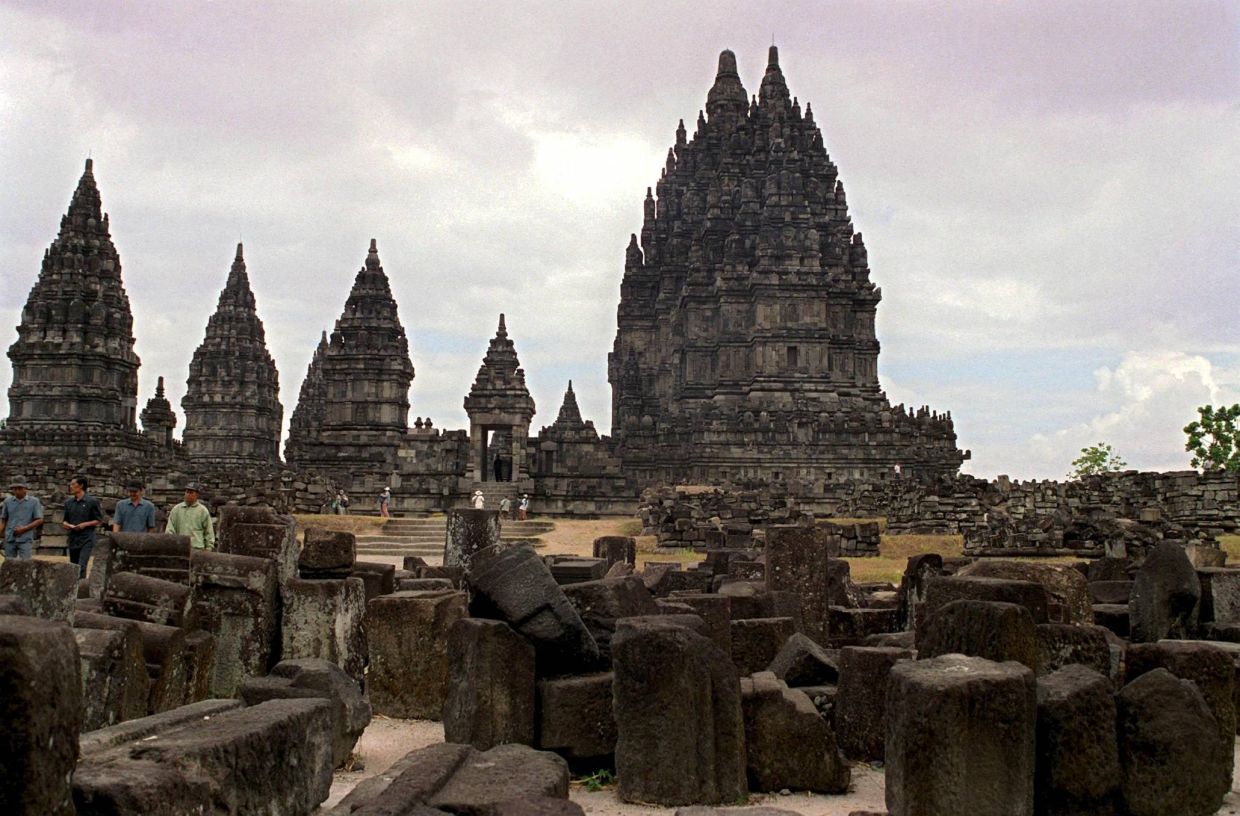
The visit's trajectory also encompasses a pilgrimage dimension. Modi is scheduled to travel to Yogyakarta on Wednesday to potentially announce an Indian-supported restoration initiative at Prambanan, one of Indonesia's most treasured Hindu temples. This undertaking, rooted in an agreement finalised during Prabowo's attendance at India's Republic Day celebrations earlier this year, demonstrates how bilateral relationships now interweave cultural preservation with diplomatic substance. The symbolism resonates across both societies—acknowledging shared civilisational heritage while reinforcing contemporary strategic alignment.
Economically, the dialogue addresses critical vulnerabilities both nations face. Food security concerns, particularly acute in developing Asia where population growth and climate pressures intensify, feature explicitly on the agenda. Energy security—encompassing both traditional hydrocarbon access and renewable transition pathways—represents another shared priority. Critical minerals access deserves particular attention; as global supply chains reorganise around decarbonisation and technological advancement, competition for cobalt, nickel, rare earths and other strategic materials intensifies. India and Indonesia, possessing complementary resource endowments and technological capabilities, recognise collaborative approaches create mutual advantage.
The Modi visit follows his previous Indonesian trip in 2018, marking a seven-year interval that reflects evolving regional dynamics. Prabowo's relatively recent assumption of Indonesia's presidency last October creates an opportunity to reset bilateral parameters under new leadership. The sequencing of Modi's broader Indo-Pacific tour—with Jakarta as the inaugural stop before Australia and New Zealand—broadcasts a statement about priority. Southeast Asia's largest economy, strategically positioned at the convergence of multiple trading blocs and geopolitical zones, requires consistent high-level engagement from Asian powers seeking influence.
Both India and Indonesia maintain memberships in consequential institutions—the Group of 20 and BRICS—that position them as representatives of developing-world interests. Ambassador Chakravorty's framing of the visit emphasised how Global South solidarity becomes increasingly essential in current geopolitical contexts. This perspective rejects binary framing of international relations and instead proposes that countries sharing development trajectories and governance challenges should coordinate rather than compete. Such positioning holds particular appeal for nations seeking to avoid alignment pressures while advancing substantive interests.
As geopolitical competition intensifies across the Indo-Pacific, the Modi-Prabowo engagement illustrates how middle powers navigate great-power rivalry through strategic partnership. Rather than choosing between competing blocs, India and Indonesia cultivate their bilateral relationship as foundation for broader regional stability and prosperity. The visit's mixture of defence cooperation, economic integration, cultural exchange, and technological collaboration reflects sophisticated statecraft adapted to contemporary complexity.

