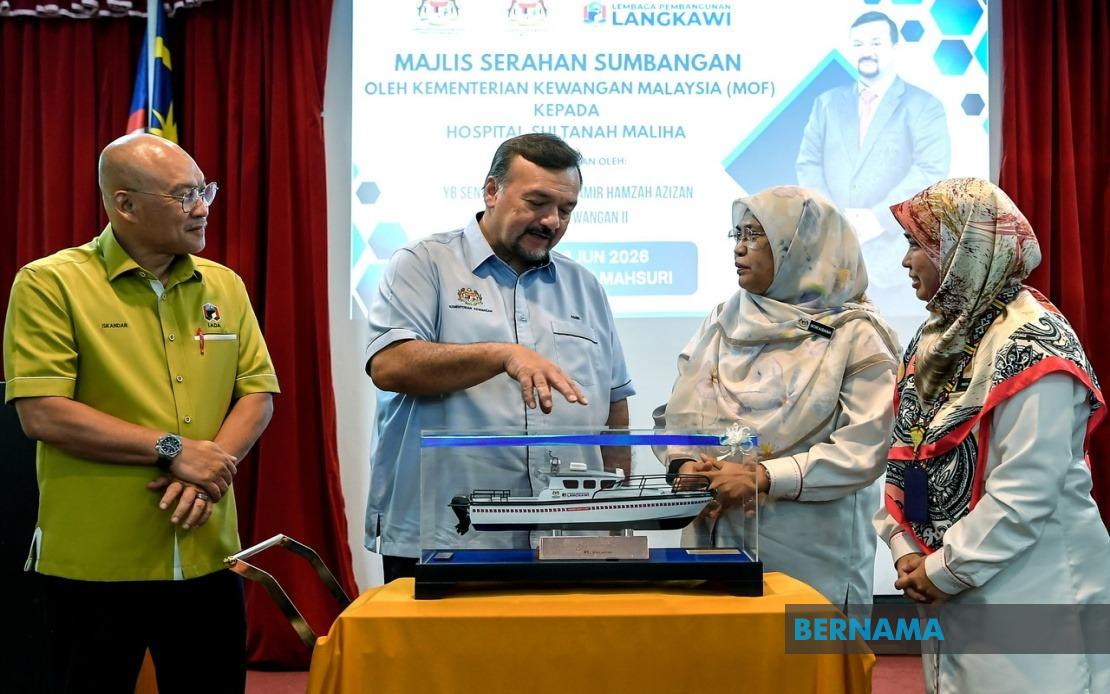
The Ministry of Finance has committed RM5.5 million to establish a specialized sea ambulance service for Langkawi, marking a significant step toward improving emergency healthcare delivery in the island state. The new service, which is scheduled to begin operations in early 2025, represents a direct response to longstanding challenges in transporting critically ill patients from the island to referral hospitals on the peninsula. Finance Minister II Datuk Seri Amir Hamzah Azizan outlined the project's scope during a visit to Hospital Sultanah Maliha, emphasizing how the initiative addresses both the needs of the local population and the hundreds of thousands of tourists who visit Langkawi annually.
Currently, patient transfers from Langkawi rely heavily on commercial passenger ferry services, a system that creates dangerous bottlenecks during medical emergencies. The situation becomes particularly precarious during periods when ferry operators reduce service frequencies due to weather conditions or operational constraints, leaving patients and their families with severely limited transport options. This arrangement is far from ideal for those requiring urgent referral to specialized facilities that only exist on the mainland, potentially compromising treatment outcomes during critical windows when time is essential. The new sea ambulance addresses these vulnerabilities by providing a dedicated, medical-grade transport solution that operates independently of commercial ferry schedules.
The dedicated vessel will be operated by Hospital Sultanah Maliha under the oversight of healthcare professionals. According to Amir Hamzah, the sea ambulance is equipped to accommodate two stretcher-bound patients simultaneously, along with a crew of up to twelve medical and support personnel. This capacity allows for proper clinical care during transit, ensuring that critically ill or injured patients receive continuous monitoring and intervention throughout their journey to the mainland. The dedicated staffing arrangement is crucial, as it enables trained healthcare professionals to focus entirely on patient welfare rather than balancing medical responsibilities with routine passenger service operations.
Beyond operational efficiency, the new service incorporates important safeguarding measures for patient dignity and privacy. Medical evacuations can be traumatic experiences, and the specialized design of the sea ambulance ensures that patients are transported in a controlled, professional environment rather than exposed to the scrutiny of general passenger travel. This consideration reflects growing awareness among health planners that the entire patient experience, including the journey to treatment facilities, contributes to overall health outcomes and psychological well-being.
The announcement of the sea ambulance initiative coincided with the presentation of RM700,000 worth of additional healthcare equipment to Hospital Sultanah Maliha, representing a comprehensive approach to strengthening the island's medical infrastructure. The equipment package encompasses various categories including diagnostic medical devices, information technology systems, furnishings, vehicles, and security installations. This multi-faceted investment demonstrates recognition that improving healthcare quality requires addressing infrastructure gaps across multiple dimensions simultaneously.
A particularly significant component of this equipment package involves digital health infrastructure, specifically the implementation of Electronic Medical Record (EMR) systems that align with the Health Ministry's broader digitalization agenda. The hospital will receive mobile computing units that enable clinical staff to input patient data directly into centralized digital systems during ward rounds. This technological integration creates real-time connectivity between Langkawi's hospital and mainland referral centers, allowing patients' medical histories to be instantly available to healthcare providers across the network. For patients requiring emergency transfer, this instant accessibility to comprehensive medical records could prove critical in informing treatment decisions at receiving hospitals.
The digital health initiative extends beyond simple record-keeping, representing a strategic shift toward data-driven healthcare delivery. When nurses and doctors can access complete patient information immediately upon arrival at referral hospitals, it eliminates delays caused by manual record transfer and reduces the risk of critical medical information being unavailable or incomplete. This efficiency gains particular importance in emergency situations where initial treatment decisions must be made rapidly based on accurate patient history and prior test results. The system also reduces duplicative testing, as mainland facilities can view previous investigations conducted at Hospital Sultanah Maliha without requiring patients to undergo redundant diagnostic procedures.
For Langkawi, which attracts millions of international tourists annually, improved emergency healthcare capabilities carry economic as well as humanitarian significance. Destination competitiveness increasingly depends on the availability of modern medical facilities and rapid access to emergency care. Tourists evaluating whether to visit particular destinations often factor in healthcare quality and accessibility, particularly families traveling with young children or elderly relatives. A dedicated sea ambulance, coupled with digitally connected hospital systems, sends a clear signal that Langkawi takes visitor safety seriously and has invested in infrastructure to respond to medical emergencies professionally and efficiently.
The broader context for these investments reflects Malaysia's emphasis on addressing healthcare disparities between urban and island communities. Langkawi, despite its status as a major tourism destination and economic driver for Kedah, has historically faced constraints in medical infrastructure compared to larger mainland cities. This funding allocation acknowledges that equitable healthcare access requires targeted investment in regions facing geographic disadvantages. The sea ambulance and equipment donation represent federal commitment to ensuring that island residents do not experience delays or compromised care quality simply due to their location.
Amir Hamzah, who holds dual responsibility as Finance Minister II and co-chairman of the Langkawi Development Authority, is well-positioned to champion integrated development approaches that combine economic growth with social services. His involvement in both roles signals alignment between financial planning and local development objectives. The coordination between federal budget allocation and local development authority priorities demonstrates how Malaysia's governance structures can function effectively when key decision-makers maintain accountability across multiple institutional portfolios.
The expected launch timeline of early 2025 allows sufficient lead time for staff recruitment, training, and operational protocols to be established before the service begins. Healthcare workers operating the sea ambulance will require specialized training beyond standard emergency medical training, given the unique challenges of providing care in a maritime environment. Contingency planning must account for various weather scenarios and potential mechanical issues, ensuring the service can operate reliably across Langkawi's maritime conditions.
This investment should be understood as part of Malaysia's broader healthcare modernization agenda, which emphasizes both technological advancement and infrastructure development. The sea ambulance initiative demonstrates that modernization in healthcare extends beyond high-tech diagnostic equipment to encompassing logistical systems that ensure patients can actually reach facilities where advanced care is available. For island communities throughout Malaysia and Southeast Asia facing similar geographic barriers to healthcare access, Langkawi's experience could serve as a template for addressing comparable challenges through dedicated funding and integrated planning.

