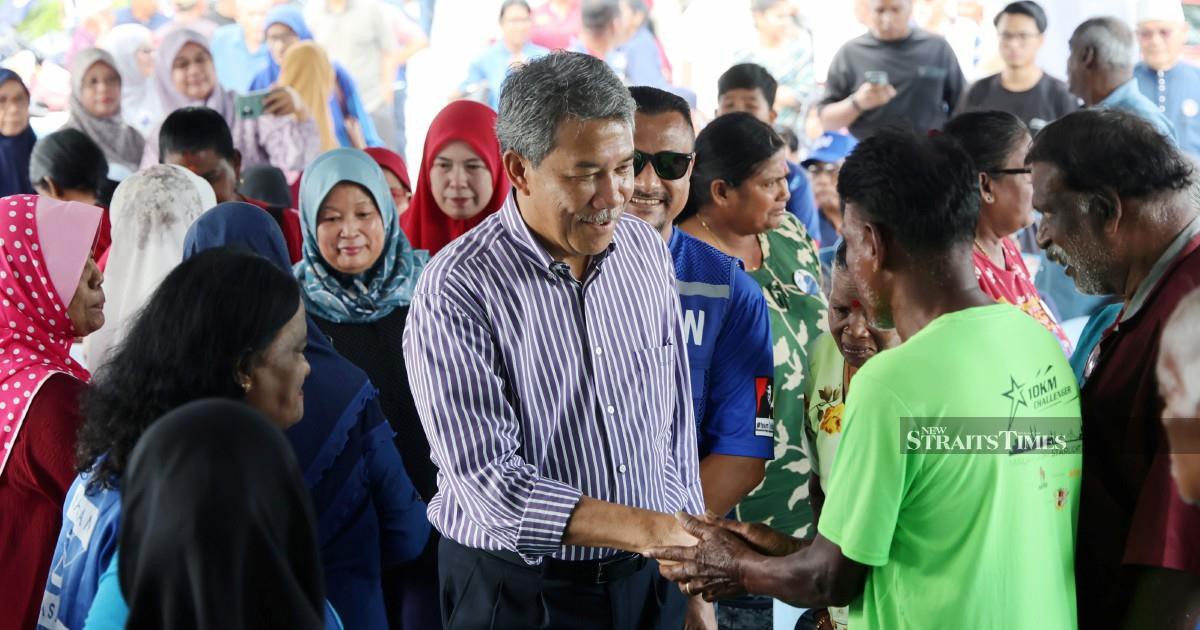
Datuk Seri Mohamad Hasan, Malaysia's Foreign Minister, has publicly declared his willingness to vacate the diplomatic portfolio should Prime Minister Datuk Seri Anwar Ibrahim issue such a directive. Speaking in Rembau, the minister indicated his acceptance of the premier's prerogative to reorganise the cabinet according to government needs and strategic priorities.
The statement carries implications for Malaysia's political landscape, where ministerial positions remain instruments of executive discretion and party management. Mohamad Hasan's pronouncement reflects a broader pattern within the federal government where senior figures balance operational autonomy with deference to the Prime Minister's constitutional authority over cabinet appointments and shuffles.
Foreign affairs represents one of Malaysia's most sensitive and visible portfolios, encompassing bilateral relations with key trading partners, membership management within regional and global organisations, and diplomatic crisis response. The ministry handles critical relationships across Asia-Pacific economies and maintains Malaysia's profile in international forums ranging from the United Nations to ASEAN structures.
Modern Malaysian politics has witnessed several cabinet reorganisations and ministerial transitions, each reflecting broader coalition dynamics or performance evaluations. The Foreign Ministry has previously experienced shifts in leadership as governments recalibrate priorities or respond to political developments within ruling coalitions. Mohamad Hasan's explicit readiness suggests either confidence in his current standing or pragmatic recognition of the executive's prerogatives.
The timing of such statements often warrants examination within Malaysian political discourse. Cabinet stability remains a priority for governments seeking to project competence, yet flexibility in personnel allows leaders to respond to performance concerns, factional pressures, or strategic reassessment. Ministers who publicly accept potential reassignment may be signalling either secure footing or calculating that such deference strengthens their position.
For Malaysia's diplomatic engagement regionally and globally, ministerial continuity typically facilitates relationship-building and policy implementation. Foreign ministries benefit from sustained relationships with counterparts, institutional knowledge, and established working patterns. Transitions introduce adjustment periods, though they may also allow fresh strategic approaches or strengthen bilateral ties through renewed diplomatic engagement.
The Foreign Ministry's current agenda encompasses managing maritime disputes, supporting economic partnerships across Southeast Asia and beyond, and positioning Malaysia within evolving geopolitical configurations affecting the region. The ministry also coordinates Malaysia's participation in multilateral initiatives spanning trade, security, and development concerns affecting ASEAN nations.
Within the Malaysian cabinet context, such statements function as political communication, signalling relationships between ministers and the Prime Minister. The willingness to accept reassignment may reassure the premier of a minister's loyalty or conversely indicate resignation to uncertain tenure. Political observers monitor such declarations for implications about cabinet dynamics and potential reshuffle patterns.
Mohamad Hasan's background spans both domestic and international portfolios, providing him experience navigating Malaysia's complex governance environment. His tenure as Foreign Minister has involved managing relationships with major powers, ASEAN coordination, and representation of Malaysian interests across multiple diplomatic contexts. The portfolio requires balancing Malaysia's strategic interests with coalition partnership obligations and domestic political considerations.
For Malaysian readers and regional observers, ministerial statements about tenure reflect the broader challenge of balancing governance continuity with political reality in systems where coalition dynamics influence personnel decisions. The Foreign Ministry's effectiveness depends partly on sustained leadership, yet democratic governance accepts that appointed officials serve at executive pleasure.
Looking forward, Mohamad Hasan's position appears stable under current circumstances, given his public readiness statement and the Foreign Ministry's importance to Malaysia's diplomatic standing. However, political dynamics within coalition governments remain fluid, and ministerial portfolios periodically shift as parties renegotiate representation or leaders reassess administrative arrangements.
The statement ultimately reflects the constitutional reality that Malaysia's Prime Minister wields substantial authority over cabinet composition and that ministers operate within this framework. Such explicit acknowledgment of that authority, particularly from a senior minister handling a critical portfolio, underscores the executive prerogatives governing Malaysia's ministerial appointments while suggesting the incumbent's confidence in current arrangements.

