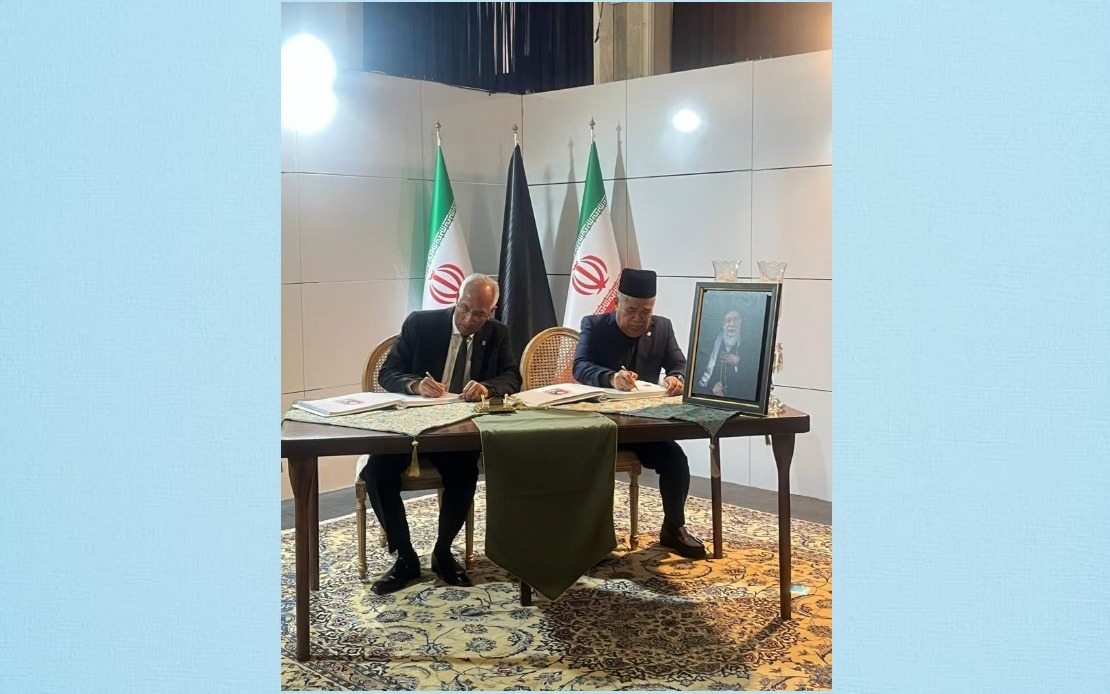
Malaysia's Minister of Agriculture and Food Security Datuk Seri Mohamad Sabu travelled to Iran at the head of a government delegation to participate in mourning rites for Ali Khamenei, the deceased Supreme Leader of Iran. The tribute took place at the Grand Mosalla in Tehran, where the Malaysian official joined high-ranking Iranian dignitaries in honouring the late leader. Upon his arrival, Mohamad was received by Mohammad Bagher Ghalibaf, Speaker of the Iranian Parliament, and Abbas Araghchi, the Iranian Foreign Minister, underscoring the diplomatic significance attached to Malaysia's participation.
The ceremonial schedule reflects the profound reverence accorded to Iran's Supreme Leader within the Islamic Republic's religious and political hierarchy. Rather than concluding in Tehran, the funeral rites will unfold across multiple cities sacred to Shia Islam over an extended period. From the initial proceedings at the Grand Mosalla, the funeral cortege will proceed to Qom, followed by journeys to Najaf and Karbala—two of the holiest sites in Shia Islam located in Iraq—before ultimately reaching the Imam Reza Shrine in Mashhad, where interment is scheduled for July 9. This multi-city progression allows for widespread public participation and demonstrates the pan-Islamic significance attributed to Khamenei's legacy.
The timing of these ceremonies carries considerable weight within regional geopolitics. Khamenei's death occurred on February 28 following what sources identified as a joint military operation involving the United States and Israel. By early July, more than one hundred days had elapsed since the attack, yet Iran and its allies continued to conduct formal mourning observances. Malaysia's decision to dispatch a high-level delegation at this juncture signals Kuala Lumpur's commitment to maintaining diplomatic relations with Tehran despite the turbulent circumstances surrounding the Supreme Leader's death.
For Malaysian policymakers, participation in such ceremonies reflects a broader engagement strategy within the Muslim world. Iran remains a significant player in Middle Eastern affairs and maintains considerable influence among Shia communities across Asia. Malaysia's historically pragmatic approach to international relations has consistently emphasised maintaining functional ties with diverse Islamic nations regardless of sectarian or geopolitical divisions. The attendance of a cabinet-level minister demonstrates that these relationships carry institutional weight within the Malaysian government's priorities.
Moreover, the funeral proceedings themselves underscore the enduring theological and political significance of Iran's Supreme Leader position. Unlike many national leaders whose deaths trigger brief memorial periods, Khamenei's passing necessitated extended ceremonies spanning multiple countries and involving complex logistical coordination. This reflects Iran's unique constitutional structure, wherein the Supreme Leader holds authority not merely as a political executive but as the ultimate arbiter of religious and state matters combined. The deliberate pace of the funeral rites allows the Iranian state to consolidate succession arrangements while international observers and allied nations acknowledge the transition through formal participation.
From a Southeast Asian perspective, Malaysia's involvement highlights the region's interconnectedness with Middle Eastern religious and political developments. Malaysian Muslims, though predominantly Sunni, have substantial cultural and historical ties to Iran's Islamic Revolution and its intellectual traditions. The delegation's presence at these ceremonies acknowledges these connections while maintaining Malaysia's position as a bridge between diverse Muslim communities and political systems. This balancing act remains crucial for Malaysian foreign policy, particularly as regional tensions in the Middle East periodically intensify.
Datuk Seri Mohamad Sabu's role as head of the delegation also carries symbolic importance beyond ceremonial protocol. As Minister of Agriculture and Food Security, his selection reflects the government's investment in maintaining broad-based diplomatic relationships across all ministerial portfolios rather than concentrating such duties exclusively within the Foreign Ministry. This approach, while less conventional in some Western democracies, aligns with Malaysia's traditional practice of demonstrating comprehensive governmental engagement with strategic partners.
The condolences extended by the Malaysian representative included religious sentiments appropriate to the Islamic context of the occasion. Mohamad invoked Islamic prayers for the deceased, requesting divine mercy and forgiveness for Khamenei's sins whilst praying that he be granted a righteous place in the afterlife. These prayers, conveyed through social media to the Malaysian and international public, reinforced the religious rather than purely political character of Malaysia's participation, even as the underlying diplomatic calculations remained evident.
Looking ahead, the resolution of Iran's succession process during these extended funeral rites will carry implications for Malaysia and other Southeast Asian nations engaged with Tehran. The seven-day interval between the delegation's visit and the scheduled burial on July 9 would have allowed sufficient time for senior Iranian officials to coordinate the transition to a new Supreme Leader whilst international participants paid their respects. Malaysia's early presence in the mourning process positioned the country favourably within Iran's diplomatic calculations during this transitional period, potentially advantaging future bilateral negotiations across trade, energy, and strategic sectors.

