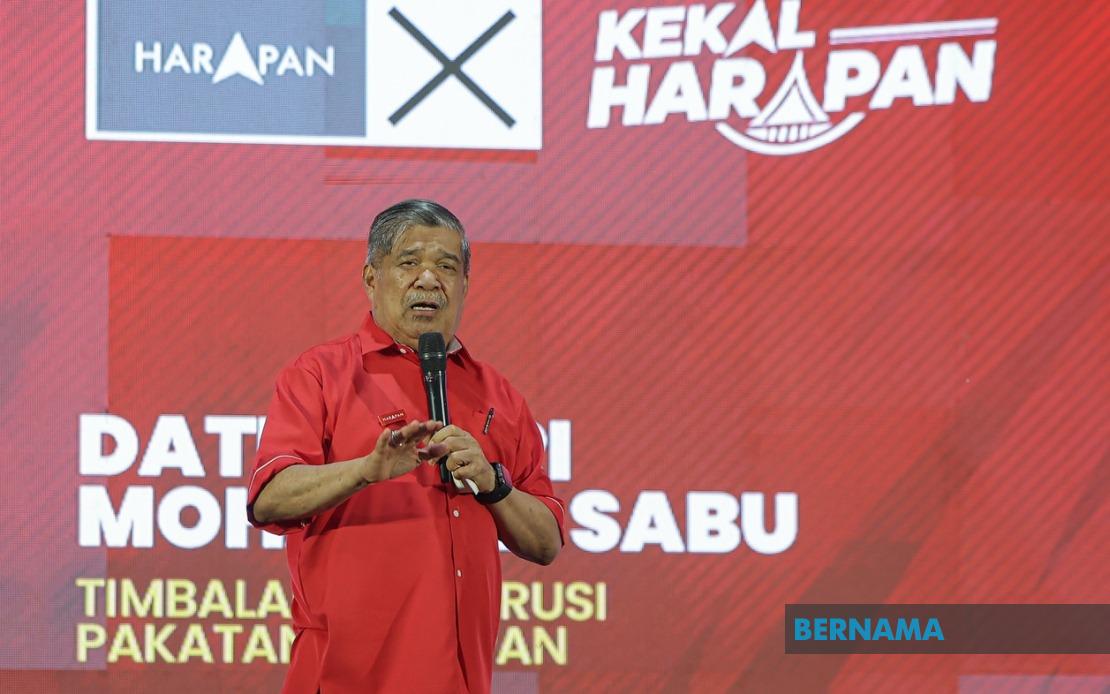
Datuk Seri Mohamad Sabu, president of Amanah, has launched a forceful appeal to voters in Negeri Sembilan to resist what he terms the destructive cycle of 'marriage-divorce' politics, a practice he identifies as the root cause of instability in Malaysia's political landscape. Speaking in Seremban on July 22, the seasoned politician drew sharp attention to the pattern whereby certain parties abandon their allies in pursuit of power consolidation, a strategy he argues has become increasingly prevalent across the nation's electoral arena.
The Amanah leader's critique centers on the phenomenon of strategic party-hopping and the constant recalibration of political alliances based not on principle but on pragmatic calculations about which coalition offers the best pathway to governmental authority. Rather than viewing politics as a stable contest between ideological or programmatic camps, these parties instead treat political partnerships as transactional arrangements to be dissolved and reformed as circumstances warrant. For Mohamad Sabu, this approach represents a fundamental corruption of democratic norms and threatens to erode public confidence in the political system itself.
In characterizing this trend as particularly corrosive to Malaysia's political culture, Mohamad Sabu emphasized that voters must remain vigilant against parties demonstrating a pattern of frequent realignment. Such behavior, he contends, signals that a party's commitment to governance principles remains secondary to its hunger for ministerial positions and the benefits that accompany holding power. The inability of a political organization to maintain stable partnerships or clearly defined principles suggests to voters that the party lacks genuine conviction about how the country should be managed or what values it truly represents.
To illustrate his argument, Mohamad Sabu pointed to a specific historical trajectory involving multiple changes of alliance. He referenced how certain parties had successively married themselves to Barisan Nasional, then to Pakatan Rakyat, before returning to UMNO-BN only to abandon that relationship within little more than a year. The pattern continued when these parties subsequently aligned with Bersatu before divorcing again, and now find themselves positioning to court new allies. This catalogue of serial partnerships, Mohamad Sabu implied, demonstrates a fundamental instability that should concern any voter considering where to place their electoral trust.
The broader implications of allowing this pattern to persist extend beyond individual electoral cycles. When parties routinely prioritize power acquisition over principled governance, the political system itself becomes increasingly fragile and susceptible to manipulation. Voters lose confidence in the consistency of political messaging, as they recognize that today's partner in coalition may become tomorrow's adversary. Government policy priorities become hostage to the latest realignment, with coherent long-term planning becoming nearly impossible when the foundational coalition supporting a government remains volatile and subject to sudden dissolution.
For Negeri Sembilan specifically, Mohamad Sabu's intervention signals Amanah's determination to position itself as a force for political stability and consistency. The state has long been a crucial battleground in Malaysian politics, and how voters there respond to calls for rejecting opportunistic politics will have resonance throughout the broader Pakatan Rakyat coalition. The emphasis on stability and principled alliance-building appeals particularly to middle-class and educated voters who view constant political realignment as a sign of dysfunction rather than healthy competition.
The warning also carries implications for how different segments of the voting public perceive the major coalitions. While Barisan Nasional has historically been viewed as the establishment force, recent years have seen its constituent parties engage in their own recalibrations and departures. Pakatan Rakyat, meanwhile, has struggled to maintain cohesion despite its 2018 electoral victory, with various partners pursuing divergent interests. Against this backdrop, Mohamad Sabu's call for voters to punish habitual alliance-switchers becomes a statement about which parties deserve to be entrusted with power in future elections.
The fundamental concern underlying Mohamad Sabu's remarks is that when party-hopping becomes normalized and accepted within the political system, it establishes a precedent that undermines accountability. Elected representatives begin to view themselves as free agents rather than representatives bound by specific electoral mandates. Government becomes a prize to be seized through whatever coalition arrangements prove most advantageous at any given moment, rather than a responsibility to be discharged according to a coherent vision for the nation's future.
Moving forward, how successfully Mohamad Sabu's message resonates with Negeri Sembilan voters will likely influence broader electoral calculations across Malaysia. If voters demonstrate through their ballots that they genuinely penalize parties for serial realignment, this could incentivize greater stability in coalition arrangements. Conversely, if opportunistic alliance-building continues to be rewarded with electoral success, the cycle of instability is likely to persist. The outcome in Negeri Sembilan may therefore serve as a barometer of whether Malaysian voters are prepared to enforce consequences for the kind of political behavior Mohamad Sabu has criticized, or whether the pursuit of power will continue to override all other considerations in determining Malaysia's political trajectory.

