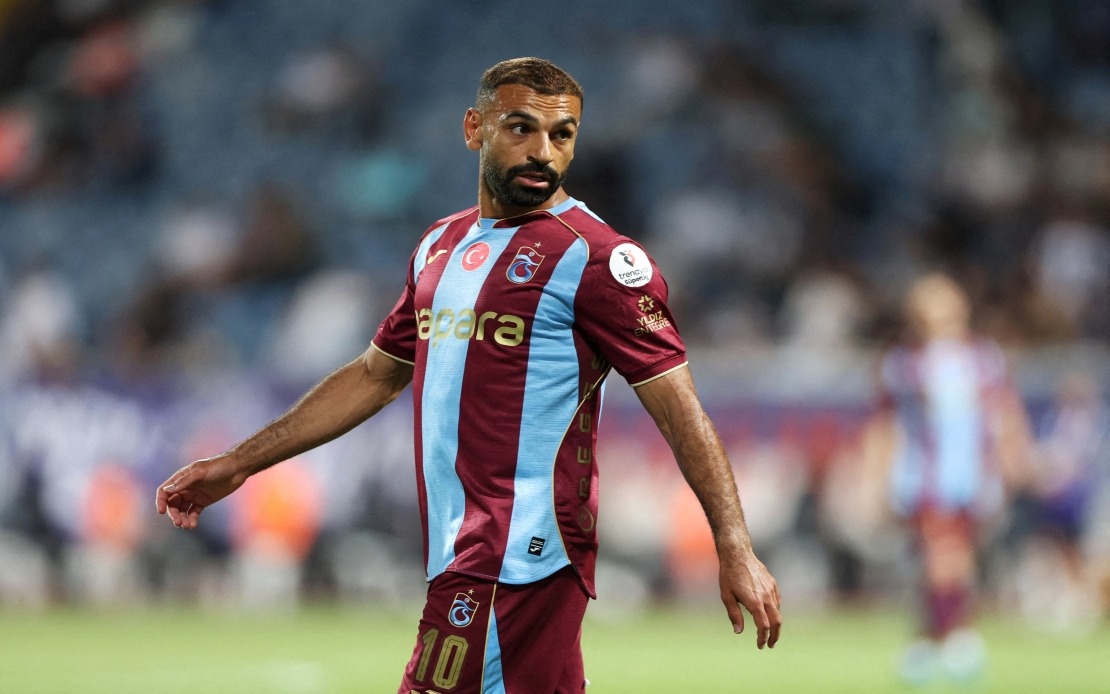
Mohamed Salah's recent transfer to Turkish football club Trabzonspor has generated commercial momentum within days, with the Egyptian superstar's No. 10 jersey now prominently displayed across sports retailers in Cairo's venerable Khan el-Khalili bazaar. The iconic market, which recently hosted visits from Egyptian President Abdel Fattah el-Sisi and French President Emmanuel Macron, has become an unexpected showcase for Salah merchandise, signalling the profound cultural resonance of the player's career moves among ordinary Egyptians.
Retail activity around Salah's move has been swift and visible. Multiple sports shops throughout the historic bazaar have positioned his claret-and-blue Trabzonspor shirt alongside his Egypt national team jersey, capitalising on immediate consumer interest. Shopkeepers report brisk sales at competitive prices, with the Trabzonspor jersey retailing between 400 and 500 Egyptian pounds, roughly equivalent to eight to ten US dollars. This pricing strategy appears designed to make authentic licensed merchandise accessible to broader segments of Cairo's population, from casual supporters to dedicated collectors.
The enthusiasm extends well beyond point-of-sale transactions. Social media platforms across Egypt and the broader Arab world have circulated footage documenting the warm reception Salah encountered upon his arrival in Turkey. These videos have resonated strongly among football fans, who interpret the Turkish welcome as validation of both Salah's continued elite status and the reciprocal respect between Turkish and Egyptian communities. The narrative emerging from these digital spaces frames Salah's relocation not simply as a commercial transaction, but as a cultural affirmation.
Local merchants recognize the broader significance of Salah's presence in their inventory. Salah Abdulmecid, a Khan el-Khalili shopkeeper interviewed about the phenomenon, articulated enthusiasm grounded in cross-cultural admiration. He emphasized that Egyptians hold Turkish people in high regard, citing shared traditions and mutual religious commitment. Abdulmecid's framing suggests that merchandise sales reflect deeper currents of popular affinity between the two societies, with Salah serving as the tangible embodiment of that connection. His comments reveal how individual sporting achievement becomes entangled with national identity and international relations at grassroots level.
Egyptian sociologist Said Sadik has interpreted Salah's transfer through the lens of international relations and soft power dynamics. Sadik characterizes Salah as a "soft power" figure whose career trajectory strengthens the bonds between Egyptian and Turkish societies. This assessment gains particular weight from the fact that Salah's name was explicitly mentioned during high-level diplomatic discussions, appearing in joint remarks made by Turkish Foreign Minister Hakan Fidan and Egyptian counterpart Badr Abdelatty during Fidan's official visit to Cairo on August 14. This diplomatic acknowledgment transforms Salah from a mere athlete into a recognized instrument of state-to-state relations.
The sociologist's analysis reflects a broader pattern observable across the Middle East and North Africa, where prominent athletes transcend sporting boundaries to become symbols of national prestige and international standing. Sadik noted that Salah's appeal spans demographic segments that would not ordinarily engage closely with football commentary, with even casual observers making deliberate efforts to follow his career developments. This expansive reach amplifies the commercial and diplomatic implications of his every transfer, making his choice of club a matter of national interest rather than simply sporting significance.
The reception Salah received in Turkey has itself become politically meaningful. Sadik specifically highlighted how enthusiastic Turkish welcomes for the Egyptian player serve as tangible indicators of strengthening interpersonal connections between Turkish and Egyptian populations. Whereas official diplomatic channels often remain formal and constrained, the spontaneous and warm public reception of foreign celebrities creates space for authentic popular sentiment to manifest. Turks embracing Salah become, in this framework, visible expression of deeper goodwill toward Egypt more broadly.
For Malaysian and Southeast Asian observers, Salah's transfer illustrates how sporting superstars function as bridges across geographical and cultural distances. The phenomenon parallels similar dynamics in Southeast Asian football, where regional players achieving prominence in global competitions generate waves of merchandise demand and national pride. The Khan el-Khalili bazaar scene demonstrates that even in cities with limited Turkish resident populations, successful athletes generate immediate commercial activity and serve as conversation starters about international relations.
The timing of Salah's move occurs during a period of apparent diplomatic warmth between Egypt and Turkey, after years of tension. His transfer thus arrives as both symbol and potential reinforcement of improving state relations. When foreign ministers reference a footballer in official remarks, and when that footballer's merchandise appears rapidly across historic commercial districts, the boundary between sport and statecraft dissolves. Salah's jersey becomes less a commodity than a statement about Egypt's relationship with Turkey and the direction of Middle Eastern geopolitics.
Future football transfers involving high-profile athletes from smaller nations will likely generate similar cross-border commercial activity and diplomatic subtext. Salah's experience in Khan el-Khalili demonstrates that global sports superstars create economic opportunities for retailers while simultaneously reinforcing national narratives and international positioning. The phenomenon rewards deeper examination of how celebrity athletes shape public diplomacy and international sentiment at ground level, where ordinary transactions in historic markets reflect and potentially influence broader patterns of international relations.

