A tragedy unfolded along the old Kuala Lumpur-Bentong road near Janda Baik on Wednesday afternoon when a massive fallen tree crushed the four-wheel-drive vehicle carrying Mohd Radzi Rahimi, 40, and three family members, claiming their lives instantly. The incident, which occurred around 1 pm, sent shockwaves through political circles in Pahang, where Mohd Radzi had carved out a reputation as a dedicated and popular grassroots organiser within the United Malays National Organisation.
Mohd Radzi's involvement in party politics stretched back years, according to his father Rahimi Abd Samad, 63, who spoke to journalists at the Sultan Haji Ahmad Shah Hospital Forensic Unit in Temerloh. The younger Rahimi had invested approximately a decade in building the Maran UMNO Youth division before ascending to its leadership position. His trajectory within the party hierarchy eventually led to his appointment as Treasurer of the broader Pahang UMNO Youth movement, a position reflecting the confidence that senior party figures placed in his organisational abilities and commitment.
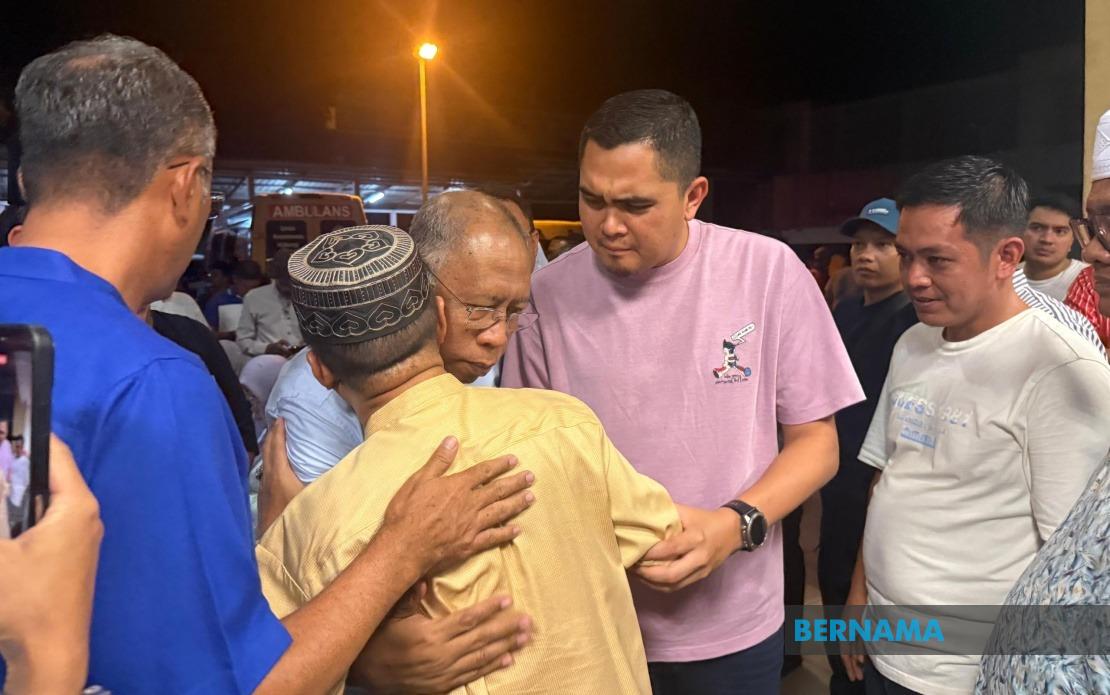
Beyond the statistics of his career progression lay a more human dimension to his political engagement. Rahimi senior emphasised that his son's popularity extended across the membership base, with numerous UMNO activists maintaining close personal relationships with him. This grassroots connection became evident in the immediate aftermath of his death, when senior party leadership moved swiftly to pay their respects to the family. UMNO Youth chief Datuk Dr Muhammad Akmal Saleh personally visited the hospital, underscoring the significance of the loss within party ranks. The gesture reflected not merely protocol but genuine acknowledgment of a colleague's contributions at the divisional level.
The circumstances surrounding the accident revealed a family united in community engagement. Mohd Radzi was travelling with his wife Nuriani Mohammad Jafri, 36, their five-year-old son Muhammad Rizz Hazim, and his brother-in-law Mohammad Nizam Mohammad Jafri, 35, all of whom perished in the incident. The group had spent the day participating in a motorcycle programme involving youth contingents from Maran, an activity that epitomised the kind of recreational yet purposeful engagement that characterises grassroots party building in Malaysian politics. Their vehicle was returning to Maran after the event at Pulau Pangkor in Perak when the tree fell, transforming what should have been a routine journey into a fatal moment.
Rahimi recalled that his final conversation with his son occurred on Thursday before the Pangkor trip, with nothing suggesting the gravity of what lay ahead. Mohd Radzi had mentioned participating in a motorcycle convoy to the island with friends—a casual detail that underscored the ordinary nature of the day's planned activities. The normalcy of that last exchange would later acquire a poignant weight in the father's memory, marking the boundary between life and unexpected loss.
Another dimension of the tragedy emerged in the survival of Mohd Radzi's second son, Muhammad Rizz Haziq Mohd Radzi, who sustained severe head injuries but remained alive and receiving treatment at the same hospital. The boy's survival, while offering a glimmer of hope within an otherwise devastating sequence of events, also meant that the family unit suffered fragmentation—a living witness to an accident that claimed his mother, older brother, and father in one terrible moment.
The political establishment's response demonstrated the cross-factional solidarity that sometimes surfaces in moments of genuine tragedy. Beyond the UMNO Youth chief, other prominent figures made the journey to express condolences, including UMNO Supreme Council member Datuk Seri Shahaniza Shamsuddin, herself the Maran UMNO division chief, and Kuantan UMNO division chief Datuk Seri Ab. Hamid Nazahar. These visits represented more than ceremonial obligation; they acknowledged a loss felt throughout the party's organisational network in Pahang.
The procedural aspects of the tragedy proceeded with the solemnity befitting the circumstances. Post-mortem examinations concluded at 9 pm, clearing the way for funeral arrangements that would honour both religious observance and the public character of the deceased within political circles. The bodies were to be conveyed to Masjid Kampung Paya Luas in Temerloh for ritual preparations before transport to Masjid As-Syakirin in Maran, where funeral prayers would be conducted. Final committal would occur at the Taman Sri Chendung Muslim cemetery, a sequence that allowed the community to gather in acknowledgment of Mohd Radzi's place within their midst.
For Malaysian politics, particularly at the state level in Pahang, the incident represented a sobering reminder of mortality's indifference to rank and ambition. Mohd Radzi's decade-plus engagement with UMNO structures at the grassroots had positioned him as precisely the kind of mid-level organiser upon whom party machinery depends—individuals capable of mobilising youth membership, sustaining institutional momentum, and building the personal networks that characterise political influence in the region. His sudden removal from that ecosystem left a tangible gap in the configuration of Pahang's party politics.
The tragedy also highlighted the vulnerability of families within the Malaysian political sphere, where obligations to public engagement sometimes extend to spouses and children who participate in official activities by proximity rather than personal political choice. Nuriani Mohammad Jafri and the couple's young son Muhammad Rizz Hazim found themselves caught in circumstances of their husband and father's public role—a reminder that the consequences of political participation can extend beyond the individual activist to encompass dependents whose agency in the matter remains limited.
As news of the incident rippled through political networks and beyond, the narrative gradually shifted from the shock of an accident to contemplation of a life cut short. Mohd Radzi Rahimi would be remembered less for any spectacular achievement or high-profile controversy than for steady, patient accumulation of influence and trust at the organisational level where much of Malaysian politics actually unfolds—a quieter, less glamorous realm than the ministerial corridors but equally essential to the functioning of electoral democracy.

