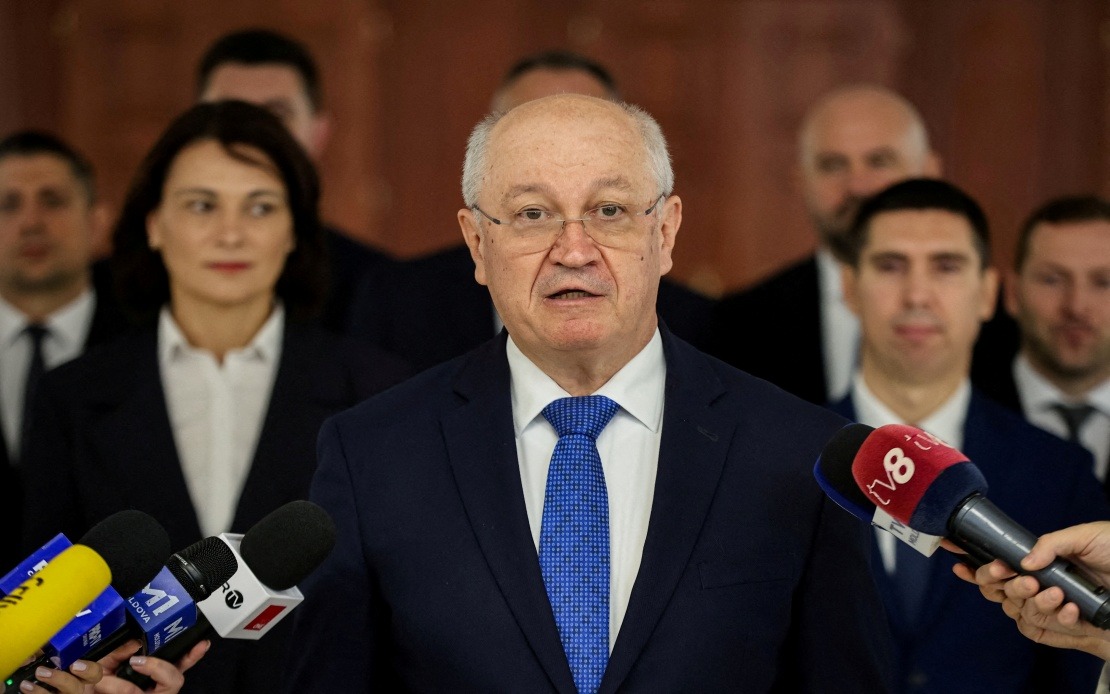
Moldova's Prime Minister Alexandru Munteanu announced his resignation on Friday, bringing to an end his tenure that began in November 2025. The abrupt departure marks a significant political development in the Eastern European nation, though Munteanu offered limited public explanation for his decision to step aside at this juncture.
In a statement posted on social media platform X, Munteanu declared that his time leading the government had reached its conclusion. He indicated that his departure stemmed from a fundamental conflict between the demands of his office and his personal ethical framework. The resignation itself carried an air of finality, with the premier making clear that continuing in his role had become untenable given the circumstances he faced.
Munteanu's characterisation of his exit centred on a matter of principle rather than any specific scandal or policy failure. By framing his decision around the inability to govern "in accordance with my principles and convictions," the outgoing premier appeared to signal disagreement with the trajectory his administration was taking or directives he was being asked to follow. Such vague but pointed language often indicates internal political friction or external pressure that the departing official finds incompatible with their worldview.
The timing of the resignation is noteworthy given that Munteanu had occupied the prime ministerial office for just over eight months. This relatively brief tenure suggests that tensions either developed gradually over his time in government or emerged suddenly to force a decisive break. In contemporary Eastern European politics, where governance frequently involves navigating complex relationships between domestic factions and international stakeholders, such pressures can mount rapidly.
Moldova itself remains a nation of considerable geopolitical significance. Situated between the European Union and Russia, with a substantial Russian-speaking minority and ongoing tensions related to the breakaway region of Transnistria, Moldovan politics frequently reflects broader regional fault lines. Prime ministers in Chișinău often find themselves managing competing pressures from the West and East, making the moral clarity that Munteanu invoked particularly relevant to understanding his position.
The lack of detailed public explanation from Munteanu distinguishes this resignation from many political exits in the region, where departing officials typically itemise grievances or policy disputes. His appeal to personal principle rather than specific controversies may reflect either a desire to maintain dignity and avoid protracted public disputes, or an attempt to position himself favourably for potential future political involvement. The opacity of his statement has left Moldovan political analysts and international observers to speculate about the true drivers behind his decision.
For Malaysia and other Southeast Asian nations monitoring developments in Eastern Europe, Munteanu's departure illustrates the complexities facing smaller nations navigating between competing geopolitical powers. Just as some ASEAN members balance relationships with various global actors, Moldova must manage its position carefully. The resignation underscores how personal conviction and political feasibility can diverge sharply, even for those who reach the highest executive office.
The immediate succession process will now command attention in Chișinău. Moldova's constitutional framework dictates specific procedures for replacing a departed prime minister, typically involving consultation between the president and parliamentary parties. Depending on the political composition of Moldova's parliament and factional alignments, the search for a successor could prove contentious or relatively smooth, with broader implications for the nation's policy direction.
International observers, particularly those in EU capitals and Washington, will scrutinise both the circumstances of Munteanu's exit and the profile of his replacement. Moldova's progress toward deeper European integration, its management of energy security concerns, and its stance on the broader Russia-Ukraine conflict all hinge partly on the stability and direction of its government. A leadership change at this level inevitably raises questions about continuity and potential shifts in approach.
Munteanu's departure also reflects broader patterns in Eastern European governance, where even recently appointed leaders may find their positions untenable when fundamental questions about direction and values come to the fore. Unlike larger democracies where political transitions occur within more established institutional frameworks, smaller nations like Moldova often experience more volatile leadership changes that can affect policy consistency and international credibility.
The statement Munteanu released avoided recrimination or detailed critique, suggesting either a measured approach to departure or an effort to preserve relationships that might prove valuable later. In the aftermath of his resignation, further clarity may emerge from parliamentary proceedings, media investigations, or statements from other government figures who may shed light on the specific issues that prompted his exit.
As Moldova's political class moves toward appointing a new premier, the nation faces a critical juncture. The incoming prime minister will inherit a complex array of challenges spanning economic management, energy security, EU relations, and security concerns. Whether Munteanu's replacement commands stronger alignment with government direction or faces similar principled objections remains to be seen.

