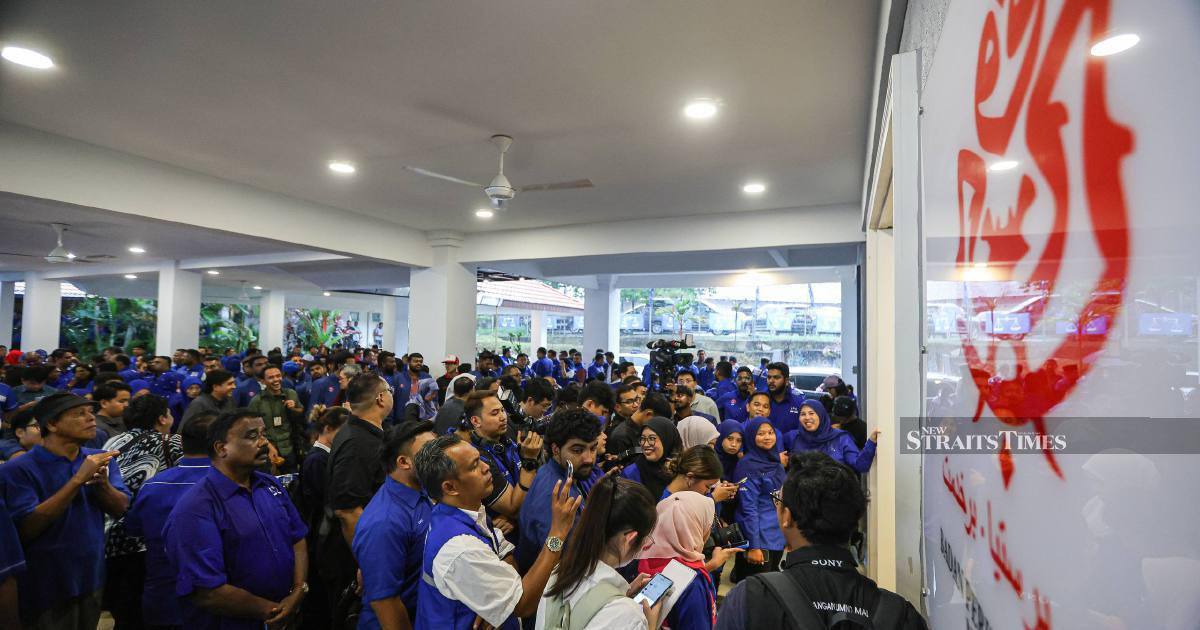
Barisan Nasional has ignited campaign fever in Johor as senior party figures and their supporters assembled at the Umno state headquarters in Johor Baru, with all eyes fixed on the imminent disclosure of the coalition's slate for the 16th state election. The gathering reflected the palpable anticipation rippling through the ruling coalition's machinery, with rank-and-file members and political operatives converging on the venue in what promised to be a significant moment in the state's electoral calendar.
For Barisan Nasional, candidate selection represents far more than a procedural exercise. It signals the coalition's strategic calculations for maintaining its grip on power, particularly in Johor, where the bloc has held considerable sway across multiple electoral cycles. The choice of which personalities to field, which constituencies to contest, and how to allocate party resources among coalition partners reveals the coalition's assessment of electoral vulnerabilities and opportunities heading into polling day.
The atmosphere at the Umno headquarters captured the competitive energy now permeating Johor politics. Party delegates, grassroots activists, and ordinary members had gathered to witness announcements that would shape the contours of the state campaign. For many participants, the event represented an opportunity to observe which rising figures the party leadership deemed worthy of elevation, and which sitting representatives retained the blessing to defend their seats—a calculation laden with political significance for careers and constituency dynamics.
Candidate selection in Malaysian state elections carries outsized importance because it determines which individuals will represent parties in direct competition for voter support. Unlike abstract policy debates, the choice of candidates transforms electoral contests into personal narratives, with local figures becoming the face of their respective coalitions. In Johor's diverse constituencies—spanning urban centres, industrial zones, and rural districts—the calibre and acceptability of candidates often prove decisive in swaying outcomes.
Barisan Nasional's reliance on the candidate announcement as a rallying point underscores the continued importance of traditional party-machine politics in Malaysia. By congregating supporters before unveiling their selections, the coalition sought to generate momentum, reinforce party cohesion, and demonstrate organizational vitality to observers both within and beyond party ranks. Such gatherings serve as visual manifestations of party strength and the enthusiasm of the base.
Johor's electoral significance extends beyond the state itself. As Malaysia's second-largest state by population and a major economic contributor, political outcomes in Johor invariably influence national political calculations. The state has historically been considered a Barisan Nasional stronghold, and the coalition views maintaining dominance there as essential to sustaining its national relevance. Any erosion of Barisan Nasional support in Johor would signal broader weakness in the coalition's appeal to Malaysian voters.
The gathering also reflected the multi-party nature of Barisan Nasional, which includes Umno, MCA, and MIC alongside other component parties. Candidate announcements necessitate negotiation among coalition partners over seat allocation, a process that can strain relationships when demands exceed available positions. The visible assembly of supporters suggested that leadership had managed internal negotiations sufficiently to proceed with public announcements, though underlying tensions over seat distribution typically remain evident to experienced political observers.
For voters in Johor, the candidate selection process carries practical implications. The individuals chosen would become the primary channels through which constituents interact with government and political representation. Candidate quality, community rootedness, and accessibility influence how effectively representatives address local concerns and translate electoral promises into tangible benefits. In constituencies where competition proves intense, candidate attributes often determine electoral outcomes.
The timing of the candidate announcement also matters strategically. By advancing the timeline and building early momentum, Barisan Nasional sought to control campaign narratives before opposition parties could fully mobilize their own organizations. Early announcements allow candidates time to establish campaign infrastructure, introduce themselves to voters unfamiliar with them, and build grassroots support networks essential to modern electoral success. Opposition coalitions attempting to counter Barisan Nasional's moves would need to accelerate their own preparations accordingly.
The enthusiasm visible at the Johor Umno headquarters reflected broader patterns in Malaysian electoral politics, where party machinery mobilization serves as an early indicator of campaign intensity and internal party confidence. Strong turnout of supporters suggested that rank-and-file members remained engaged and optimistic about election prospects. Conversely, lackluster attendance might suggest demoralization or internal discord—factors that typically translate into reduced campaign effectiveness and voter enthusiasm.
As Johor enters its electoral cycle, the candidate announcements represent a transition from behind-the-scenes negotiation toward open electoral competition. The names and faces unveiled would dominate state political discourse for the coming campaign period, becoming symbols of competing visions for the state's future. For Barisan Nasional, these selections represented an opportunity to project strength and continuity; for opposition parties, they clarified the targets requiring defeat to shift Johor's political orientation.
The convergence at Johor Umno headquarters ultimately captured a pivotal moment in Malaysian electoral politics—the formal commencement of a campaign that would determine who governs Johor and shapes regional political alignment. As candidates prepare for the rigorous demands of electoral competition, the enthusiasm displayed at this gathering provides a glimpse into the intensity and organization that Malaysian political contests continue to generate, particularly in strategically significant states like Johor.