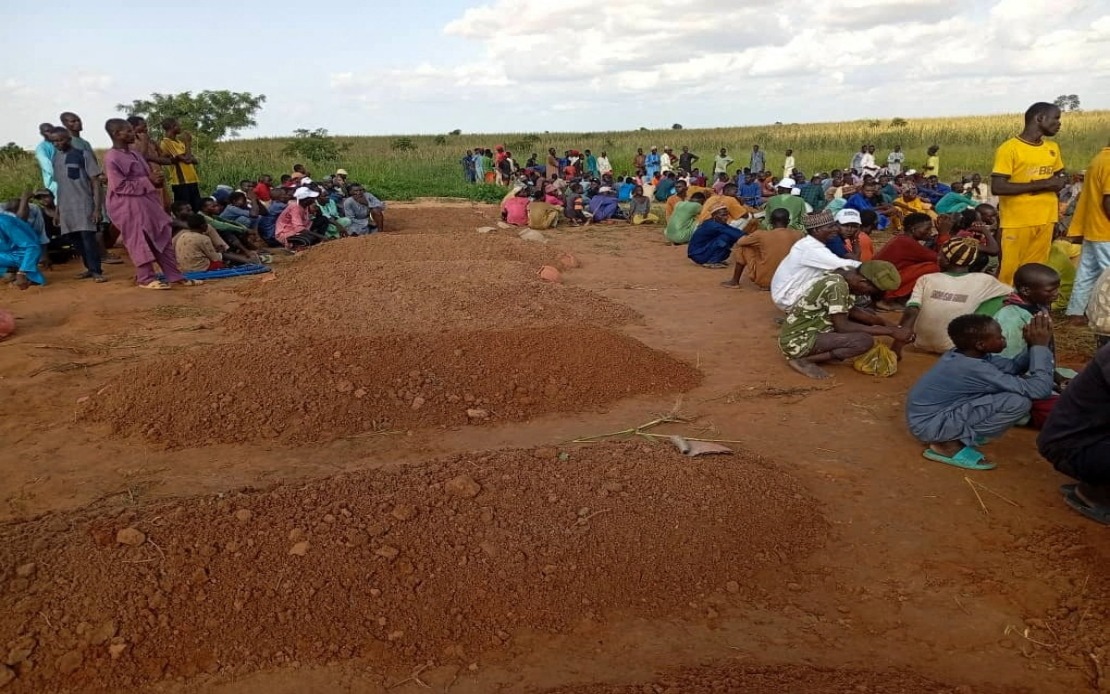
An overloaded boat carrying agricultural workers and their families capsized in northwestern Nigeria's Sokoto state on Thursday, resulting in the deaths of at least 40 people, with the vast majority being children. The disaster occurred near Gorau town in Goronyo Local Government Area as the vessel navigated waters during the seasonal rice farming period, when local communities depend heavily on waterway transportation to reach farmland. Authorities and eyewitness accounts provided differing casualty figures, though all confirmed a devastating loss of life in what represents one of the deadliest recent maritime accidents in the region.
Initial assessments from Nigeria's National Inland Waterways Authority (NIWA) placed confirmed fatalities at 40, with state manager Abdulkadir Yusuf cautioning that the final toll remained under verification. However, community witnesses painted a grimmer picture. One observer present at Gorau's central mosque, where deceased bodies were prepared for burial, reported counting approximately 47 corpses, many shrouded in traditional wrapping materials and prayer cloths awaiting interment that same evening. The discrepancy between official counts and on-the-ground observations reflects the challenges faced by authorities in rapidly documenting casualties during mass casualty incidents in remote locations with limited documentation infrastructure.
Political representatives for the area confirmed harrowing details about the vessel's condition and passenger manifest. Nasiru Adamu, a member of the Sokoto State House of Assembly representing Goronyo, disclosed that the boat had departed with nearly 70 occupants aboard, substantially exceeding safe capacity limits. He stated that rescue teams had successfully pulled 16 survivors from the water, while ongoing search operations were recovering additional bodies from the riverbed. Most critically, Adamu indicated that the majority of passengers fell within the 10 to 15 age bracket, suggesting this was likely a community journey involving schoolchildren and adolescent laborers travelling with adult relatives.
Personal testimonies from affected residents underscored the human toll of the tragedy. Samaila Garba, a 55-year-old community member, described losing his 13-year-old granddaughter, Jamila Usman, in the incident. Garba's own count of fatalities reached at least 42 bodies, with he noted that women and young girls constituted a substantial portion of the dead. Such accounts from family members present at burial preparations often provide more accurate tallies than initial official estimates, given their proximity to deceased relatives and intimate knowledge of who had boarded the vessel.
This accident emerges against a backdrop of chronic safety concerns plaguing Nigeria's inland waterway system. The country's network of rivers, particularly in northern and central regions, serves as a vital transportation corridor for millions lacking access to adequate road infrastructure. However, systematic deficiencies in vessel maintenance, minimal enforcement of passenger capacity regulations, and insufficient safety equipment have created conditions where maritime disasters recur with disturbing frequency. The rainy season, when water levels rise and more communities attempt water crossings, consistently witnesses elevated accident rates across West Africa.
The broader pattern of preventable boat tragedies in Nigeria demonstrates institutional failures spanning multiple levels. Most vessels operating on inland waterways lack basic safety features such as life jackets, emergency flotation devices, or functional communication equipment. Regulatory oversight by authorities remains sporadic, with financial pressures and corruption enabling operators to overload vessels far beyond safe limits. Training standards for boat operators are minimal, and many captains possess limited swimming ability or maritime knowledge. These systemic weaknesses persist despite repeated pledges from government agencies to strengthen waterway safety protocols.
Recent precedent underscores the recurring nature of these disasters. In January of the current year, the Yobe state region in northeastern Nigeria experienced a similar tragedy when a deteriorating vessel carrying passengers sank, claiming at least 25 lives. That incident, like the Sokoto capsize, involved a vessel with known structural defects and excessive passenger loads. The frequency of such accidents—multiple fatal incidents annually—suggests that individual incidents receive attention but fail to catalyze comprehensive systemic reform across the waterway transportation sector.
For Malaysian and Southeast Asian observers, the Sokoto disaster carries particular relevance regarding maritime safety standards in developing nations. While Southeast Asian countries such as Indonesia and the Philippines face comparable challenges with informal water transportation, regional bodies like the ASEAN Secretariat have promoted coordinated maritime safety initiatives that Nigeria's fragmented federal-state governance structure has failed to implement effectively. The incident highlights how transportation infrastructure disparities between wealthy and economically disadvantaged regions within countries create vulnerability patterns that transcend national borders, affecting entire populations reliant on informal transit systems.
The tragedy also illuminates broader development challenges in sub-Saharan Africa's agricultural sectors. Seasonal labor migration for farming requires workers—including children assisting family agricultural activities—to traverse dangerous waterways that lack modern infrastructure alternatives. Until road networks reach remote farming communities and economic opportunities improve sufficiently to reduce seasonal migration pressures, populations will continue depending on unsafe water transport. This structural vulnerability means that vessel safety improvements alone, though necessary, cannot resolve the underlying factors driving people onto overloaded boats in the first place.
Response from Nigerian authorities has thus far focused on search and recovery operations rather than substantive investigation into systemic causes. While immediate rescue efforts deserve commendation, the absence of announced inquiries into vessel maintenance standards, operator licensing, or capacity enforcement suggests that accountability mechanisms remain weak. Without investigations establishing responsibility and consequences for violations, operators and vessel owners have minimal incentives to invest in safety improvements or adhere to capacity restrictions that reduce profitable journeys per boat.
The Sokoto capsize underscores the urgent need for comprehensive waterway safety frameworks addressing multiple dimensions simultaneously. Enhanced regulatory capacity, mandatory safety equipment requirements, stricter capacity enforcement, operator training standards, and community education about water safety represent necessary components of any effective response. International development agencies and maritime organizations could support Nigeria in establishing such frameworks, drawing on successful models implemented elsewhere in Sub-Saharan Africa and beyond.
Community mourning is already underway across Goronyo and surrounding towns, with families confronting the loss of multiple relatives in a single incident. The psychological and social impacts of such mass tragedies extend far beyond immediate mortality statistics, affecting entire communities' sense of safety and confidence in essential transportation systems. Recovery will require not only memorial ceremonies and bereavement support but meaningful institutional changes preventing recurrence of similar preventable disasters in the future.

