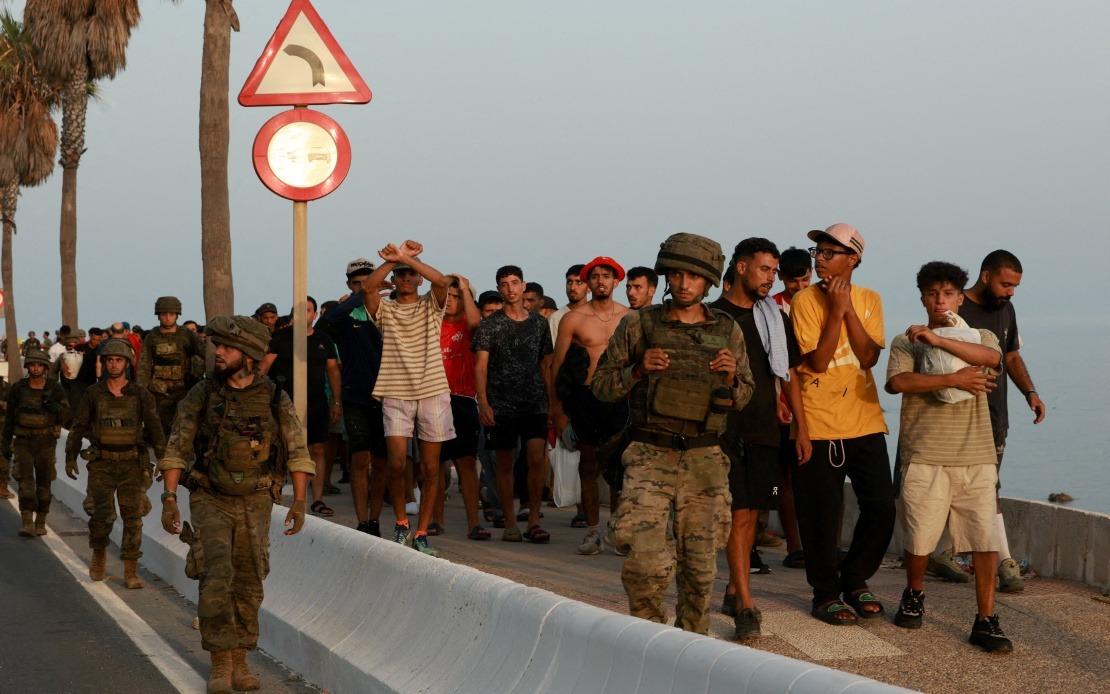
Morocco's Interior Ministry has pointed to online falsehoods and organised trafficking rings as the primary catalysts for thousands of migrants attempting to breach the Spanish enclave of Ceuta, a geographically isolated territory wedged on Africa's northern coast. The government contends that misleading information circulating across social platforms, combined with criminal networks profiting from desperation, orchestrated the unprecedented surge of people crossing the maritime and land borders separating Morocco from this European outpost. Officials further suggested that misinterpretation of a Spanish judicial decision created a false perception among vulnerable migrants that they could enter Europe without facing immediate deportation, amplifying the already dangerous journey.
The scale of the movement has strained both nations' administrative capacities and raised profound questions about border control, humanitarian obligations, and the evolving role of digital platforms in triggering mass migration. Moroccan authorities estimate approximately 40,000 individuals successfully entered Ceuta during the surge, though Spanish officials place the figure considerably higher at between 50,000 and 60,000 arrivals within a compressed timeframe of just a few days. This discrepancy in reporting highlights the chaos of the situation and reflects the difficulty in rapidly verifying arrivals in a territory with a resident population of merely 85,000 people. The simultaneous attempt on Melilla, another Spanish North African possession, saw roughly 1,135 migrants pursue a similar crossing, though Moroccan authorities maintain that all those reaching Melilla were promptly intercepted and returned.
The human cost of these journeys remains contested between the two governments, underscoring the wider diplomatic tensions surrounding migration flows in the Mediterranean region. Moroccan officials have documented eleven fatalities resulting from the crossing attempts, a figure that starkly contrasts with Spanish authorities' assessment of at least 72 deaths. Such discrepancies are not uncommon when rapid population movements occur across contested borders, as immediate victim identification, verification of circumstances, and coordination between nations' records systems face inevitable delays. The Moroccan Interior Ministry acknowledged the necessity of ongoing coordination with Spanish counterparts to confirm additional potential deaths within Ceuta itself and to systematically identify victims and determine their nationalities and origins.
For Malaysian and Southeast Asian observers, this incident illuminates persistent vulnerabilities within global migration systems and the expanding reach of human trafficking networks that operate across continents. The explicit invocation of social media's role by Moroccan authorities reflects a growing governmental awareness that digital platforms can rapidly mobilise vulnerable populations and amplify false narratives about asylum pathways and legal statuses. This mirrors concerns raised across Southeast Asia, where trafficking organisations similarly exploit social networks to recruit migrants, spreading misleading promises of employment and safety in distant countries. The phenomenon demonstrates how transnational criminal networks have evolved to harness modern communication tools, creating sophisticated information ecosystems that prey on economic desperation.
The judicial misinterpretation cited by Moroccan officials as contributing to the surge deserves particular scrutiny, as it reveals how migrants, often lacking reliable information channels and legal counsel, can misconstrue institutional decisions with devastating consequences. A Spanish court ruling, likely addressing specific procedural or rights-based issues, became distorted as it circulated through informal networks and unreliable sources, transforming into a belief that border restrictions had been lifted or that asylum claims would be processed favourably. This phenomenon occurs repeatedly in migration contexts worldwide, where genuine policy changes become exaggerated or inverted through successive retelling, creating mass perceptions divorced from legal reality. Southeast Asian governments face similar challenges when regional court decisions regarding migrant rights generate confusion and spike attempted border crossings.
Human trafficking organisations are particularly adept at exploiting such confusion, leveraging genuine judicial developments alongside fabricated claims to convince desperate individuals that dangerous journeys represent viable pathways to opportunity. Moroccan authorities' emphasis on trafficking networks as architects of the crisis underscores that individual decisions to migrate, whilst influenced by personal circumstances, increasingly occur within structured criminal enterprises that profit from uncertainty and hope. These networks operate with significant sophistication, establishing supply chains of vulnerable migrants through West and Central Africa, processing payments, arranging transportation, and managing logistics across international borders. Southeast Asian countries contend with comparable trafficking architectures, though often targeting different destination countries and utilising different routes and methodologies.
The political dimensions of Morocco's explanatory framework warrant consideration, as government statements about migrant surges frequently serve domestic audiences as much as international ones. By attributing the crisis primarily to external malevolent actors—dishonest social media content and criminal traffickers—rather than structural economic factors or failures in border management, the Moroccan government frames the situation as imposed upon the nation rather than rooted within it. This rhetorical approach resonates across numerous nations, where political leaders similarly deploy narratives of foreign interference and criminal manipulation when confronting large-scale migration movements. Yet such framing, whilst politically useful, can obscure underlying factors driving migration, including poverty, political instability, climate pressures, and limited economic opportunity in origin communities.
Spain's handling of this episode, marked by significantly higher death toll reporting and its geographic vulnerability as a primary transit zone for African migration into Europe, positions it within broader European debates about asylum, border security, and burden-sharing among member states. The Spanish exclave's unique status as European territory surrounded by Moroccan jurisdiction creates perpetual tension and occasional flashpoints, with migration surges weaponising this geographical vulnerability. European Union policies addressing Mediterranean crossing and North African cooperation frameworks have repeatedly struggled to balance humanitarian concerns with security imperatives, a tension vividly illustrated by the Ceuta events. Southeast Asian nations observe these European precedents closely, as the region grapples with comparable dilemmas regarding Rohingya populations, irregular maritime movement from South Asia, and labour migration across porous boundaries.
The coordination between Morocco and Spain in the aftermath of the surge represents essential diplomacy, though the divergence in reported statistics and competing narratives suggests underlying friction. Both nations have material interests in controlling information about the scale and lethality of cross-border movements, as casualty figures and arrival numbers carry political weight domestically and internationally. Morocco faces pressure to demonstrate competent border stewardship and security, whilst Spain must justify its treatment of arriving migrants and account for deaths occurring within Ceuta's jurisdiction. International observers, humanitarian organisations, and regional partners require accurate information to assess both the immediate humanitarian needs and the systemic factors requiring longer-term resolution.
For Malaysian policymakers and regional leaders, the Ceuta episode serves as instructive case study regarding the complex interplay of information ecosystems, organised crime, migration drivers, and bilateral tensions. Malaysia's own experience with irregular maritime arrivals, trafficking networks, and border management challenges provides relevant context for understanding how misinformation spreads, how criminals exploit vulnerable populations, and how countries might cooperate whilst maintaining distinct national interests. The incident underscores the necessity of robust mechanisms for verifying casualty figures, establishing victim identities, and ensuring humanitarian accountability, particularly in chaotic circumstances where multiple jurisdictions and national narratives intersect. Moving forward, addressing mass migration surges requires simultaneously combating trafficking organisations, establishing reliable information channels that counter false narratives, addressing root causes of displacement, and building regional cooperation frameworks that balance sovereignty with humanitarian responsibility.

